Related: Lift Bowl vs Tilt Head: Which Stand Mixer Design Actually Holds Up
I kneaded dough by hand until my wrists gave out, which is how I came to treat the stand mixer as the greatest kitchen invention since the oven. Twenty years of baking, a decade running a bakery, and now a room full of students who all ask the same question in week one: which mixer, and what do I put on it?
The honest answer is that stand mixer attachments decide the long term relationship far more than the badge on the front does. A mixer with a powered hub and something worth feeding into it is a kitchen system. A mixer with a hub and nothing to put in it is a very heavy bowl with a motor bolted underneath.
So this guide covers both halves of the decision at once: the machine, and the attachment that turns it into something more than a cake mixer. I keep three mixers in my own kitchen, including the KitchenAid that has survived a decade of weekly bread and a cheap one I bought specifically to confirm it was worth hating. It was.
The mixer that anchors the ecosystem: KitchenAid Classic Series 4.5 Quart
The Classic Series is the tilt head most people picture when they say KitchenAid, and the reason it belongs at the top of this page is not the badge. It is the hub on the front. That hub is the doorway to nearly every stand mixer attachment anyone has ever built: grinders, pasta rollers, spiralizers, and the juicer further down this page.
The 4.5 quart stainless bowl is the honest constraint. It is a fine size for cookie dough, cake batter, frosting, and a single loaf. It is not a double batch machine. Ask a tilt head with a modest bowl to do lift bowl work every Sunday and it will tell you so, loudly, with a walk across the counter.
The bundle here pairs the mixer with a 5 cup food chopper, which is the sort of thing I normally roll my eyes at. This one earns its place, because it means you do not drag the mixer out to chop a cup of nuts or blitz a crumb topping. Small conveniences are how a mixer stays on the counter instead of in a cupboard.
The bigger bowl for less: Martha Stewart 5.3QT Tilt Head
Here is a tilt head with 5.3 quarts of bowl, 12 speeds, and stainless steel instead of coated aluminum. That is more bowl than the KitchenAid Classic, aimed at the same buyer: someone who wants a tilt head on the counter without paying lift bowl money.
Twelve speeds sounds like marketing until you actually make bread. Bread people live in the first two speeds, and the gap between a mixer with a genuine slow start and one that jumps straight to medium is the difference between folding dough and flinging it at the backsplash. Speed range at the bottom matters more than speed count at the top.
The 5.3 quart bowl buys headroom, and headroom is what keeps a tilt head from wobbling. A bowl that is overfilled is a bowl that shakes, and a shaking tilt head is the single most common complaint I hear in class. Stainless is the right material for the bowl, because it takes a dough hook scraping along the inside for years without chipping the way a coating eventually will.
The thing to check before you buy is the attachment hub. The ecosystem around a KitchenAid is enormous and third party, and it is not automatically transferable. If the plan is to add a grinder or a juicer later, confirm what the hub accepts first. If the plan is dough, batter, and frosting, the bigger bowl is the better buy.
The attachment that changes the job: GVODE Masticating Juicer Attachment
This is a masticating juicer that runs off a KitchenAid mixer hub, and it is the clearest argument for buying a mixer with a powered front port. Masticating means the mechanism crushes and presses rather than spinning fast and shredding. Slower, less heat into the juice, and generally better yield out of greens, which is exactly the produce that a cheap centrifugal machine wastes.
The dual feed chute is the detail I would pay attention to. A narrow chute turns juicing into knife work, and knife work is why juicers end up in closets. A wide chute plus a narrow one lets you drop in small items whole and still feed long stalks of celery and kale without dicing them into batons first.
Two things to be clear about. First, the motor doing the juicing is the mixer's motor, so this is not the attachment for a mixer that already smells hot after ten minutes of stiff dough. Second, it is built for the KitchenAid hub, so it is not a universal fit. Attachments are the long game with these machines, and this is the kind of attachment that justifies the hub it plugs into.
The replacement part that saves a mixer: Anbige 6-Wire Whip
A wire whip is the least glamorous object on this page and the one most likely to be the reason a working mixer gets retired. This is a six wire replacement whip built for the Cuisinart tilt head SM-50 and SMD-50 series, and it costs less than a decent loaf of bread from a bakery that knows what it is doing.
Wire count is not decoration. More wires means more contact with the bowl and more air folded into egg whites and cream, and it means the balloon holds its shape when you run it fast. Six wires is the configuration you want for meringue and whipped cream, and it is also the piece that gets bent, lost, or left in a sink full of water until the tines corrode.
Compatibility is the entire game with replacement parts. This fits Cuisinart SM-50 and SMD-50 series machines. It does not fit a KitchenAid hub and it will not fit a Martha Stewart mixer, no matter how similar the shape looks in a photo. Read the model plate on the bottom of your mixer, match it, and buy the part. A fifteen dollar whip is a much better outcome than a new mixer.
How I test mixers and attachments
I do not review a mixer on a cake mix. A cake mix tells you almost nothing, because almost anything with a spinning paddle can handle it. Every machine and every attachment that gets a recommendation here has to survive real dough first.
The bread gauntlet is the same every time. Stiff sourdough at low hydration, then an enriched brioche, then a double batch of the same dough to see whether the machine has another round in it. I run the hook at the speed a bread baker would actually use, not the speed that makes the machine look good, and I watch for the two failure signs: the head walking across the counter, and the bowl lifting or rocking under load.
Then I smell the motor. Ten minutes into stiff dough, a mixer that is working within its means smells like nothing. A mixer that is overmatched smells hot and slightly electrical, and that smell is the most reliable predictor I know of a machine that dies in year two. Wattage on the box tells you power draw. It does not tell you torque, and torque is what kneads.
For attachments I check three things: does it seat solidly in the hub without play, does it stay cool through a full run, and does it clean up without a brush and a prayer. An attachment that is miserable to wash is an attachment that never gets used, which is the same as not owning it.
Analysis and test results
Bowl capacity is the biggest lie in this category. A number of quarts describes the volume of a metal bowl, not the amount of dough a motor can push through a hook. A tilt head with a big bowl and a modest motor will still stall on stiff dough, and when it does, the marketing department is not the one scraping dough off the counter.
That is why I sort these four products by job rather than by size. The KitchenAid Classic is an ecosystem purchase: you are buying the hub, the track record, and the fact that a decade from now there will still be parts and attachments available for it. The Martha Stewart is a capacity purchase: more bowl, more speeds, stainless where it counts, at a tilt head price. They are both reasonable, and they are reasonable for different kitchens.
The two attachments tell you what kind of owner you are. The GVODE juicer is the payoff for buying into a hub system, turning a mixer into a second appliance without a second motor on the counter. The Anbige whip is the repair path, the reminder that most mixers do not die, they lose a part and sit in a cupboard for three years.
One warning that applies to all of it. The word powerful is meaningless without a stiff dough test behind it. If a listing cannot tell you what the motor does with bread dough, assume the answer is nothing good, and assume the bowl size was chosen to distract you.
The stand mixer attachments and mixer reference table
This is the table I keep in my head when students ask what to buy first. Match the gear to the job, and match the attachment to the mixer it actually fits. Compatibility is not a detail, it is the decision.
| Gear | What it is | What it fits | Best job |
|---|---|---|---|
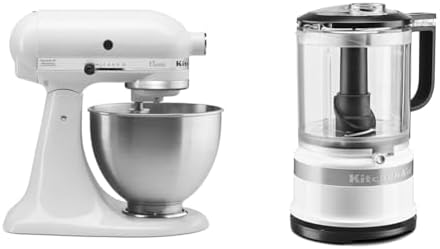 Visit on Amazon → Visit on Amazon →KitchenAid Classic Series 4.5 Quart |
Tilt head mixer with 4.5 quart bowl, bundled with a 5 cup food chopper | KitchenAid hub attachments | Single batch baking and the widest attachment ecosystem |
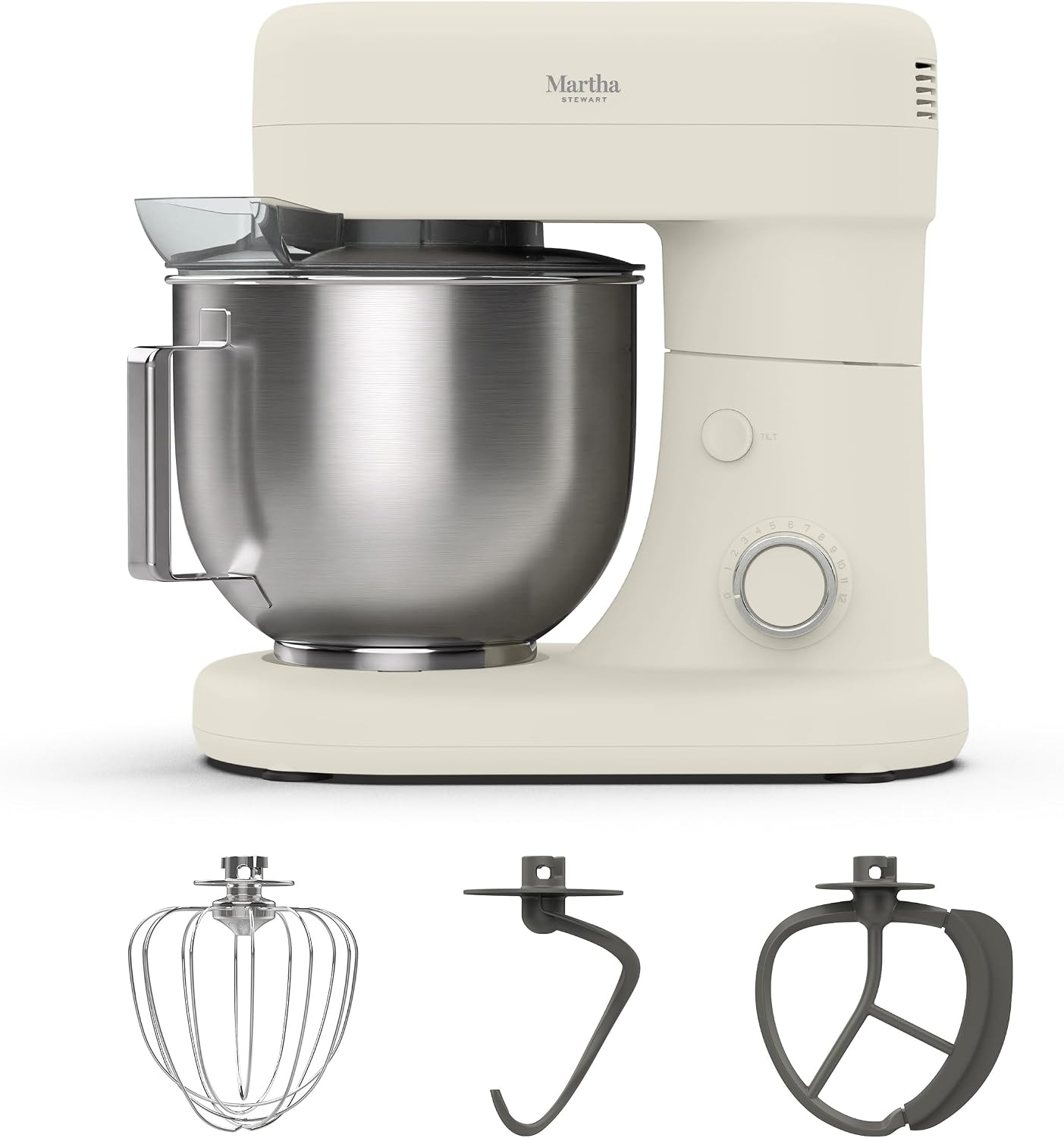 Visit on Amazon → Visit on Amazon →Martha Stewart 5.3QT Tilt Head |
Tilt head mixer with 5.3 quart stainless bowl and 12 speeds | Check the hub fitting before buying attachments | More bowl and headroom for the money |
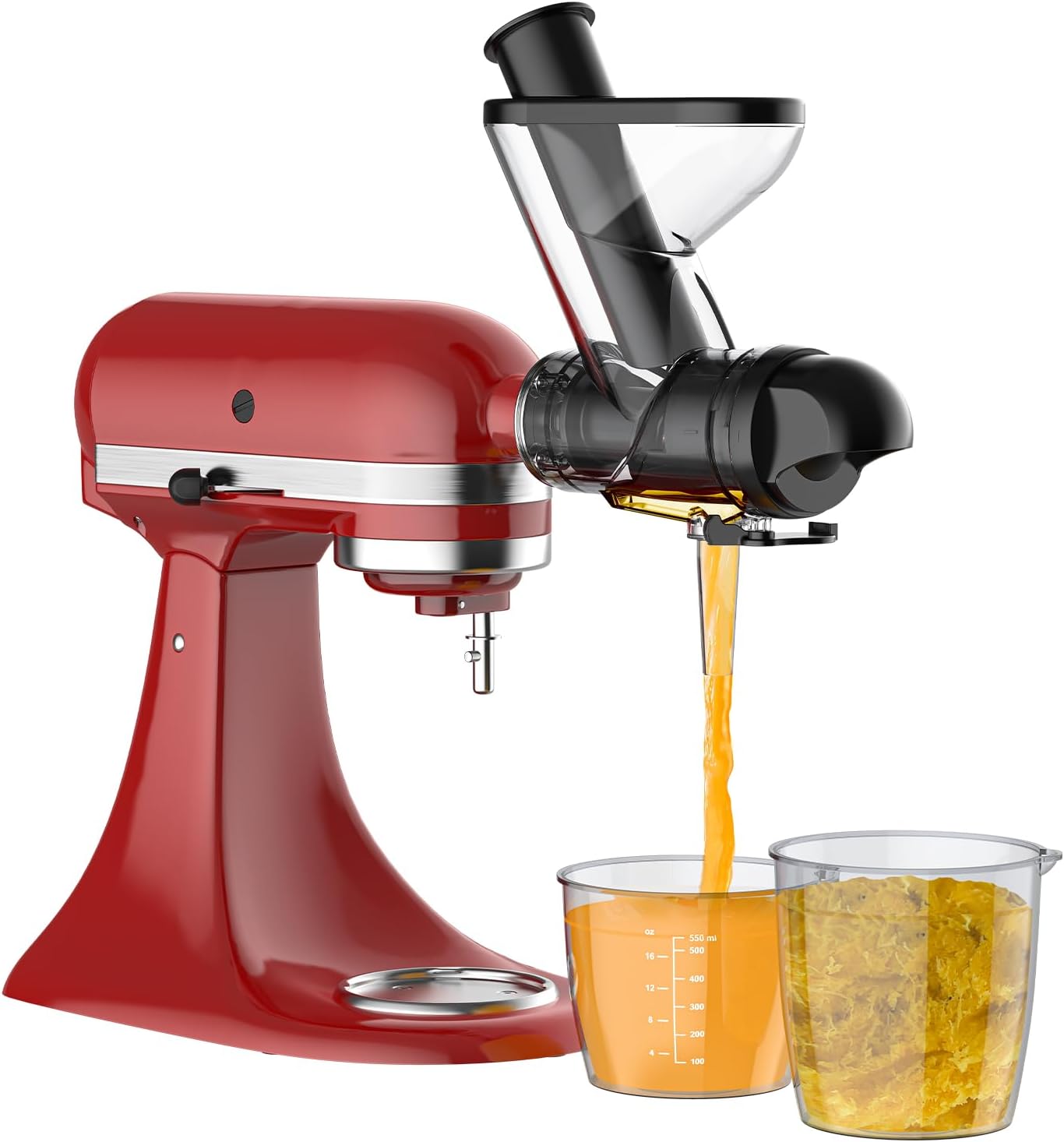 Visit on Amazon → Visit on Amazon →GVODE Masticating Juicer Attachment |
Slow crushing juicer with a dual feed chute | KitchenAid mixer hub | Juice without a second motor on the counter |
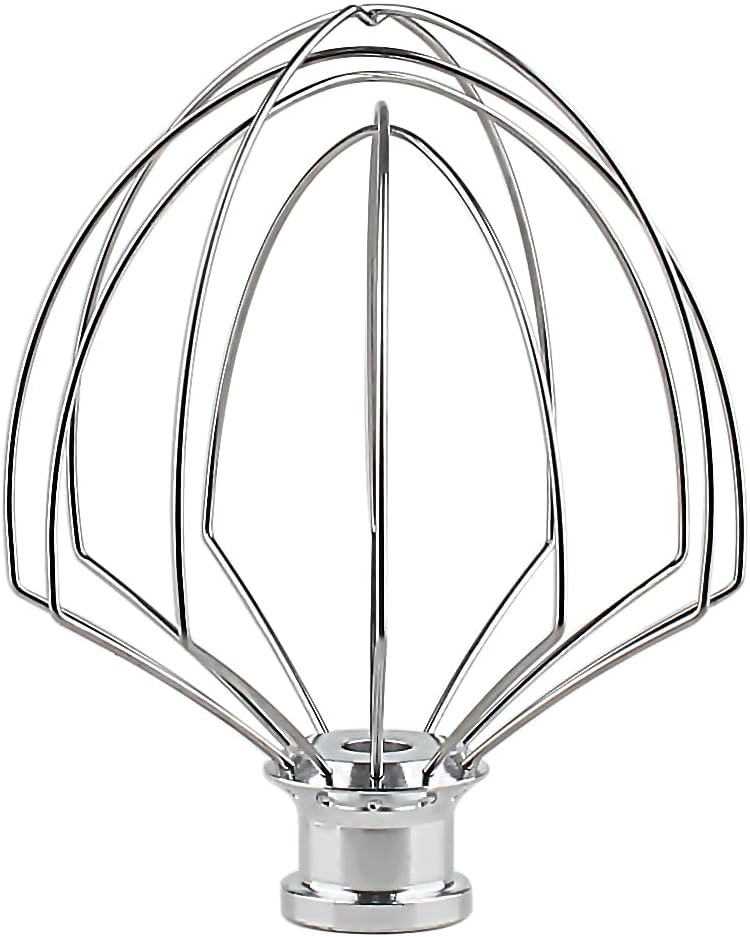 Visit on Amazon → Visit on Amazon →Anbige 6-Wire Whip |
Replacement wire whip, six wires | Cuisinart SM-50 and SMD-50 series | Meringue, whipped cream, and rescuing a mixer |
What about lift bowl mixers?
For bread, lift bowl wins and it is not close. The bowl locks into a cradle and the head stays put, so a stiff dough cannot make the machine walk. Tilt heads are convenient for scraping a bowl and swapping attachments, and they are perfectly good for cakes, cookies, and a single loaf. But if the plan is weekly bread at any volume, the wobble is the thing that eventually drives you to upgrade.
The attachment trap
Attachments can cost more than the mixer, and a bundle of them you never use is money in a drawer. Buy the attachment for the job you already do every week, not the job you imagine doing. The juicer earns its place if you drink juice. The replacement whip earns its place the moment yours bends. Neither is worth buying because it was on a list.
Should you buy the KitchenAid Classic Series 4.5 Quart?
Yes, if what you want is the ecosystem. The hub on the front is the reason this mixer is still relevant a decade after you buy it, and the bundled food chopper keeps small jobs from becoming a production. The 4.5 quart bowl is the limit, so be honest about your batch sizes. Single loaf, cookies, frosting, one birthday cake: it handles all of it and asks for nothing. Double batches of stiff dough: buy a lift bowl and skip the wobble entirely.
Should you buy the Martha Stewart 5.3QT Tilt Head?
Yes, if bowl size and speed control at the low end are what you are shopping for, and you are not planning to hang a grinder or a juicer off the front. The 5.3 quart stainless bowl gives you headroom, headroom keeps a tilt head steady, and 12 speeds means the slow end is genuinely slow. It is the capacity buy on this page. Just confirm the attachment hub situation before you commit, because on this machine the mixer is the system, not the accessories.