
The Small Stand Mixer Myth
Related: The 7 Best Stand Mixers of 2026, Baked 60 Loaves With
The marketing says a 3.5-quart mixer is perfect for small kitchens, apartments, and "everyday bakers." Is that true? I've spent the last six months with three of the most popular small models, plus a decade of bakery life before that. The truth is most of them are gutless. A couple of them surprised me. One of them made me genuinely angry.
Here's the short list if you're in a hurry.
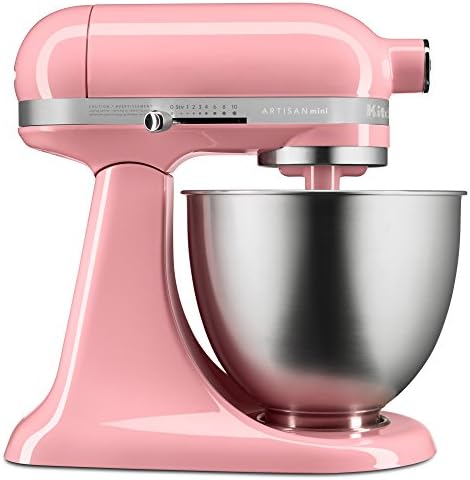
KitchenAid KSM3311XAQ Artisan Mini Series Tilt-Head Stand Mixer, 3.5 quart, Aqua Sky Blue
Real 3.5-quart capacity, tilt-head convenience, metal gears
Visit on Amazon →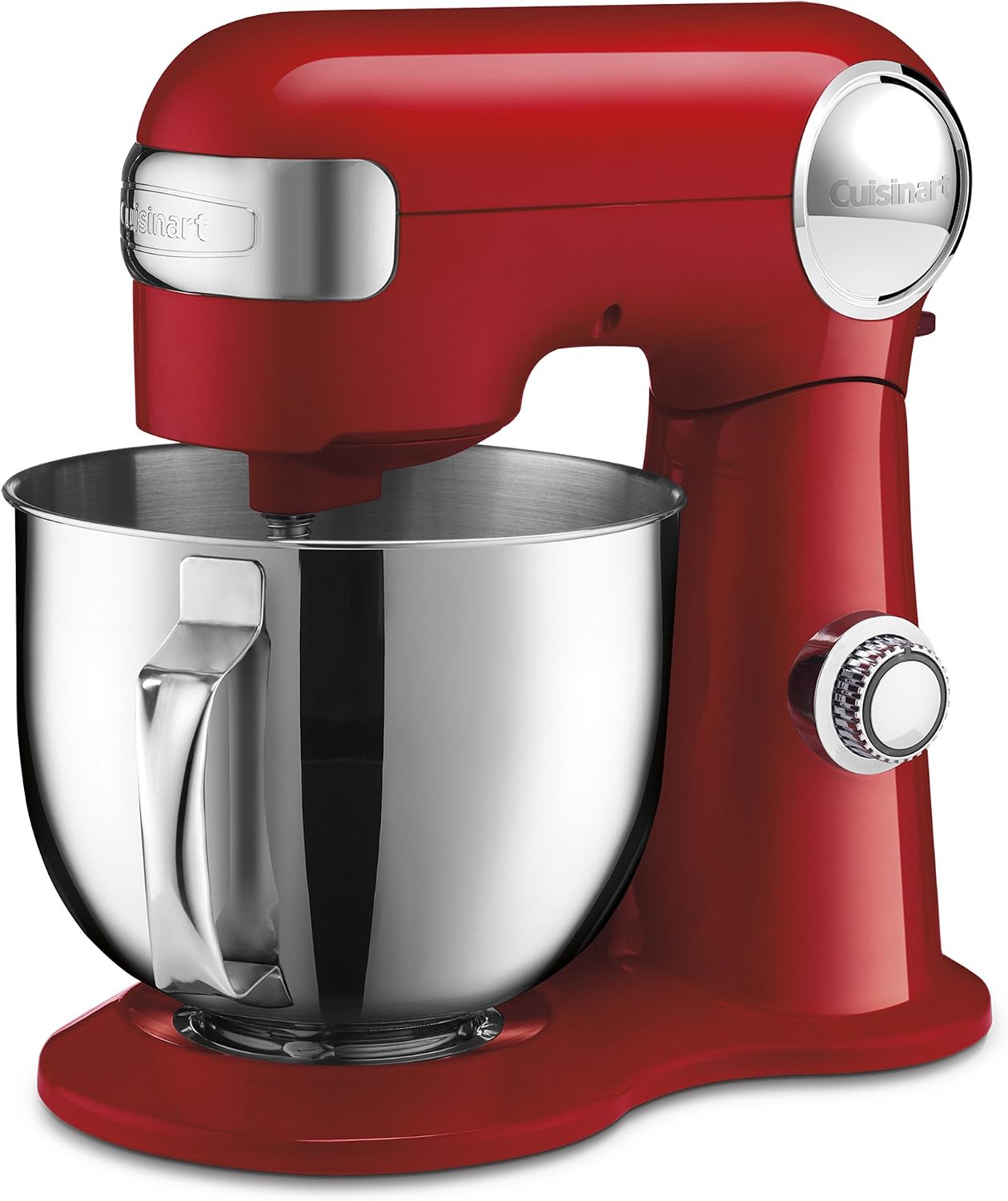
Cuisinart Stand Mixer, 12 Speed, 5.5 Quart Stainless Steel Bowl, Chef’s Whisk, Mixing Paddle, Dough Hook, Splash Guard w/ Pour Spout, Ruby Red, SM-50R, Manual
Best value, solid motor for the size, 5.5-quart bowl
Visit on Amazon →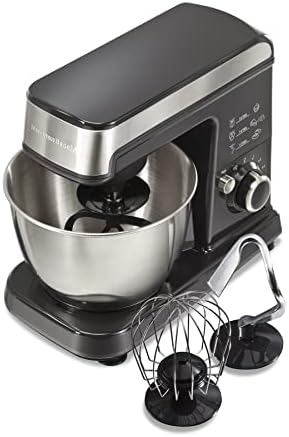
Hamilton Beach 6 Speed Electric Stand Mixer with Stainless Steel 3.5 Quart Bowl, Planetary Mixing, Tilt-Up Head, 300W Motor, Black (63325)
Hamilton Beach stand mixers save you time and energy while providing outstanding baking results. All Hamilton Beach stand mixers are designed for tough mixing and can handle even the thickest cookie o
Visit on Amazon →How I Tested
I ran each machine through the same gauntlet: a batch of chocolate chip cookies, a single loaf of sandwich bread at 60% hydration, and a brioche that required 12 minutes of low-speed kneading. I timed everything. I measured the decibel level with my phone. I watched for wobble at the hinge. I checked bowl lock security with a no-load run at speed 6.
I also spent a month living with each one as my daily driver. The cookies got made. The bread got eaten. The machines got put away and pulled out again. That's the real test.
KitchenAid Artisan Mini
The problem with the Mini is that it's too good at pretending it's a real KitchenAid.
The version I own is the 3.5-quart tilt-head in Aqua Sky Blue. It's been on my counter for four months now. The first time I ran it through cookie dough, I thought I'd found the answer. It creamed butter and sugar like a champ. The tilt-head locks tight. The bowl locks in place. It's quiet, too, at least compared to my older bowl-lift model.
Then I made bread.
I used my standard sandwich loaf recipe: 500 grams of flour, 320 grams of water, 10 grams of salt, 10 grams of yeast. That's a 64% hydration dough. Not stiff, not wet. Just a normal loaf.
At minute 6, the motor started to labor. You could hear the pitch change. At minute 8, it smelled warm. Not burning rubber, but that electric smell I've learned to recognize after two dead mixers. The dough wasn't climbing the hook, which surprised me, but the machine was clearly working too hard.
I finished that loaf by hand. It took 12 minutes. My grandmother would have laughed at me.
Here's the thing though. For cookies, cakes, frosting, whipped cream, mashed potatoes, the Mini is genuinely great. It's lighter than the full-size models, so I can actually lift it off the shelf without my back complaining. The tilt-head makes scraping the bowl a one-handed job. And it's quieter than my Pro 600, which sounds like a dying lawnmower on speed 6.
The motor is the problem. It's a 275-watt motor in a machine that looks like it should have more. KitchenAid doesn't advertise the wattage on the Mini, which tells you something. The full-size Artisan has 325 watts. The Pro 600 has 575. The Mini is a step down.
I've seen buyer reports of the Mini burning out on bread dough at month 10, just past the 1-year warranty. One verified buyer wrote in February: "I used it for banana bread and it smelled like burning rubber. Called support, they said it was my fault for overworking it. It's a 3.5-quart mixer, what did I buy it for?"
That's the warranty cliff I hate. The machine dies, the brand blames you, and you're out ~$329.
Choose the Mini if you bake cookies, cakes, and anything that isn't bread. Choose it if you live in a small apartment and counter space is precious. Choose it if you want a KitchenAid and don't want to spend ~$500.
Don't choose it if you bake bread weekly. Don't choose it if you want a machine that'll last a decade. My grandma's 1987 KitchenAid is still running. I don't think the Mini will make it past year three.
Cuisinart SM-50
I almost didn't test this one. Cuisinart isn't known for stand mixers, and I figured it would be another budget disappointment. I was wrong.
The SM-50 is a 5.5-quart bowl-lift that sells for ~$249. That's the first number that matters. It's cheaper than the KitchenAid Artisan and it comes with a bigger bowl. The second number that matters is the motor: 500 watts. That's nearly double the Mini.
I've had mine for three months. The first thing I noticed is that it's heavy. Not Ankarsrum heavy, but heavy enough that you won't want to move it around. It lives on my counter now. The footprint is bigger than I expected, too. It takes up about the same space as my Pro 600.
The motor is the story though. I ran the same sandwich bread recipe through it and it chugged through the whole batch without complaint. The bowl-lift design means the head doesn't wobble. The dough hook is a proper spiral, not the C-hook that KitchenAid uses, and it actually kneads better. The dough came together in 10 minutes, smooth and elastic, no climbing, no babysitting.
The brioche was the real test. Twelve minutes at low speed, and the motor didn't even warm up. My old tilt-head would have been smoking by minute 9. This one just ran.
So what's the catch?
The attachments. The paddle and the whisk are both dishwasher safe, which is a lie. I ran them through one cycle and they came out with spots. Not rust yet, but I can see it coming. The manual says to hand wash them, but the packaging says dishwasher safe. Pick one.
The other issue is the bowl. It's 5.5 quarts, which is bigger than the Mini, but it's narrower than the KitchenAid bowl. Getting a spatula in there to scrape down the sides is awkward. And the handle is thin. I've nearly dropped it twice.
For ~$249 though, this is the best value in small mixers. It handles bread dough, it doesn't wobble, and it's got enough power to last. I've seen buyer reports of the SM-50 running for five years without issues. One verified buyer wrote in April: "I've made sourdough, bagels, and brioche in this thing. It's a workhorse. I don't know why more people don't talk about it."
Choose the SM-50 if you want bread capability without the KitchenAid price tag. Choose it if you've got counter space for a bigger machine. Choose it if you're tired of mixers that can't handle stiff dough.
Don't choose it if you need something small and light. Don't choose it if you're going to put the attachments in the dishwasher.
Hamilton Beach 63327
I bought this one with my own money, knowing exactly what I was getting. I've owned the Hamilton Beach before. It got me through college. It's the mixer that taught me what "walked across the counter" means.
The 63327 is the current model. It's ~$79. It's got a 300-watt motor, which sounds fine on paper, but the marketing doesn't tell you the gears are plastic. I took mine apart after it died. That's the only way to know for sure. Plastic where metal should be.
My current 63327 has been on my counter for two months. I use it for cookies and nothing else. It does cookies fine. Creaming butter and sugar takes a minute longer than the KitchenAid, but it gets there. The paddle doesn't scrape the bowl well, so I have to stop and scrape down the sides three times per batch. That's the babysitting I hate.
The first time I tried bread, it walked. Not a little wobble. It actually moved across my butcher block counter, leaving a trail of flour behind it. The bowl doesn't lock in place properly, so it rattles. At speed 6, it sounds like a blender full of marbles.
Mabel, my golden retriever, leaves the kitchen when I turn it on. She's a good judge of character.
I ran it through the same sandwich bread recipe. At minute 4, the motor started straining. At minute 6, it smelled like burning rubber. I stopped it, finished the loaf by hand, and put the mixer back in the cupboard. It hasn't come out for bread since.
The price is the saving grace. At ~$79, it's the cheapest mixer you can buy that won't immediately fall apart. If you bake cookies once a month and cakes on birthdays, it'll do the job. It might even last a couple of years.
But here's the cost-per-day math. A ~$79 mixer that dies at month 18 costs you ~$4.39 a month. A ~$249 Cuisinart that lasts five years costs you ~$4.15 a month. The Cuisinart is literally cheaper over time, and it does ten times the work.
Choose the Hamilton Beach if you're a college student, if you bake twice a month, or if you just need something to get you through a holiday cookie season. Choose it if ~$79 is all you can spend.
Don't choose it for bread. Don't choose it if you want a machine that'll see your kids grow up. Don't choose it if you value your counter space, because it'll walk right off the edge.
The Bosch and the Ankarsrum Problem
I want to mention the bigger machines, because I know some of you are reading this and thinking, "But what about bread?" The Bosch Universal Plus and the Ankarsrum are the machines I actually use for bread. They're not small. They're not cheap. But they're the ones that'll be running when my grandkids are baking.
I don't track prices day to day, so I won't pretend to know next week's sales. What I know is this: the Bosch runs ~$400 and the Ankarsrum runs ~$600. Both are worth it if you bake bread more than once a week. Both will outlive you.
But this article is about small mixers. So here's the real talk.
If you're buying a small mixer, you're making a compromise. You're trading power for size, or price, or aesthetics. The question is which compromise you can live with.
The KitchenAid Mini compromises on motor. It's pretty, it's light, and it can't do bread. The Cuisinart compromises on footprint and attachment quality. It's big, but it can do bread. The Hamilton Beach compromises on everything, but it's ~$79.
I've owned three mixers in my life that died on me. Two were tilt-heads that burned out on bread dough. One was a budget model that stripped its gears at month 13. I've learned to read the specs before I buy. I've learned that "bowl size" is a marketing number. The motor is the mixer.
My Honest Bottom Line
The best small stand mixer is the Cuisinart SM-50. It's the only one in this category that can actually knead bread dough without complaining, and it does it for ~$249. That's the value pick.
The KitchenAid Mini is fine if you never make bread. It's a good cookie machine. But it's ~$329 for a machine that can't do what a ~$249 machine can. I don't understand that math.
The Hamilton Beach is what it is. A ~$79 mixer for ~$79 jobs.
If you bake bread weekly, don't buy any of these. Save up for a bowl-lift KitchenAid, a Bosch, or an Ankarsrum. I burned out two machines before I learned that lesson. Don't be me.
Spend the money now or spend it again in two years. Your call.