
I ran a bakery for ten years before I moved to teaching bread classes in Burlington, and in that decade I killed four mixers. Not through abuse. Through dough. A stiff sourdough at 65% hydration finds the weak point in any machine, usually the gear housing, sometimes the speed control, always your patience. That history is why I sort stand mixers for bread dough by one question before anything else: what does the motor do in the fifth minute of kneading?
This is a four-way comparison. A compact 3-quart tilt-head, a 12-speed 5.5-quart workhorse, an 800-watt kitchen machine, and a 6.5-quart heavy duty tilt-head with the largest bowl of the group. I have not run these four side by side on my counter, and I am not going to pretend otherwise. What I can do is tell you what each machine is built for, which specs actually decide the outcome, and which one I would put my money on.
The short version: the Kenwood Chef Titanium and the 6.5QT heavy duty tilt-head are the two machines here genuinely aimed at bread dough. The Cuisinart SM-50 is the best all-round compromise for a mixed kitchen. The Dash Everyday is a cake and frosting mixer that happens to ship with a dough hook, which is not the same thing as being a kneading machine.
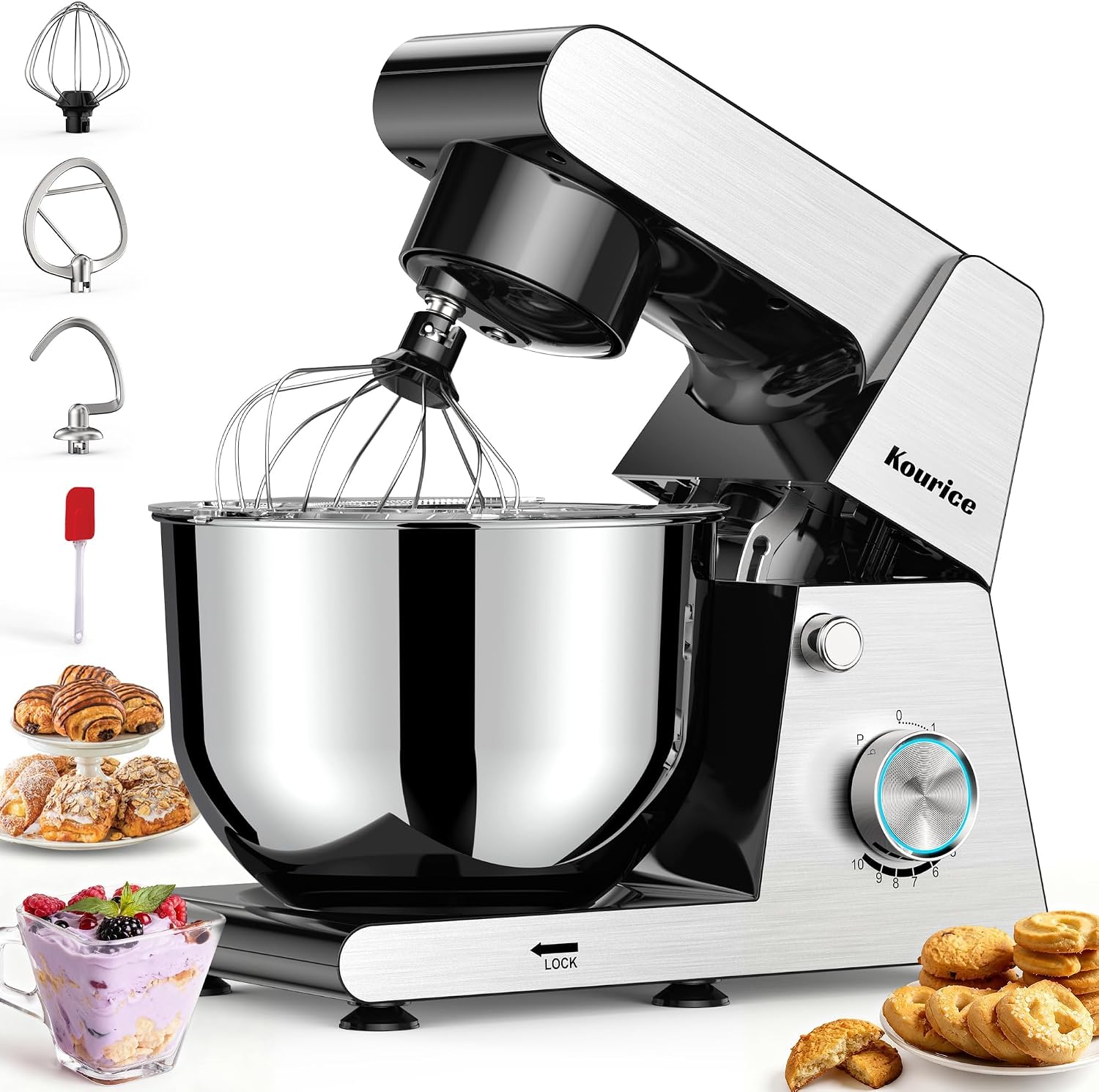
6.5QT Tilt-Head Stand Mixer, Heavy Duty Pro
Largest bowl here at 6.5 quarts, 10 speeds, stainless cladding, and a full tool set including a dough hook
Tilt head design means the hinge and lock carry the load, so heavy dough is where it gets tested
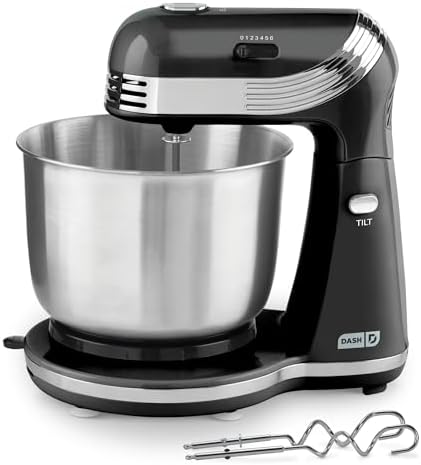
Dash Everyday Stand Mixer, 3-Quart
Compact, light, 6 speeds, stainless steel bowl, and the cheapest way onto this list
A 3-quart bowl will not hold a two-pound dough, and 6 speeds is a thin range for bread work
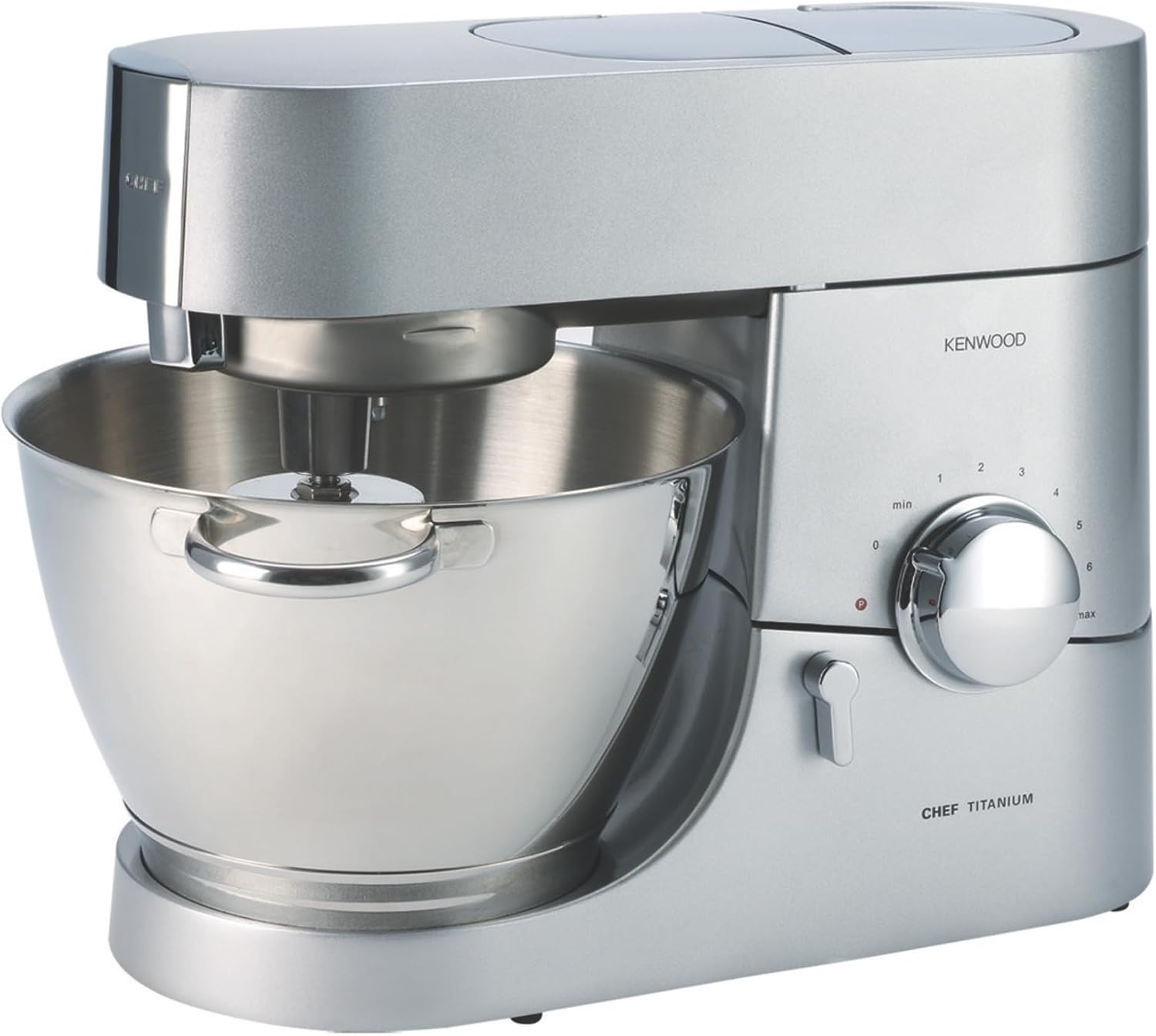
Kenwood Chef Titanium Kitchen Machine, 5 qt
800W motor with electronic variable speed control, dishwasher-safe work bowl, three mixing tools included
Highest price of the four, and 5 quarts is the smallest capacity among the serious machines here
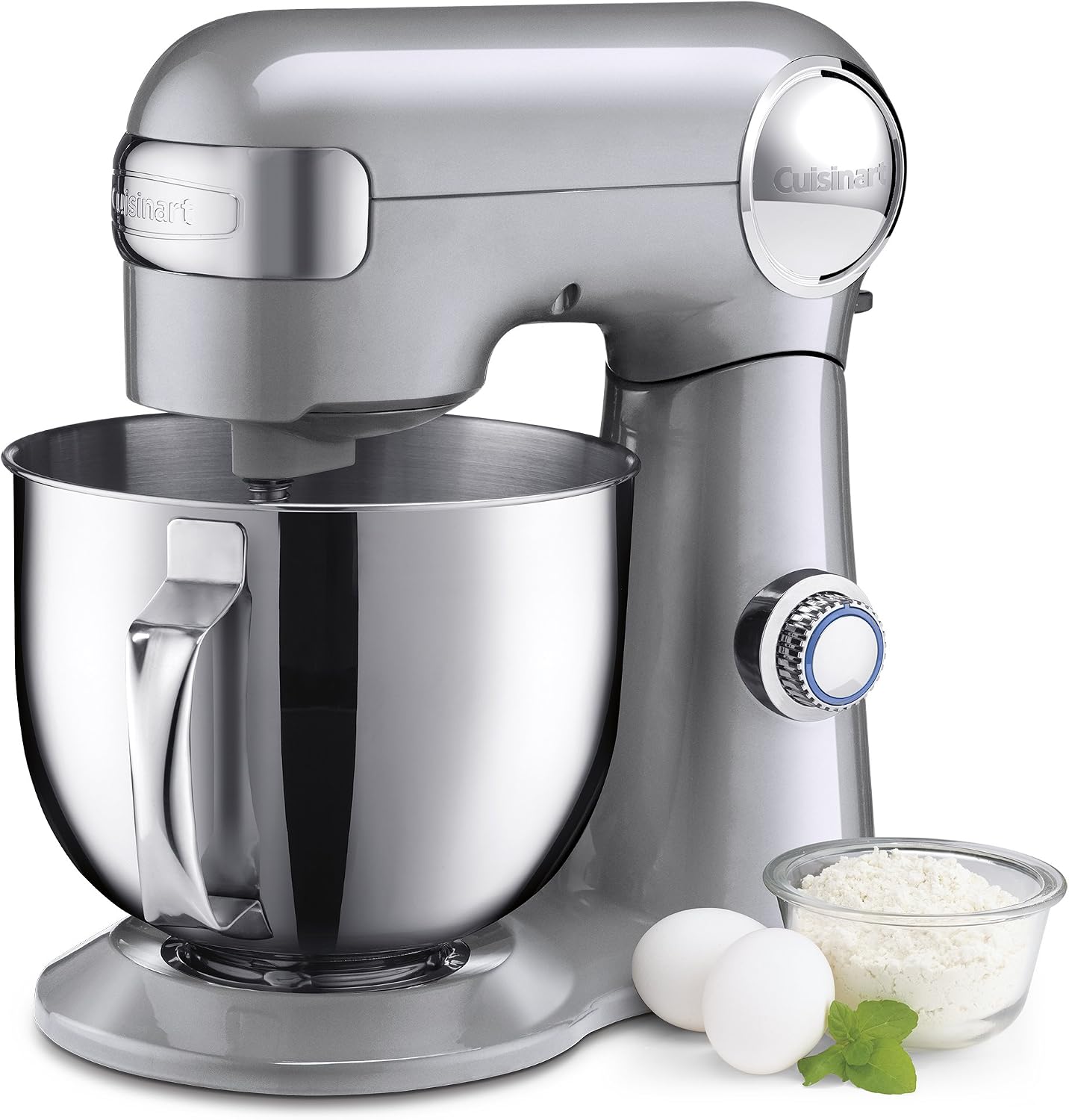
Cuisinart Stand Mixer, 12 Speeds, 5.5-Quart
12 speeds, 5.5-quart bowl, whisk, paddle, dough hook, and a splash guard with a pour spout
Not a lift bowl, so the frame does the work under stiff dough rather than the bowl carriage
Prices and availability were captured from Amazon Creators API and may change.
How I judge a mixer for bread dough
Wattage tells you power draw. Torque tells you whether the machine can actually knead. They are related but not the same, and marketing departments know that, which is why you see big numbers on the box and a stalled hook in your bowl. A mixer that whips cream effortlessly can still bog down the moment the dough turns from shaggy to smooth and starts resisting.
Here is the honest test I use, and the one I teach in class. Put two pounds of stiff dough in the bowl, run it on the lowest speed that keeps the dough moving, and check three things. First, does the hook keep climbing the dough rather than burying itself and spinning in place. Second, does the speed hold steady or does it sag when the dough stiffens. Third, after ten minutes, what does the motor smell like. If it smells hot, it is not powerful enough for what you bought it for, and no bowl size fixes that.
The other thing I refuse to accept is capacity marketing. A 5-quart mixer that stalls on two pounds of bread dough has a marketing problem, not a capacity problem. Quarts describe the bowl. They do not describe what the machine can push through a hook. Every recommendation below assumes you are buying for dough first and cake second, and if that is backwards for you, the ranking changes.
The four mixers, one at a time
6.5QT Tilt-Head Stand Mixer, Heavy Duty Pro
This is the biggest bowl in the group at 6.5 quarts, and the spec sheet reads like it was written for people who bake in volume. Ten speeds, stainless steel cladding, a stainless bowl, and all three core tools: dough hook, wire whisk, and flat beater. The 10-speed dial matters more than it sounds, because bread wants the slowest speed the machine will hold, and a wider range gives you somewhere to land between "barely turning" and "flinging flour across the room."
The 6.5-quart capacity is the practical advantage. A double batch of brioche or a big Saturday sourdough fits with room for the dough to climb, which is what a good hook needs. The trade-off is the tilt head itself. On a tilt design, the hinge and the head lock carry the force of the dough, and that is the part that wobbles when a stiff dough fights back. Check the lock engages firmly and the head does not rock when you press down on the front of it. If it rocks in the store, it will rock harder with dough in it.
Cuisinart Stand Mixer, 12 Speeds, 5.5-Quart
The Cuisinart is the machine I would hand to someone who bakes bread twice a week and cookies the rest of the time. Twelve speeds, a 5.5-quart bowl, and the full tool kit: chef's whisk, flat mixing paddle, dough hook, plus a splash guard with a pour spout. That splash guard is the underrated part. Adding water or flour while the mixer runs is a normal part of bread work, and a guard with a pour spout means you are not stopping the machine, lifting the head, and losing your rhythm every time the dough tightens.
The 5.5-quart bowl is the sweet spot for a household. One large loaf, two standard loaves, or a single batch of rolls fits comfortably without the dough disappearing under the hook. What you are giving up is the lift bowl design. A tilt head has to hold its position against the dough, and while a well-built one manages, it is not the fortress geometry of a bowl that rises on arms into the machine. For weekly bread at moderate hydration, that is a fair trade. For daily stiff dough, it is a compromise you will feel.
Kenwood Chef Titanium Kitchen Machine, 5 qt
On paper this is the most serious motor on the list: 800W with electronic variable speed control, a 5-quart dishwasher-safe work bowl, and three mixing tools included. Electronic speed control is the detail I care about most, because it means the machine holds its selected speed under load instead of sagging as the dough stiffens. That is the difference between a mixer that sounds labored at minute six and one that keeps the same rhythm from the first turn to the last.
The 5-quart capacity is the smallest among the three serious machines here, and that is the honest limitation. You get less headroom for a double batch, which means more batches, which means more time. What you get in return is a machine built as a kitchen system rather than a single-purpose appliance, with a dishwasher-safe bowl that makes cleanup after a sticky dough genuinely easier. If your bread baking is one or two loaves at a time and you want the motor to never be the bottleneck, this is the pick.
Dash Everyday Stand Mixer, 3-Quart
I want to be fair to this one, because it is not pretending to be a bread machine. It is compact, it is a tilt-head, it has 6 speeds and a stainless steel bowl, and it costs a fraction of everything else on this page. For frosting, whipped cream, cookie dough, pancake batter, and small cakes, it does the job and it takes up almost no counter space.
Where it falls apart is the thing this article is about. A 3-quart bowl does not hold a two-pound bread dough, and even if you scale down to a single small loaf, 6 speeds is a thin range for the low, slow, sustained turning that dough development needs. The motor in this class is a whipping motor. It will mix. It will not knead with authority, and the fifth-minute smell test is not one I would want to run on it. If you make bread more than occasionally, this is the wrong purchase, and I would rather tell you that than sell you a dough hook that comes with a mixer attached.
Tilt head versus lift bowl
Two of these machines are tilt heads and one is a kitchen machine with a fixed head and a bowl that lifts, and that difference shows up under load. On a lift bowl design, the bowl rises on arms into the mixing head and locks in place. The bowl is a fortress, the dough has nowhere to push, and the whole assembly absorbs the force. On a tilt head, the head pivots on a hinge and locks down, which means the hinge and lock are part of the load path. A good tilt head handles it. A mediocre one wobbles, and wobble is where gear teeth go to die.
That does not make tilt heads bad. They are easier to load, easier to scrape, and easier to store under a cabinet. It makes them a design with a limit, and the limit is stiff dough in volume. If your baking is mostly cakes, cookies, and the occasional soft dough, tilt head is fine and often nicer to live with. If you are making stiff sourdough twice a week, the lift design is worth the extra counter height and the extra money.
What the attachments tell you about the long term
Attachments decide the long-term relationship. A mixer with a pasta roller, a grinder, or a shredder is a kitchen system, not a gadget, and the machines with a real ecosystem stay on the counter for a decade instead of going into a cabinet in year two. That is why I look at what comes in the box as a signal rather than a bonus. The Cuisinart includes a whisk, a paddle, a dough hook, and a splash guard, which tells you the manufacturer expects you to actually use all four functions. The Kenwood includes three mixing tools and a dishwasher-safe bowl, which tells you cleanup was part of the design brief. The heavy duty 6.5-quart includes the full trio as well.
The Dash includes a dough hook because the category expects one, not because the motor was built around it. That is the distinction. When you are comparing machines, count the tools, but weigh them by whether the motor can drive them.
Capacity math: what 3 quarts really holds
Here is the number that matters and nobody prints on the box. A bowl needs roughly double the volume of the dough you put in it, because dough climbs the hook and needs room to be folded back on itself. A 3-quart bowl is realistically a one-pound dough bowl at best, and a tight one at that. A 5-quart bowl handles two pounds of dough without drama. A 5.5-quart bowl gives you a little more margin for a wetter, slacker dough. A 6.5-quart bowl is where double batches start to make sense.
So when you see a capacity claim, divide by two and ask whether the resulting dough weight is what you actually bake. Most home bakers need one to two pounds. Some need four. Almost nobody needs more, and almost everybody overbuys on quarts while underbuying on motor.
Which one I would buy
If bread is the reason you are shopping, the Kenwood Chef Titanium is the machine here with the motor and the electronic speed control to hold a stiff dough without sagging, and the dishwasher-safe bowl is a real quality-of-life win on a Tuesday night. If you want the bigger bowl and the wider speed range for double batches, the 6.5QT heavy duty tilt-head gives you more room for less money, with the caveat that you should check the head lock before you commit.
If you bake a bit of everything and want one machine that does not embarrass itself at any of it, the Cuisinart SM-50 with its 12 speeds and 5.5-quart bowl is the balanced choice. And if your baking is frosting, cookies, and small cakes, the Dash Everyday is a perfectly reasonable small mixer that I would just stop calling a bread machine.
The bottom line
Buy the motor, not the bowl. Buy the speed range, not the color. And before you trust any capacity number, ask what the machine does at minute five with two pounds of stiff dough in it. That is the only review that has ever mattered to me, and it is the one I would run on all four of these before I let any of them near my starter.
Check current Amazon price on each before you decide, since these listings move around, and read the tool list carefully. What is in the box is a decent preview of what the machine was designed to do.