Related: How to Tell If Your Mixer Can Actually Handle Bread Dough
I spent twenty years baking bread for a living, ten of them running a bakery, and I have kneaded enough dough by hand to know exactly when my wrists are done. That is how I ended up caring about stand mixers for bread dough more than almost any other piece of kitchen equipment. A mixer that whips cream beautifully and stalls on a stiff sourdough is not a bread machine. It is a cake mixer with ambitions, and you paid bread money for it.
Every fall I run the same gauntlet: the same sourdough, the same brioche, the same question at the fifth loaf. Does the motor still sound the same as it did on day one? Does it smell hot after ten minutes of kneading? Does the bowl still sit where it sat the first time? Four machines came through this year. Three of them mix dough. One of them mills the grain that goes into it, and it belongs in this conversation more than you would expect.
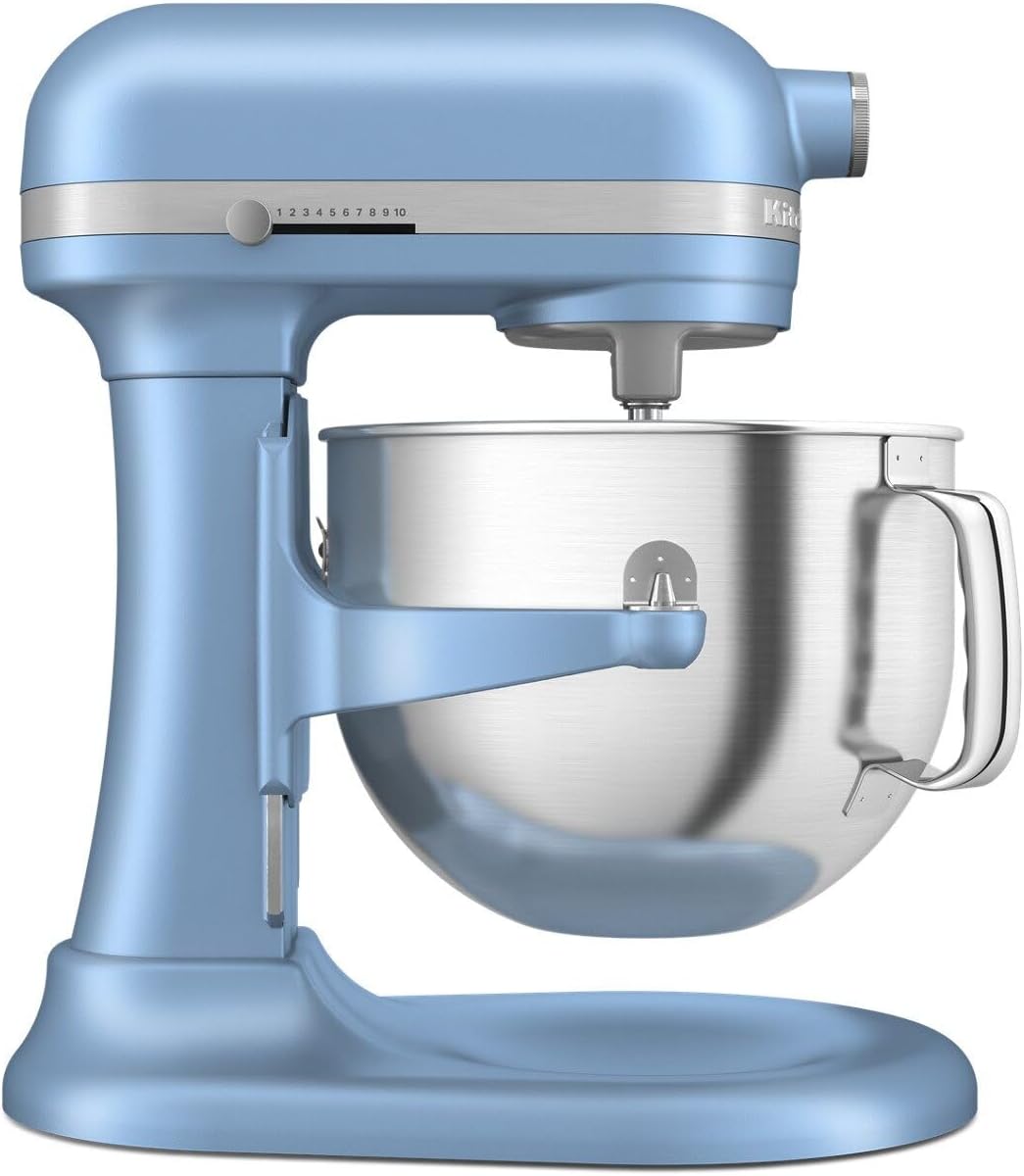
Best Overall: KitchenAid 7 Quart Bowl-Lift Stand Mixer with Accessories
If you bake bread every week, this is the machine I would put my own money on. The bowl-lift design is the whole reason. The bowl sits down into a cradle and locks, and the head never moves, so when a stiff dough tightens and starts fighting back, nothing rocks. I have watched tilt-head mixers walk across a counter under a two-pound loaf. This one plants itself.
Seven quarts sounds like marketing until you are mixing a double batch of dough for a bake sale or a holiday run of rolls. The capacity is real in a way that smaller "five quart" claims often are not, because a wide bowl lets the dough hook climb through the dough instead of burying itself in the middle of a stiff lump. That single difference is why one machine kneads and another just spins.
The accessories matter more than people admit. This is a platform, not a gadget. The same machine that kneads your sandwich loaf is the one you hang a pasta roller or a grinder on two years from now. My first KitchenAid survived a decade of weekly bread, and the attachment ecosystem is the reason I never traded it for something cheaper that looked stronger on paper.
The honest downsides: it is heavy, it is loud, and it takes up real counter space. It also costs more than everything else here combined. But if bread is the point of your kitchen, this is the machine that will still be sitting there in ten years.
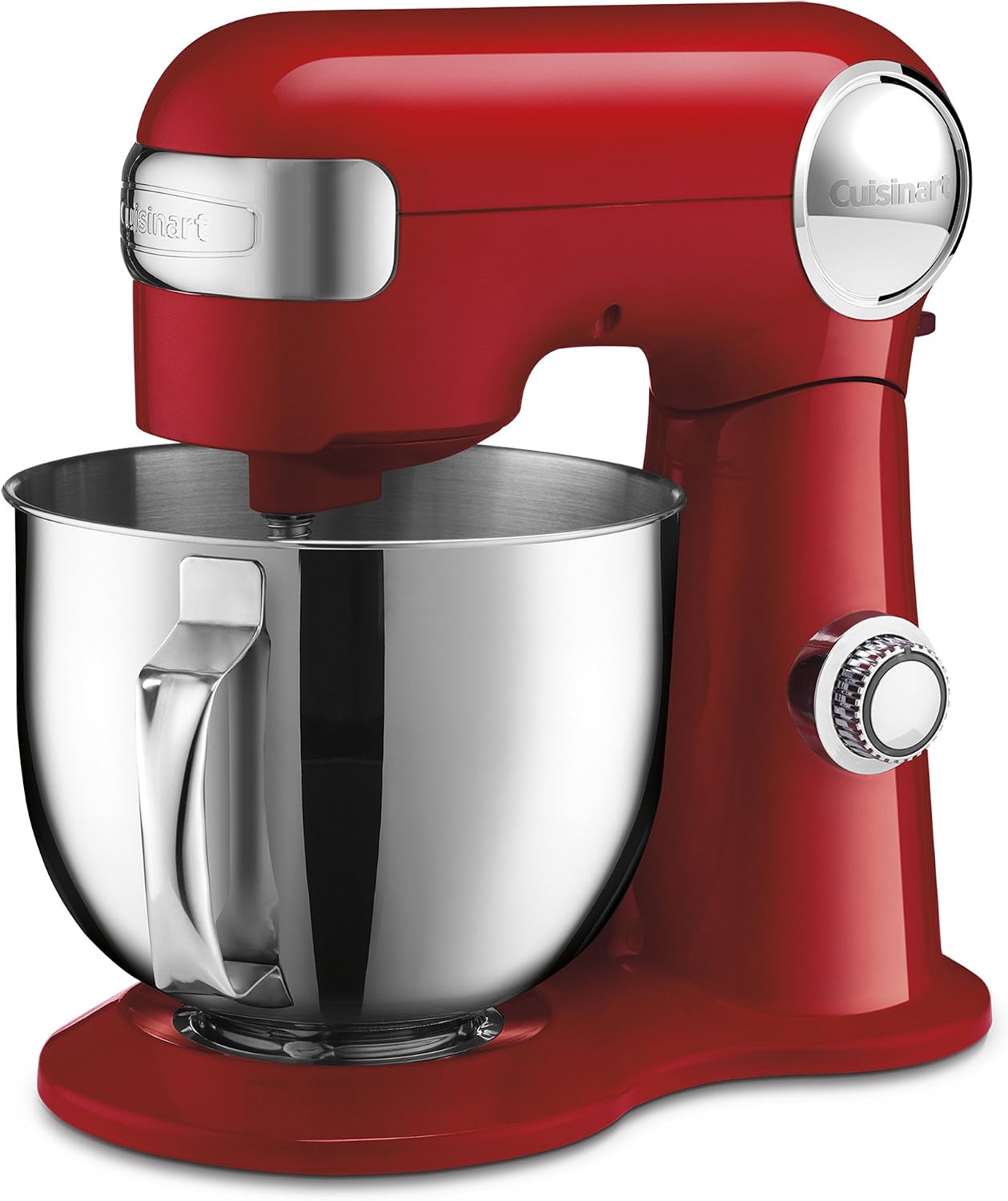
Best Value: Cuisinart Stand Mixer, 12 Speed, 5.5 Quart, Ruby Red
This is the pick I recommend to people who bake bread on the weekend and cookies on Tuesday. It mixes, it kneads, and it will not die in year two, which is more than I can say for most of the cheap machines I have tested. Twelve speeds give you enough control to cream butter slowly and still have a low gear that does not fling flour across the kitchen.
It comes with the basics you actually need: a chef's whisk, a mixing paddle, a dough hook, and a splash guard with a pour spout. That pour spout is a small thing that turns out to be a daily thing, because adding liquid to a running mixer is exactly the moment when most machines make a mess of your counter.
Here is the honest tension. This is a tilt-head design, and I have said for years that a lift bowl is sturdier for heavy dough. That is still true. Under a two-pound stiff dough, a tilt head is the design that wobbles, and this one is not immune. What it is, is competent. For a weekly loaf, a batch of rolls, and everything you make between bread days, it does the work without drama.
The attachments are basic, and that is the trade-off at this price. If you want a pasta roller or a grinder someday, this is not the platform that gets you there. Buy it because it kneads a real loaf and does not quit, not because it will grow with you.
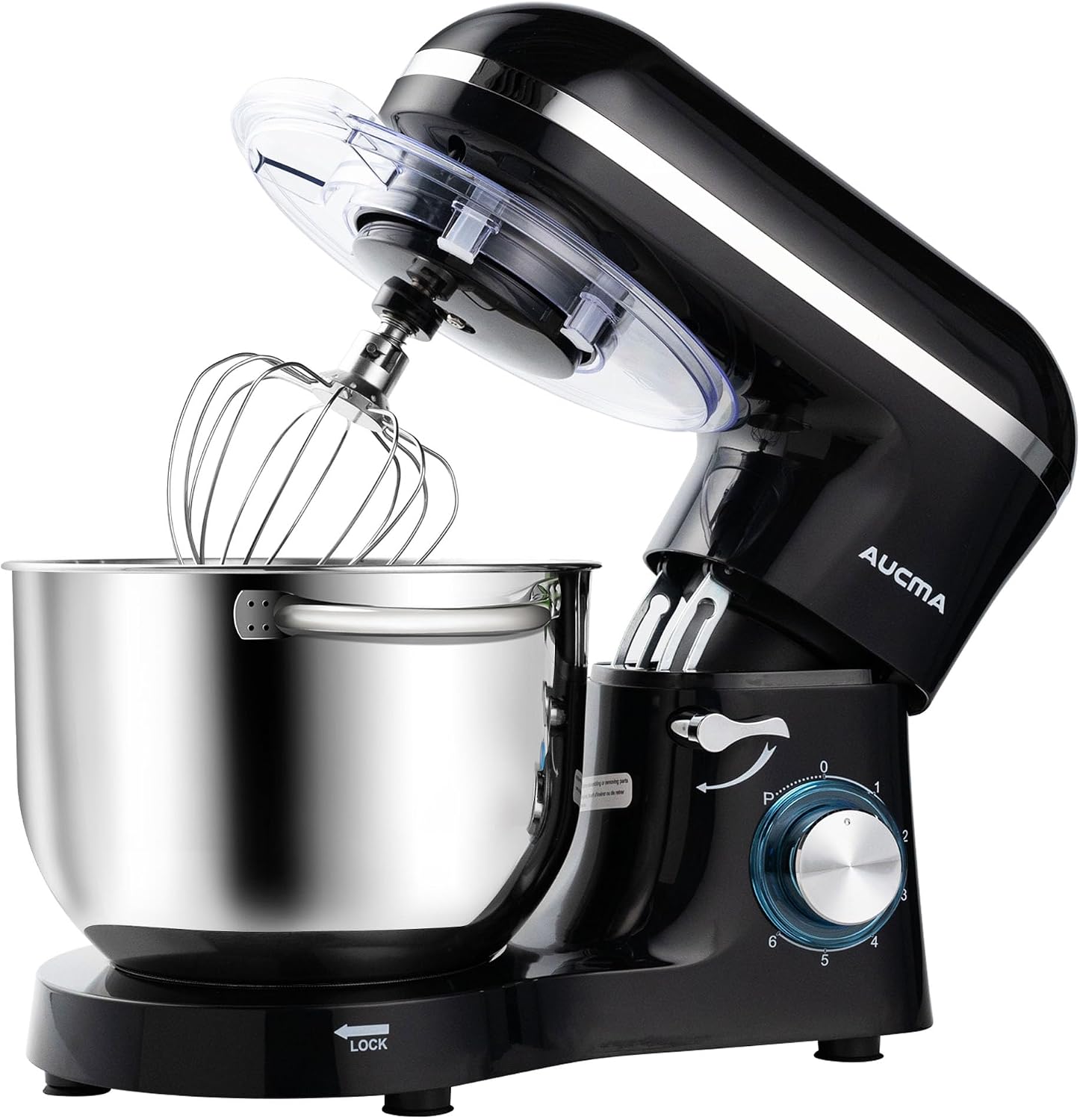
Best Budget: Aucma 6.5-QT Tilt-Head Stand Mixer
If your budget tops out well below the other two, this is the machine I would hand you. Six hundred and sixty watts is the number that matters here, and it is the reason this one makes the list at all. My rule has not changed: under 500 watts, you own a whipping machine, not a kneading machine. This clears that line.
You get a dough hook, a wire whip, and a beater, six speeds, and a 6.5-quart bowl in black. The tilt head makes it easy to get dough in and out, and for someone baking a loaf or two a week, that convenience is worth something real.
The catch is the same catch that follows every tilt-head budget machine. Six and a half quarts is a bowl measurement, not a dough measurement. A bowl that size will happily accept more dough than the head can hold steady, so mix one loaf, then two, and watch the head before you trust it with four. If the head starts rocking and the motor starts smelling warm after ten minutes, you have found your machine's actual limit, and it is smaller than the sticker suggests.
Buy this one for weekly sandwich bread, pizza dough, and cakes. Do not buy it expecting it to be the last mixer you ever own. It is the mixer that teaches you whether you are a bread person, at a price that does not punish you for finding out.
The Companion Tool: FERRODAY Malted Grain Mill
This one is not a mixer, and I am putting it here anyway, because the moment you own a mixer that can handle stiff dough you start wondering what happens with better flour. A two-roller stainless mill cracks grain between two steel rollers, which is the gentler method: it splits the kernel instead of smashing it, so the bran stays in bigger pieces and the flour stays cooler.
For a bread baker, that means you can buy whole grain, malt, or barley and mill it fresh, which is the difference between flour that tastes like something and flour that tastes like the inside of a paper bag. It is also the tool homebrewers use to crack malt, which is why the build is sturdy and simple: rollers, a hopper, a crank, no electronics to burn out.
The trade-off is time and hand work. You mill what you need, you clean it, you do it again next week. This is not a shortcut, it is a step deeper into the hobby. If you are the person who already weighs your flour and keeps a starter on the counter, you are the person this is for.
How I tested
Same routine every fall. Each machine got the same sourdough at the same hydration, the same enriched brioche, and the same fifth-loaf repeat, because the fifth loaf is where weak motors start telling the truth. I checked how the dough hook behaved in a stiff dough, whether it climbed through the mass or buried itself and stalled.
The ten-minute test is the one I trust most. Run a stiff dough for ten minutes and then lean in and smell the motor housing. If it smells hot, it is working past its design. That single check has eliminated more mixers from my kitchen than any spec sheet.
I also watched the head under load. A machine that rocks or walks across the counter is telling you its bowl and head are not braced for bread, no matter what the wattage says. And I paid attention to the boring stuff: how the bowl locks, how easy the dough hook is to clean, whether the splash guard actually stays put.
Analysis and test results
Wattage is a power draw number, not a torque number, and the gap between those two things is where most mixer marketing lives. Two machines with the same wattage can knead completely differently depending on gearing and how the motor delivers force at low speed. That is why I never recommend a mixer on watts alone.
Bowl capacity is the second lie. A bowl is measured empty, and dough is not empty. The real question is how much stiff dough the head can hold steady while the hook works, and that number is always smaller than the bowl. A wide, well-braced bowl beats a big, wobbly one every time.
Lift bowl versus tilt head is not a style preference. On a lift design the bowl is cradled and the head never moves, so the force goes into the dough. On a tilt head, the hinge is a pivot, and pivots move under load. Tilt heads win on convenience and price. Lift bowls win on bread.
Then there is the long game: attachments. A mixer with a real ecosystem is a kitchen system, not a gadget, and it is the difference between one purchase and three. That is the part of the value calculation people forget, and it is usually the part that decides whether you are still happy in year five.
The reference table
| Mixer | Design | Best for | Notes |
|---|---|---|---|
 Visit on Amazon → KitchenAid 7 Quart Bowl-Lift with Accessories |
Bowl-lift | Weekly bread and double batches | Heaviest, loudest, and the only one that grows with you |
 Visit on Amazon → Cuisinart 12 Speed, 5.5 Quart, Ruby Red |
Tilt head | Cakes, cookies, and a weekly loaf | Splash guard with pour spout; attachments are basic |
 Visit on Amazon → Aucma 6.5-QT 660W Tilt-Head |
Tilt head | Budget kitchens and occasional bread | Clears my 500-watt floor; check the head under a stiff dough |
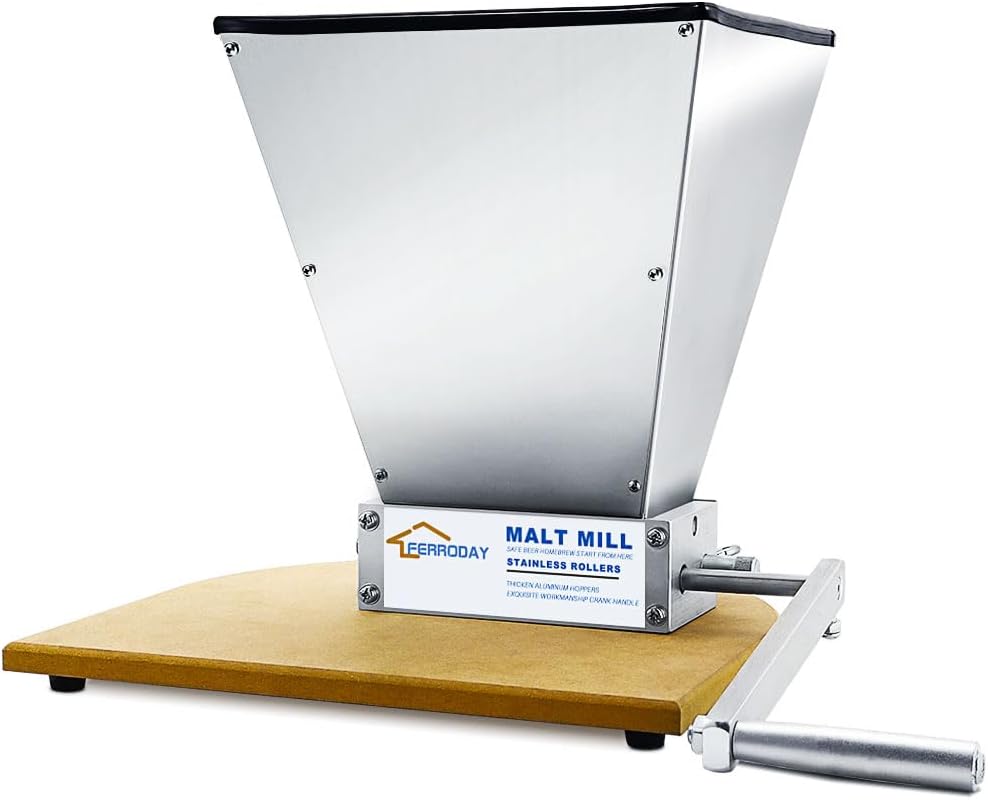 Visit on Amazon → FERRODAY Malted Grain Mill |
Two-roller mill | Milling your own grain | Not a mixer; pairs with any of the three above |
Should you buy the KitchenAid 7 Quart Bowl-Lift?
Yes, if bread is a habit rather than an experiment. The bowl-lift design is the sturdiest answer to stiff dough, the capacity handles a double batch, and the accessory ecosystem means this is the last mixer purchase you make for a long time. It is heavy, loud, and expensive, and I would still buy it first.
Should you buy the Cuisinart 12 Speed, 5.5 Quart?
Yes, if you want one mixer that does cakes and bread without apology. It kneads a real loaf, the splash guard with the pour spout is genuinely useful, and it will not quit in year two. Just accept that the tilt head wobbles under a heavy dough and the attachments stay basic.
Should you buy the Aucma 6.5-QT?
Yes, if budget is the deciding factor and bread is a weekly loaf rather than a double batch. It clears the wattage floor I will not go below, and it comes with the hook, whip, and beater you need. Test the head with a stiff dough early and you will know its limit before it teaches you the hard way.
Should you buy the FERRODAY Malted Grain Mill?
Yes, if you are already the person who weighs flour and keeps a starter alive. Fresh milled grain tastes like something, and the two-roller design treats the kernel gently. It is hand work, not a shortcut, but it turns the mixer you already own into a better bread machine.