Related: Stand Mixer Attachments Worth Buying After the Motor
I have kneaded dough by hand until my wrists gave out, and I have watched a cheap mixer start to smell like hot wiring ten minutes into a stiff dough. Those two experiences are why I own three stand mixers and why I test every new one the same way, with bread instead of cake batter. If you are shopping for a stand mixer for bread dough, the box tells you almost nothing useful. Bowl size is marketing, wattage is only a hint, and "powerful" is a word that means nothing until something stiff is in the bowl. What matters is whether the machine can drag a heavy dough around for ten minutes without stalling, wobbling, or smelling like a toaster.
I teach bread classes in Burlington, and every machine that comes through my kitchen bakes the same three things: a lean sourdough at 75 percent hydration, a butter heavy brioche, and a double batch of sandwich bread. Same flour, same starter, same room temperature, sixty days. Here is what four pieces of equipment taught me, three mixers and one accessory that quietly fixes a problem a lot of KitchenAid owners do not know they have.
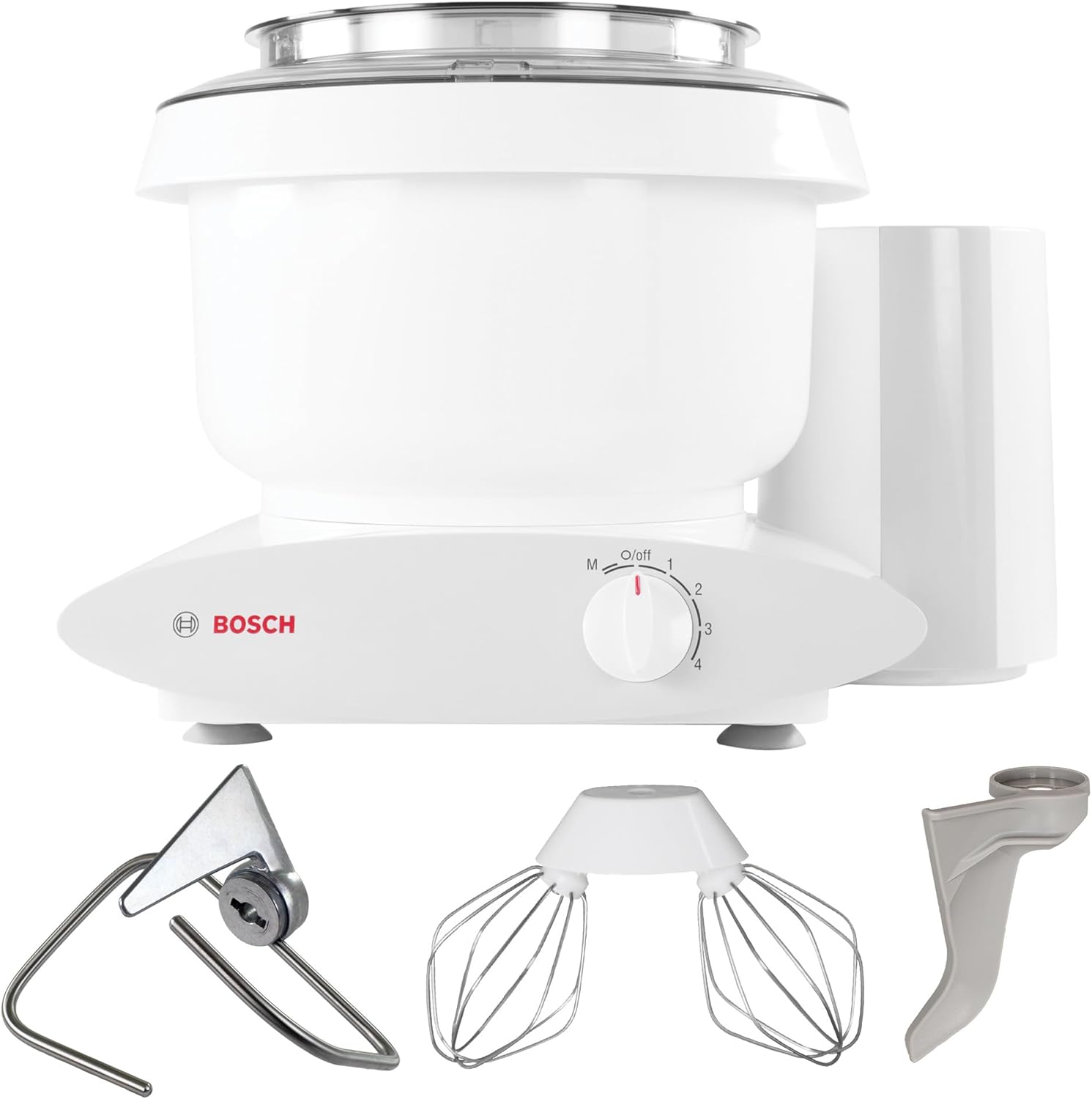
Best Overall for Bread Dough: Bosch Universal Plus Stand Mixer
This is the machine I point people toward first when their mixer is actually going to meet bread. Five hundred watts does not sound like a headline number, and this is exactly where wattage lies to you. Wattage tells you how much power the motor draws. Torque tells you whether the dough moves. The Bosch motor is geared to push dough, and the 6.5 quart bowl means a double batch of sandwich bread is a normal Tuesday instead of an event you plan around.
The bundle is the part I care about most. You get wire whips, a dough hook, and the NutriMill dough hook extender, which is the piece most buyers overlook. A hook that reaches deeper into a big batch keeps the mass of dough turning instead of letting it climb the shaft and spin in place, which is the moment a mixer stops kneading and starts pretending. With a full bowl, the extender is the difference between dough that develops and dough that just goes in circles.
The honest downsides: it is not a handsome machine, and if you mostly cream butter and whip egg whites, you are paying for bread capability you will not use. It is also not a lift bowl design in the classic sense. The bowl locks onto the base and stays put, which is the behavior I want from anything handling stiff dough.
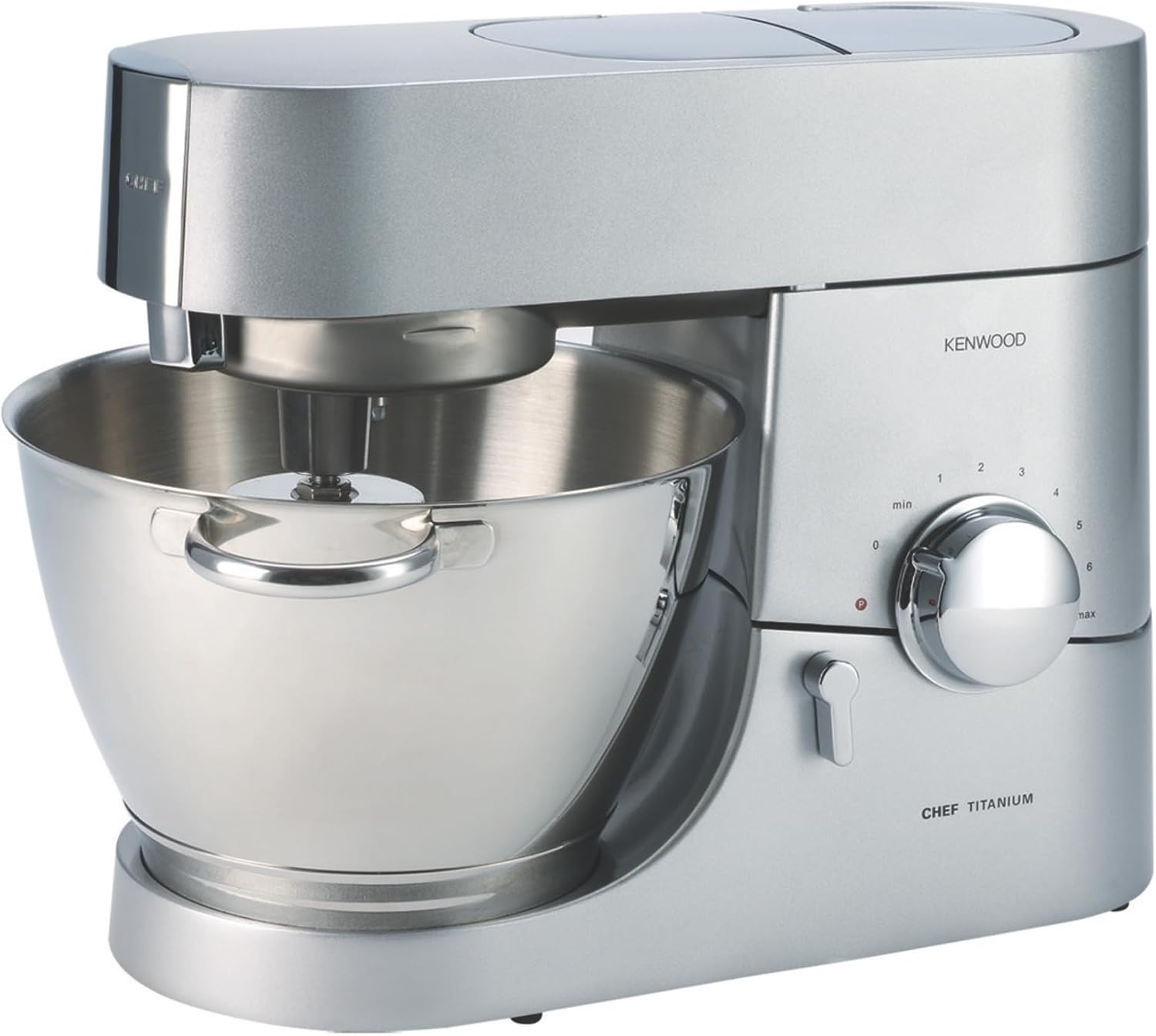
Best All-Around Motor: Kenwood Chef Titanium Kitchen Machine
The Kenwood Chef Titanium carries the strongest motor in this group, 800 watts with electronic variable speed control, and that variable speed control is not a spec sheet decoration. Bread lives at the slow end. You want a genuine slow, steady knead, not a "low" setting that actually runs fast enough to heat the dough. Electronic control holds that speed when the dough gets stiff, which is when a mechanical dial starts to wander.
The 5 quart stainless work bowl is the tradeoff. One two pound loaf is comfortable. A double batch is tight, and you will be kneading in two rounds instead of one. In exchange you get a machine that creams butter, whips cream, and kneads bread without asking you to choose a specialty. The work bowl and the three included mixing tools are dishwasher safe, which sounds minor until you have scraped butter out of a hand wash only bowl for the hundredth time.
If your baking is split between bread and everything else, this is the one I would put on the counter and leave there. If bread is ninety percent of what you do and you want the biggest batch possible, the Bosch wins.
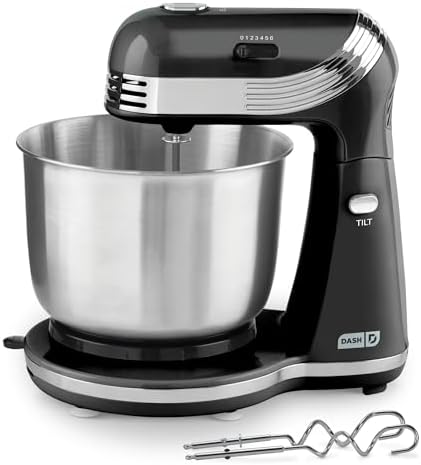
Best for Small Kitchens: Dash Everyday Stand Mixer
I am going to be straight with you, because that is the whole point of this page. The Dash Everyday is a cake mixer with ambitions. Three quarts and a six speed tilt head will handle cookies, quick breads, whipped cream, and a single loaf of sandwich bread, and it will do it in a footprint small enough for a kitchen where counter space is measured in inches. The stainless steel bowl is a nicer touch than the price point suggests.
What it will not do is knead a stiff dough with authority. Tilt head designs wobble under load, and a three quart bowl fills up fast once you add flour. If you are buying this hoping it will become your bread machine, it will not, and you will know it the first time the head rocks while the dough pushes back. Buy it for cake duty, small batches, and the red finish that looks good on a counter. That is a real job and it does it well.
Best Cheap Upgrade: Flex Edge Beater for KitchenAid
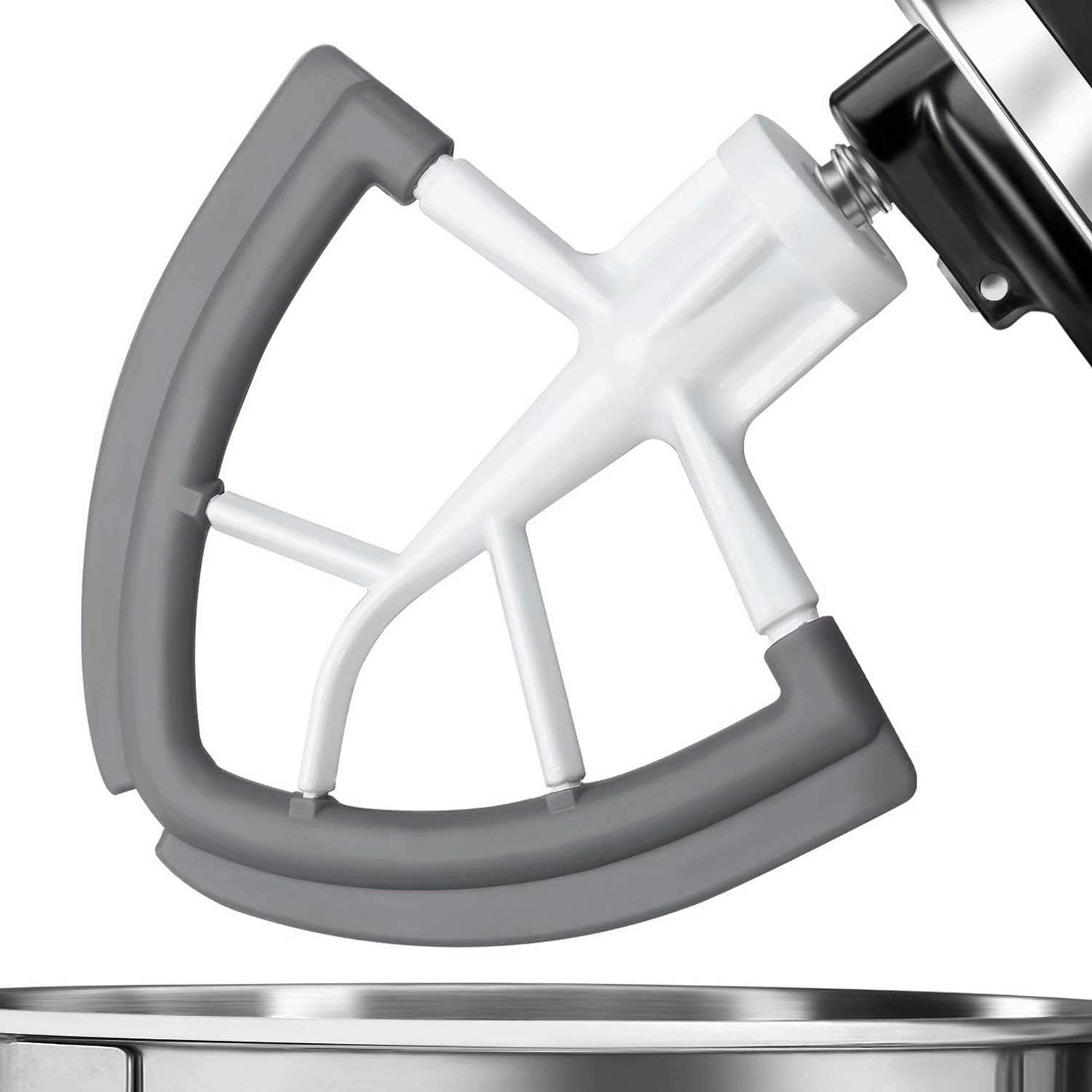
I make fun of attachment bundles, and I own attachments I have never used, so take this recommendation with the appropriate grain of salt. This one earns its place. The Flex Edge beater is a flat beater with silicone edges that scrape the bowl as it turns, which means you stop stopping the machine to push butter and sugar down the sides with a spatula. If you own a KitchenAid tilt head mixer with a 4.5 to 5 quart bowl, this replaces your flat beater and quietly makes creaming faster and more even.
Two limits worth knowing before you buy. It fits those tilt head bowls in that size range, not lift bowl machines and not the larger bowls. And it is a beater, so it creams, mixes, and blends. It does not knead. For bread you still want a dough hook and a motor with real torque behind it.
How I tested
Every machine baked the same three things over sixty days. A lean sourdough at 75 percent hydration, a butter heavy brioche, and a double batch of sandwich bread. Same flour, same starter, same kitchen, same room temperature, so the only variable left was the machine.
I watched four things every single bake. First, does the dough actually move, or does it climb the hook and spin? Second, does the machine walk across the counter or rock under load, which is the tell for a tilt head that is out of its depth. Third, how does the bowl handle a full batch, because a bowl that is fine at half capacity can be useless at three quarters. Fourth, and this is the one that matters most, what does the motor smell like after ten minutes of dough.
That smell test is not scientific, but it is honest. If a motor smells hot after ten minutes of stiff dough, it is not powerful enough for what you bought it for. No amount of bowl size marketing fixes that. I ran the fifth loaf test on everything, because a mixer that survives one batch and quits on the fifth is a mixer you will be replacing, and the whole point of this is not replacing it.
Analysis and test results
The motor is the mixer. Everything else is packaging. Wattage is a starting point and nothing more, because the number on the box tells you power draw, not whether the machine can knead. The machine that impressed me most on dough was not the one with the biggest number. It was the one that kept the dough moving at a slow, steady speed for the full knead without the motor getting warm and without the bowl shifting.
Bowl capacity is a lie, and this is my oldest complaint. A mixer advertised at five quarts that stalls on two pounds of bread dough has a marketing problem, not a capacity problem. What matters is the usable working capacity with a stiff dough in it, and that number is always smaller than the one on the box. When you are comparing machines, ask what the bowl does at three quarters full with bread dough, not what it holds when it is empty.
Lift bowl beats tilt head for bread people. I will keep saying it. A bowl that raises on arms into the mixer is a fortress. A tilt head is a wobbler, and under a heavy dough you can watch the head rock while the motor works. Tilt heads are convenient for adding ingredients and they are fine for cakes, but if bread is the plan, the geometry matters as much as the wattage.
Dough hooks are geometry, not accessories. A good hook climbs the dough instead of burying itself, and an extender that reaches deeper into a big batch keeps the whole mass turning. That is why the Bosch bundle matters more than it looks like it should. Attachments decide the long term relationship too, but only the ones you actually use. A pasta roller turns a mixer into a kitchen system. A slicer you have used twice is a drawer ornament.
Stand mixer reference table
This is the table I keep when people ask me what to buy. Strengths and bowl sizes come straight from what each machine is built to do. The honest note column is where I put the thing that will actually annoy you.
| Mixer | Motor and speed | Bowl | Best for | The honest note |
|---|---|---|---|---|
 Visit on Amazon → Visit on Amazon →Bosch Universal Plus |
500 watts | 6.5 qt | Stiff dough and double batches | Not pretty, and happiest with bread |
 Visit on Amazon → Visit on Amazon →Kenwood Chef Titanium |
800 watts, electronic variable speed | 5 qt | One machine for bread, cakes, and cream | Double batches get tight |
 Visit on Amazon → Visit on Amazon →Dash Everyday |
6 speed tilt head | 3 qt | Small kitchens and cake duty | Not a bread machine, and the head rocks under load |
 Visit on Amazon → Visit on Amazon →Flex Edge Beater |
Attachment | Fits 4.5 to 5 qt tilt head bowls | Creaming and scraping | Beater only, no kneading |
Should you buy the Bosch Universal Plus?
Yes, if bread is the reason you are buying a mixer. The bowl is big enough for a double batch, the motor moves stiff dough instead of stalling on it, and the included dough hook extender keeps a heavy batch from climbing the shaft and spinning in place. It is not a handsome machine and it is not built for showing off. It is built to knead, and after sixty days of sourdough and brioche I would trust it with a decade of weekly baking.
Should you buy the Kenwood Chef Titanium?
Yes, if you want one machine that does everything well. The 800 watt motor is the strongest here, the electronic variable speed control gives you a genuinely slow knead instead of a fast "low," and the dishwasher safe bowl and tools save you real time. The 5 quart bowl is the compromise. One two pound loaf is comfortable, a double batch is tight, and that is the only reason this is not my first pick for a dedicated bread baker.
Should you buy the Dash Everyday?
Buy it for cake duty and small kitchens, not for bread. Three quarts and a tilt head will handle cookies, quick breads, whipped cream, and a single loaf, and it will do it without eating your counter. A stiff dough will find the limit of that motor quickly, and you will feel it in the head wobble before you smell it in the motor. If your baking is mostly not bread, that trade is a good one.
Should you buy the Flex Edge Beater?
Yes, if you own a KitchenAid tilt head mixer with a 4.5 to 5 quart bowl. The silicone edges scrape the bowl while the beater turns, which means you stop stopping the machine to push butter down the sides. It fits those tilt head bowls only, and it is a beater, so it creams and mixes rather than kneads. It is the smallest purchase in this article and the one you will notice every single time you bake.