Related: How to Tell When Bread Dough Is Kneaded Enough
I ran a bakery for ten years before I moved into teaching bread classes, and I spent the years before that kneading dough by hand until my wrists gave out. Somewhere in there I figured out that a stand mixer for bread dough is not a convenience appliance. It is the difference between baking twice a week and baking twice a year.
I have owned three mixers long enough to know what dies inside them: a KitchenAid that survived a decade of weekly bread, a heavy machine that eats double batches, and a cheap one I bought purely to see whether it deserved the benefit of the doubt. It did not. So when I look at a new mixer, I am not reading the box. I am asking whether the motor can turn a stiff dough without stalling, whether the head stays put under load, and what the machine smells like after ten minutes of kneading.
Below are four mixers that cover the whole range of what a home baker actually needs, from a compact three-quart machine for quick breads to a commercial countertop unit built for volume. I will tell you which one fits which kitchen, and which one will disappoint you if you try to make it something it is not.
What actually matters when the dough gets stiff
Wattage is the number on the box. Torque is the number that matters. A motor can draw plenty of power and still fail to twist a two-pound loaf of sourdough around a hook, because kneading is about sustained force at low speed, not peak draw. If bread is the plan, treat 500 watts as the floor and read the rest of the spec sheet with suspicion.
Bowl capacity is a marketing number until you fill it. A five-quart bowl does not hold five quarts of bread dough, because dough climbs, and because the motor has to move all of it. Two pounds of dough is a comfortable single batch in a five-quart machine. Push a five-quart mixer toward its rated volume with a stiff dough and you will hear the motor change pitch, which is the sound of a machine asking for mercy.
Lift bowl versus tilt head is not a style preference. A bowl that rises on arms into the mixer is a locked, stable geometry. A tilting head is convenient for scraping and adding ingredients, and it is fine for cakes, but under a heavy dough it moves, and a head that moves is a head that is not transferring all of its power into the dough.
Attachments decide the long-term relationship. A mixer with a pasta roller and a grinder is a kitchen system. A mixer with a proprietary hub and accessories nobody stocks is a gadget with a motor.
And the smell test is free. Knead a stiff dough for ten minutes. If the motor smells hot, it is not powerful enough for what you bought it for, and no amount of warranty paperwork will change that.
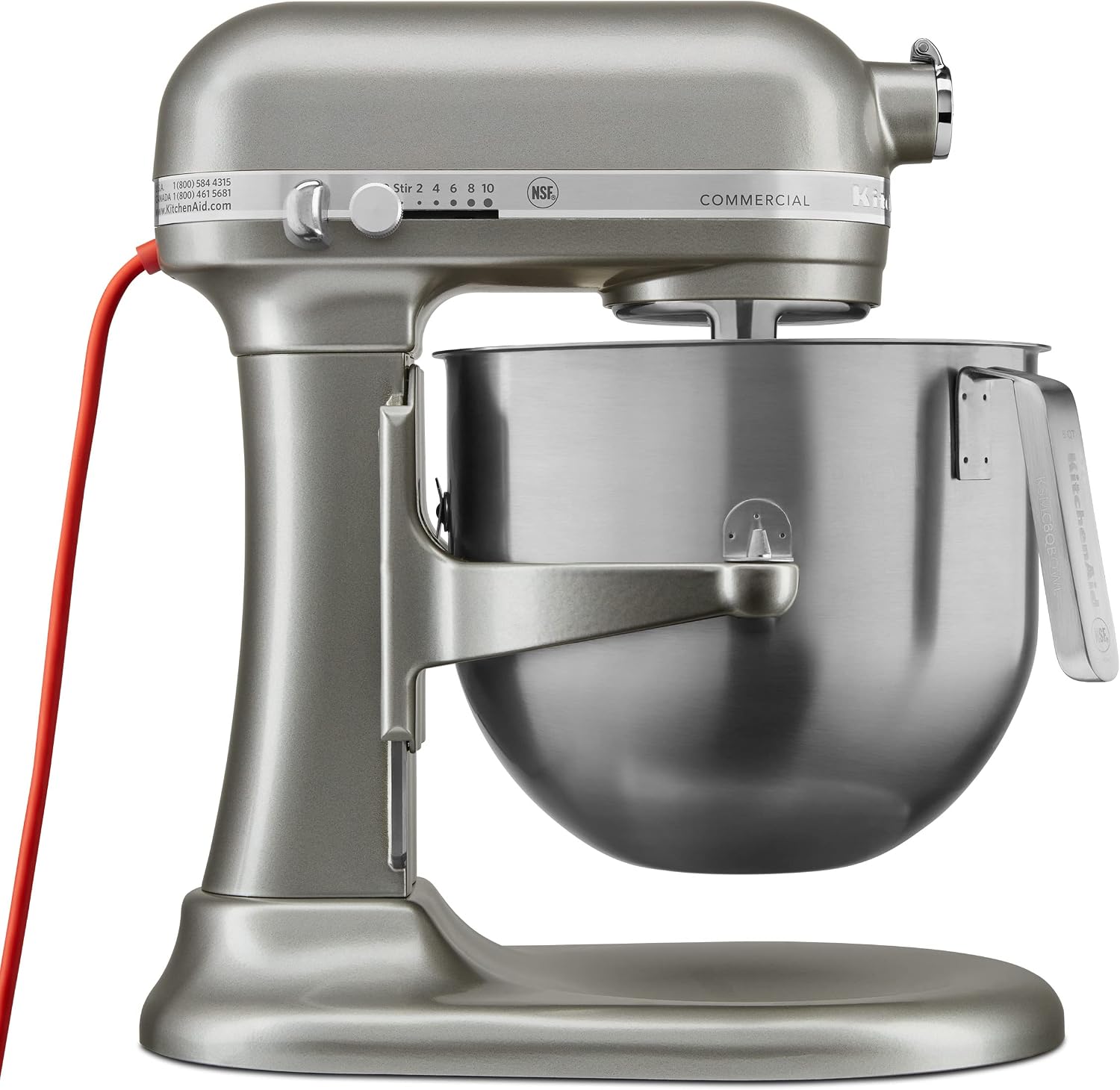
KitchenAid 8-Quart Commercial Countertop Mixer
This is the machine for the baker who has outgrown a home mixer and knows it. Ten speeds, gear-driven, an eight-quart bowl, and a commercial countertop build meant to run through duty cycle after duty cycle without complaint. The gear-driven transmission is the part that matters for bread: there is no belt to slip when the dough gets stiff, and a slipping belt is how most mixers announce that they have given up.
Eight quarts is a lot of bowl. That is a feature if you bake four loaves at a time or sell at a farmers market. It is a liability if you bake one loaf on Sunday, because you are washing a very large bowl to make a very small batch, and you are surrendering a serious amount of counter. Measure your cabinet clearance before you commit, because this machine is tall.
What you are paying for is endurance and capacity, not convenience. If your weekly bake is a single boule and a batch of cookies, this is more mixer than the job requires and the money is better spent elsewhere. If you are running a cottage bakery out of your kitchen, this is where the search ends.
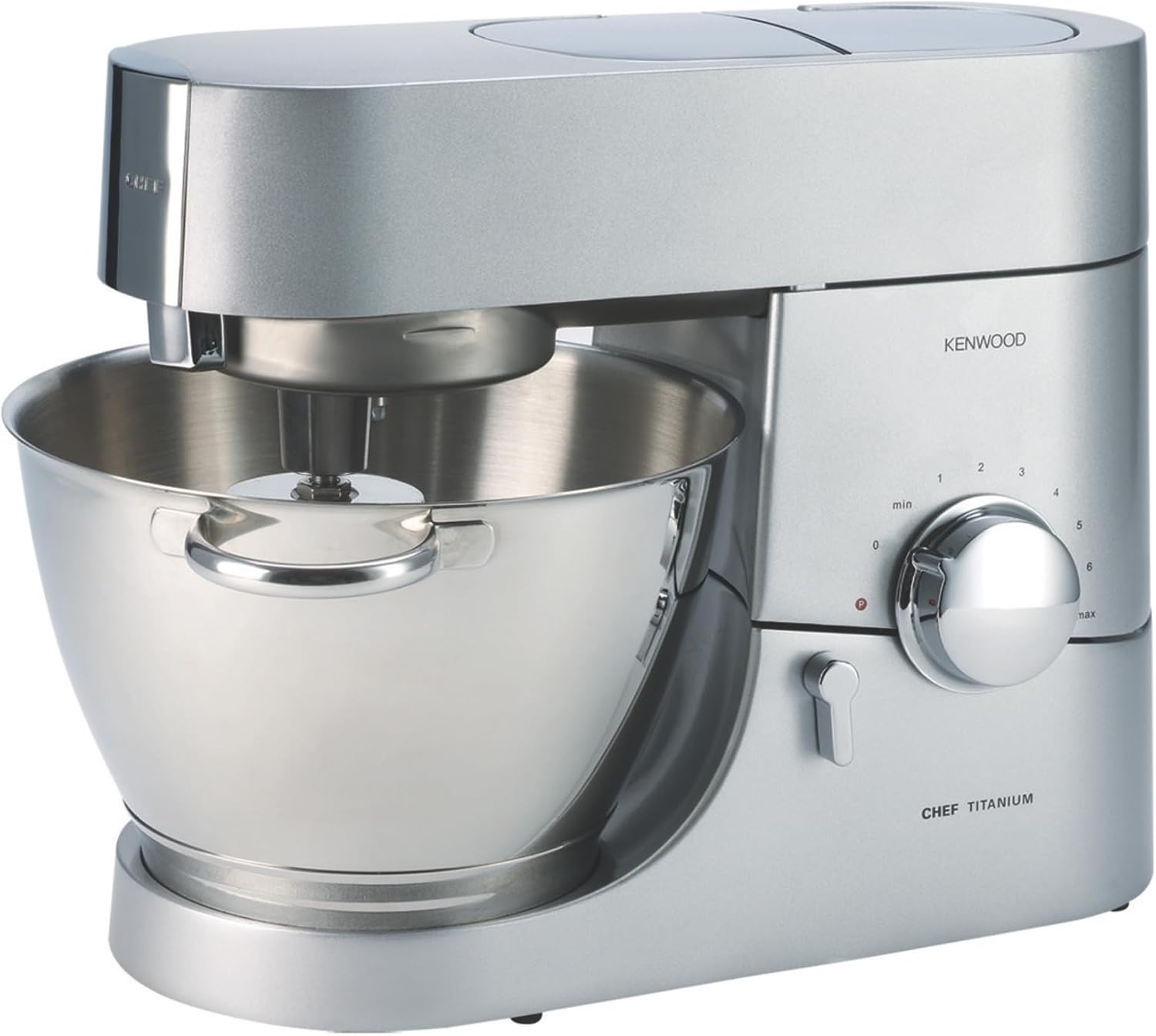
Kenwood Chef Titanium Kitchen Machine
The Kenwood is the machine I would hand to a baker who wants one mixer to do everything and does not want to think about it again. An 800-watt motor with electronic variable speed control, a five-quart stainless steel work bowl, and three mixing tools included in the box, all dishwasher safe. That tool set matters more than it sounds. Buying a mixer and then discovering the dough hook is sold separately is one of the more annoying experiences in home baking, and Kenwood skips it.
The 800-watt figure sits comfortably above the line where a mixer stops being a whipping machine and starts being a kneading machine. Electronic variable speed control means you can creep up on a stiff dough instead of choosing between a slow crawl and a violent spin, and that fine control is what keeps a wet, high-hydration dough from slapping the sides of the bowl while you add flour.
Where it asks something of you is in the ecosystem. This is not the machine with the deepest accessory catalog, and if your long-term plan involves a meat grinder and a pasta roller, check what is actually available before you buy. As a mixer, though, it is serious equipment, and the dishwasher-safe bowl is the kind of small mercy you appreciate on the fourth load of the day.
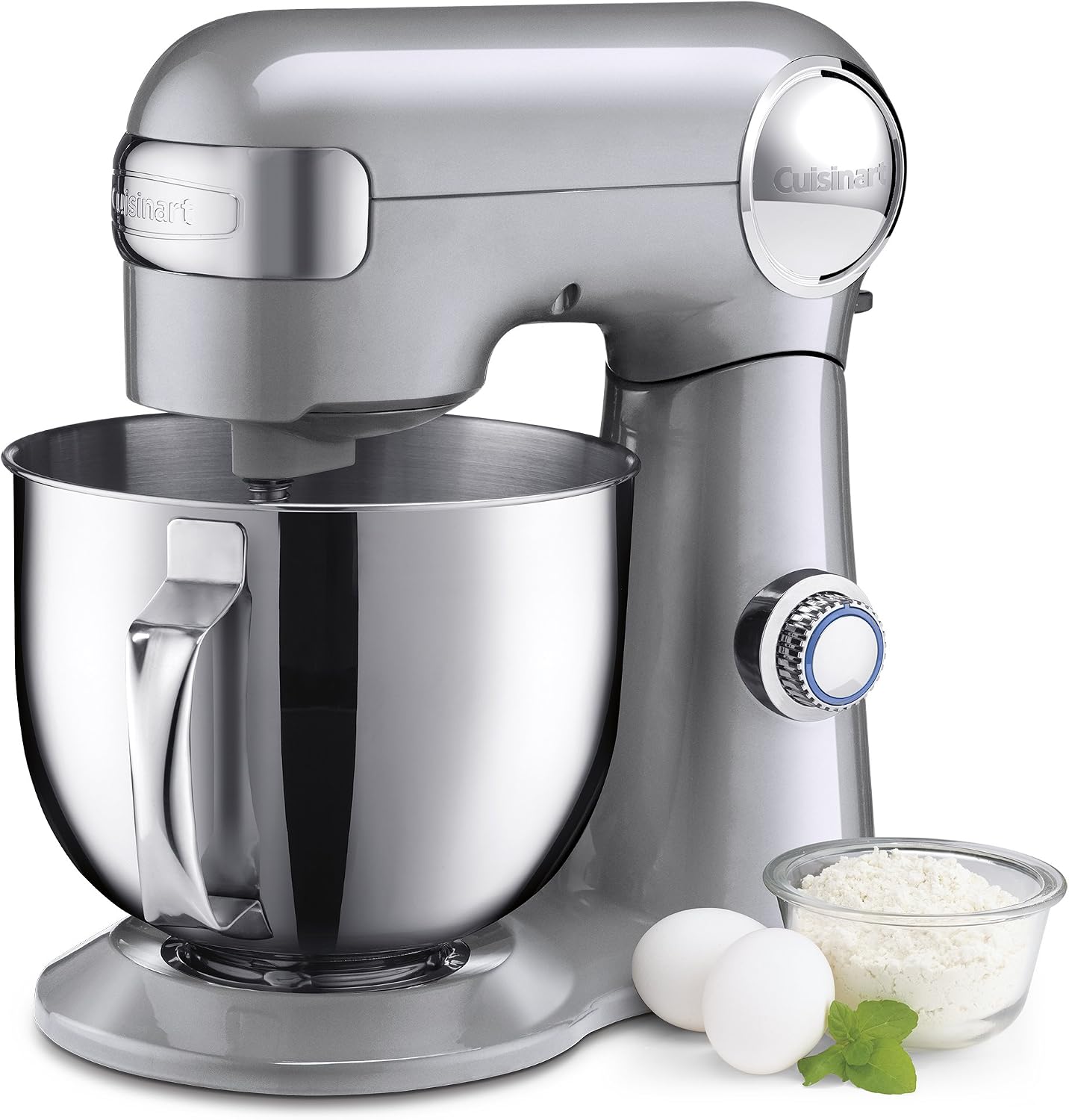
Cuisinart 5.5-Quart Stand Mixer
Twelve speeds, a 5.5-quart mixing bowl, a chef's whisk, a flat mixing paddle, a dough hook, and a splash guard with a pour spout. That last item is the one I would point at first, because adding flour to a wet dough is exactly when a mixer makes its biggest mess, and a guard with a spout lets you pour and mix at the same time instead of stopping, scraping, and starting over.
The 5.5-quart bowl is the practical sweet spot for most home bakers. It is big enough for a two-loaf batch of sandwich bread or a double batch of cookies, and small enough that a single cake batter does not get lost in the bottom. Twelve speeds give you the range to fold, cream, whip, and knead without feeling like you are fighting the machine for control.
What you should not expect is commercial endurance. This is a home mixer built for home volumes, and it will do everything a home baker asks of it as long as the batches stay reasonable. Treat it as the reliable daily driver rather than the machine you push to rated capacity every weekend, and it will last.
Dash Everyday Stand Mixer
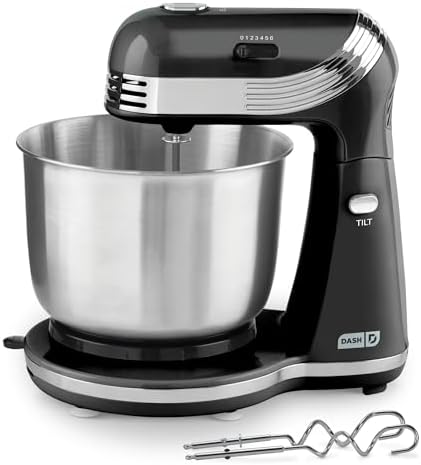
The Dash is a three-quart tilt-head mixer with six speeds and a stainless steel bowl, and it is the machine I would buy for someone whose baking life is pancakes, quick breads, muffin batter, whipped cream, and the occasional small batch of soft dough. At that job it is genuinely good. It is compact, light enough to pull out of a cabinet when you need it, and it does not demand counter space you do not have.
It is also the machine I would tell you not to buy if bread is the point. A three-quart bowl holds a small batch, and the tilt-head design under a stiff dough is exactly the geometry that wobbles. Sourdough at 75 percent hydration, a two-pound batch of bagel dough, a brioche enriched with a lot of butter: none of that is what this mixer is for. Buy it for cakes and batters and you will be happy with it for years. Buy it for weekly bread and you will be shopping again in twelve months.
The four mixers side by side
Here is the same information in one place. Read the bowl column as bowl size, not dough size, and remember that a machine's rated capacity and its comfortable batch size are two different numbers.
| Mixer | Bowl | Speed and drive | In the box | Best for |
|---|---|---|---|---|
 Visit on Amazon → Visit on Amazon →KitchenAid 8-Quart Commercial |
8 quarts | 10 speeds, gear-driven | See the listing | Big batches and cottage bakeries |
 Visit on Amazon → Visit on Amazon →Kenwood Chef Titanium |
5 qt | Electronic variable speed, 800W motor | Work bowl, three mixing tools | Kneading and long sessions |
 Visit on Amazon → Visit on Amazon →Cuisinart 5.5-Quart |
5.5-quart mixing bowl | 12 speeds | Whisk, flat paddle, dough hook, splash guard | Everyday home baking |
 Visit on Amazon → Visit on Amazon →Dash Everyday |
3-quart stainless steel bowl | 6 speeds, tilt-head | Bowl included | Cakes, batters, small batches |
Matching the machine to your bake
The mistake almost everyone makes is buying for the bake they imagine rather than the bake they actually do. Count the loaves you made last month. If the answer is one or two, the Cuisinart handles that without drama and leaves you money for flour. If the answer is eight, you are already past what a home mixer wants to do, and the KitchenAid is the honest answer.
The Kenwood sits in the middle and is the one I would recommend to the widest group of people. Eight hundred watts and variable speed control cover bread, and the included tool set means there is nothing left to buy. It is the machine that lets you stop thinking about the mixer and start thinking about the dough.
The Dash is the one to be honest with yourself about. It is a good small mixer. It is not a bread mixer, and no technique will make it one. If you want a machine for cakes, cookies, and pancakes, buy it and enjoy it.
One more thing that has nothing to do with specs: the fifth loaf tells you the truth. A mixer that feels fine on batch one and smells like hot wiring on batch five was never powerful enough. That is why I do not trust a machine until it has been pushed past what the listing suggests it can do.
Should you buy the KitchenAid 8-Quart Commercial?
Yes, if you bake in volume. The gear-driven transmission is the single most important feature on this list for bread, because it removes the belt that slips when dough gets stiff, and the eight-quart bowl means four loaves at a time instead of two. It is heavy, it is tall, and it will eat a corner of your counter permanently.
But if you bake one loaf a week, you are buying capacity you will never use and washing a bowl that is too big for the job. Buy it because you need the volume, not because it is the biggest.
Should you buy the Kenwood Chef Titanium?
Yes, for most bakers. Eight hundred watts, electronic variable speed control, a dishwasher-safe five-quart work bowl, and three mixing tools in the box. It kneads, it whips, and it does not ask you to buy anything else to get started.
The only real caveat is the accessory ecosystem. Check what is available for the attachments you actually want before you buy. If the answer is nothing you need, this is the best all-rounder of the four.
Should you buy the Cuisinart 5.5-Quart?
Yes, if you want a dependable home mixer and bread is a sometimes thing. Twelve speeds, a 5.5-quart bowl, and a full tool set including a splash guard with a pour spout make it the easiest of these to live with day to day.
Just respect the batch size. Keep your dough to about two pounds, let the machine do the work at a lower speed, and it will handle your weekly sandwich loaf without complaint.
Should you buy the Dash Everyday?
Yes, if you want a compact mixer for cakes, batters, and whipped cream and you are not planning to make bread. It is small, it is easy to store, and it does its job well.
No, if stiff dough is on your list. A three-quart tilt-head machine is the wrong tool for that, and buying it hoping otherwise is how people end up frustrated with a perfectly decent appliance.