
I have kneaded dough by hand until my wrists gave out, and I spent a decade running a bakery before I moved to teaching bread classes in Burlington. That history is why I compare stand mixers for bread dough the way a mechanic looks at an engine: watts first, bowl geometry second, paint color never.
Here is the short version. The Kenwood Chef Titanium is the strongest bread machine in this group, because 800 watts behind a 5-quart work bowl is the most honest power-to-capacity combination on the list. The Cuisinart is the better all-rounder for a kitchen that bakes more cookies than loaves. The ZACME buys you the biggest bowl and a die-cast body. The Dash is a small-batch machine that will make you happy right up until you ask it to knead a two-pound loaf.
None of that is brand loyalty talking. It is about what happens at minute eight of a stiff dough, when a motor either keeps turning or starts to smell hot.
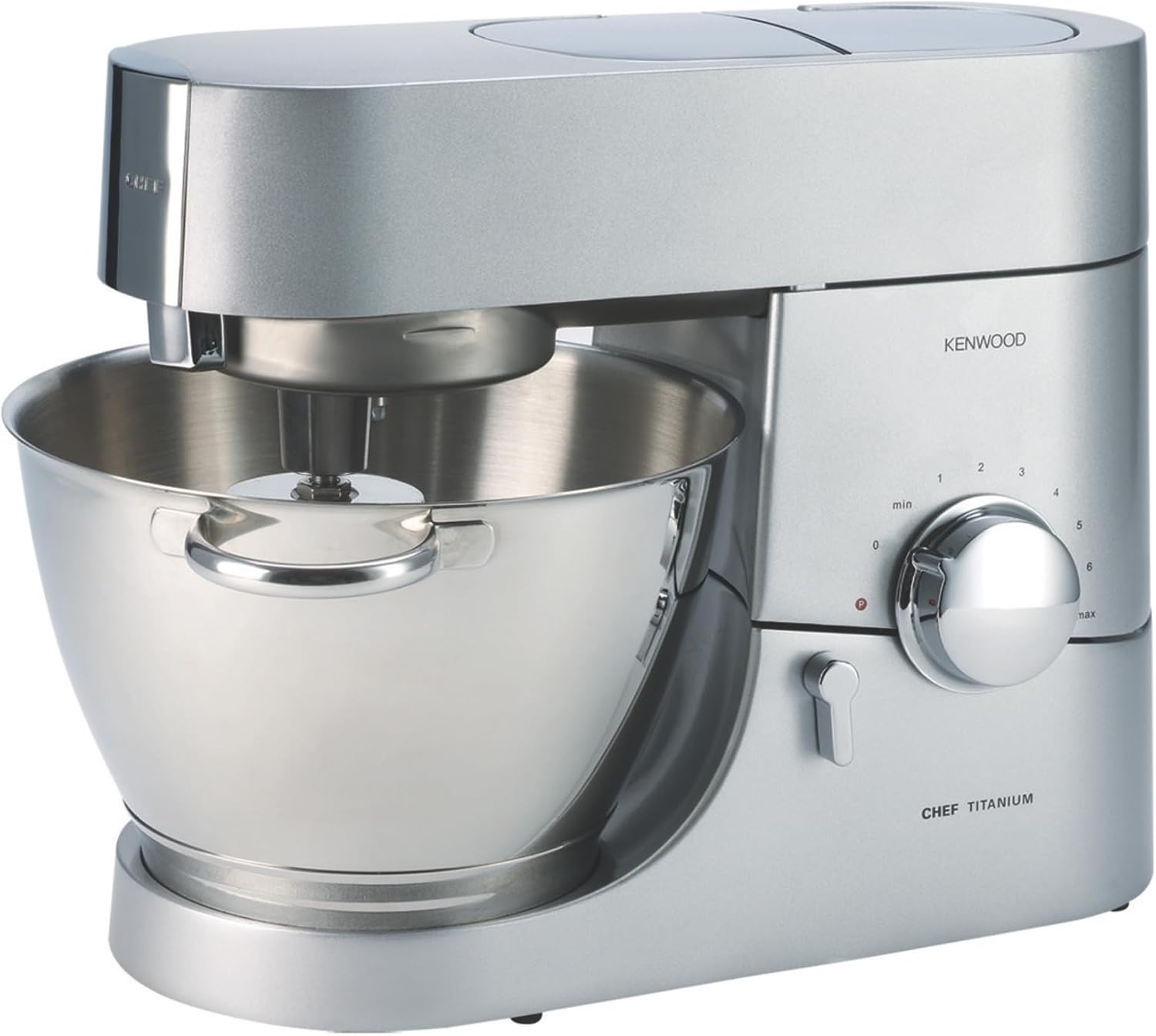
Kenwood Chef Titanium Kitchen Machine
800W motor, 5-quart stainless work bowl, three mixing tools, and a dishwasher-safe bowl
The heaviest machine here, and you pay for the motor rather than for a bundle of extras
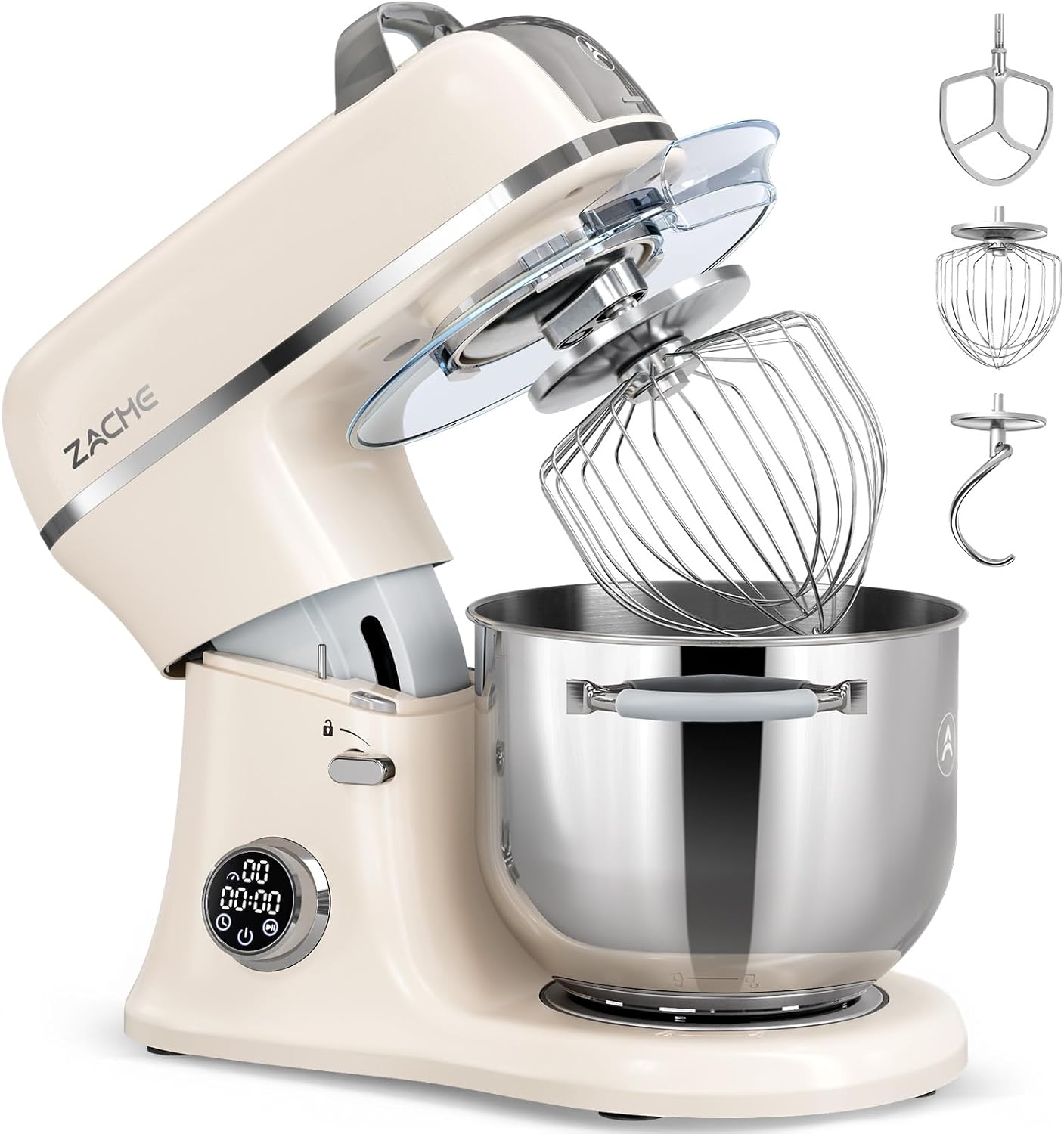
ZACME 7 Quart Stand Mixer
7-quart bowl and a 650W motor in an aluminum die-cast body, with 12 speeds and a full tool set
A big bowl of stiff dough is the hardest load a tilt head can face, and the brand is new
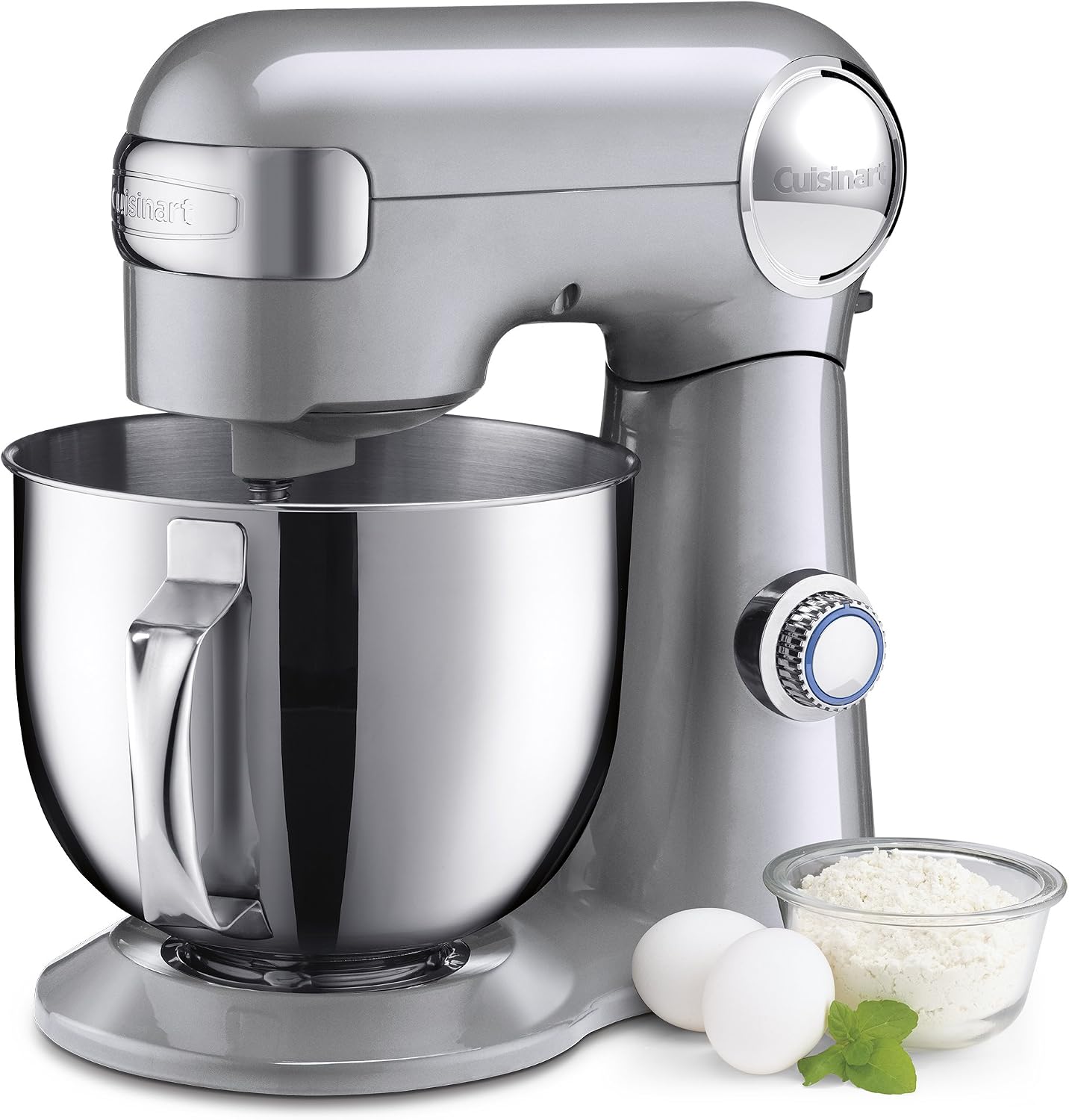
Cuisinart Stand Mixer, 12 Speeds, 5.5-Quart Mixing Bowl
5.5-quart bowl, 12 speeds, and a splash guard with a pour spout that keeps flour where it belongs
No headline wattage figure, so bread bakers are trusting speed count instead of torque
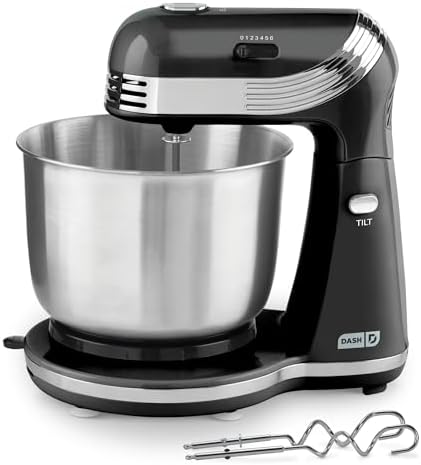
Dash Everyday Stand Mixer
Compact 3-quart footprint, six speeds, and the lowest entry point of the four
A 3-quart bowl is a small-batch ceiling, and the listing does not name a dough hook
Prices and availability were captured from Amazon Creators API and may change.
How I judge a mixer before I trust it with bread
Three things decide whether a mixer is a bread machine or a cake machine, and only one of them is printed on the box. The first is wattage, which tells you how much power the motor draws. The second is torque, which tells you whether that power becomes twisting force at the shaft when the dough fights back. The third is bowl geometry, which decides whether the hook reaches the dough or just spins in a pocket of air.
Wattage is marketing. Torque is the truth. Bowl geometry is why two mixers with similar motors behave nothing alike.
I also look at the design under load. Every machine in this comparison is a tilt-head, which means the head hinges up and back so you can seat the bowl. That is convenient, and that hinge is also the part that shudders when dough gets stiff. A heavy base and a head that clamps down with zero play are what separate a tilt head that survives a decade of weekly bread from one that walks across the counter.
And then there is the smell. If a motor smells hot after ten minutes of dough, it is not powerful enough for what you bought it for. That is not a laboratory measurement, but it is the most honest one I know.
The Kenwood Chef Titanium: the motor-first pick
The Kenwood Chef Titanium is the only machine here that leads with a real motor number: 800 watts paired with electronic variable speed control. Variable speed sounds like a small thing until you are working a stiff dough and want to start slow, stay slow, and nudge up without the head lurching. The 5-quart stainless work bowl is dishwasher safe, which matters more than anyone admits after a double batch, and the box includes three mixing tools.
That combination of 800 watts and 5 quarts is the sweet spot for a household that bakes bread every week. Five quarts holds a two-pound loaf with room to develop, and 800 watts is the kind of headroom that keeps a hook turning instead of stalling. It is also sold as a kitchen machine rather than a stand mixer, which tells you the manufacturer expects it to do more than one job on your counter.
The trade-offs are real. This is the machine I would least want to move twice a day, and at this tier you are paying for the motor rather than for a pile of extras. Check current Amazon price. Visit on Amazon
If your baking is mostly bread with some cakes on the side, build the kitchen around this one.
The Cuisinart 5.5-quart: the all-rounder
Cuisinart's entry is the machine I recommend to people who bake a bit of everything. A 5.5-quart bowl, 12 speeds, and a full tool set: chef's whisk, flat mixing paddle, dough hook, and a splash guard with a pour spout. That splash guard is the quiet hero. Adding flour to a running mixer is where most kitchen messes start, and a guard with a spout turns a two-hand juggling act into one motion.
The dough hook means it can knead, and 5.5 quarts gives you room for a standard loaf or a tray of rolls. Where I hesitate is power. The listing leads with speed count and bowl size rather than wattage, and speed count is not torque. A mixer with 12 speeds and a modest motor will still stall on stiff dough, just with more precision about the moment it gives up.
My honest read: this is a cake-and-cookie machine that can knead, where the Kenwood is a kneading machine that can also do cakes. For a household that bakes bread twice a month and cookies every weekend, the Cuisinart is the better fit and the better bundle. Check current Amazon price. Visit on Amazon
The ZACME 7 Quart: the big bowl question
On paper the ZACME is the most machine for the money in this group: a 7-quart stainless steel bowl, a 650W motor, 12 speeds, a tilt head, and an aluminum die-cast body, with a dough hook, whisk, and beater included.
The die-cast body is the detail I would pay attention to. Cast metal absorbs vibration, and vibration is what makes a tilt head wander when dough is heavy. A 7-quart bowl is genuinely useful if you bake in volume, because it lets you work a double batch without splitting it.
The problem is the pairing. A 7-quart bowl of stiff dough is the heaviest load you can put on a tilt-head design, and 650 watts is doing that work without the extra headroom the Kenwood brings. Bowl capacity and motor power are two different promises, and a bigger bowl makes the motor's job harder, not easier. The other open question is support. This is the newest name on the list, so nobody can tell you yet what year eight looks like when you need a replacement hook or a fresh bowl.
If you want capacity and a die-cast build at this tier, it deserves a look. If you want the safest bet for weekly bread, it is not the one I would reach for first. Check current Amazon price. Visit on Amazon
The Dash Everyday: the small-kitchen pick
The Dash Everyday is a different species. A 3-quart bowl, six speeds, a tilt head, and a compact footprint in a red finish that will look right on a small counter. For frosting, whipped cream, cake batter, pancake batter, and small batches of cookie dough, a 3-quart bowl is not a compromise, it is the correct size. Less bowl to scrape, less machine to store.
It is also the entry point in this comparison, which matters if you are buying your first mixer and you are not certain yet how much baking you will actually do.
The catch is bread. A 3-quart bowl is a small-batch ceiling, and stiff dough is the load that exposes a light-duty motor fastest. There is a second thing to check: the listing does not name a dough hook among the included tools, and for bread that is the tool you need. Look at the current product page before you buy, because a mixer without a hook is a whipping machine with a bowl attached.
Buy this one for cakes, small kitchens, and small households. Do not buy it expecting it to knead a two-pound loaf every Sunday. Check current Amazon price. Visit on Amazon
Tilt head versus lift bowl, and why it matters here
Every mixer in this comparison is a tilt-head design, so I will not pretend you have a lift-bowl option in this group. What I will tell you is what the design means for bread.
A tilt head hinges the motor and head assembly up and back on a single joint. That joint is the weak point under load. A lift-bowl design raises the bowl on two arms into a fixed head, which is a fortress by comparison. You feel the difference at minute eight of a stiff dough, when a tilt head starts to shudder and the bowl wants to creep.
None of that makes a tilt head a bad choice. It makes the base and the lock the parts you should care about. A wide, heavy base and a head that clamps down with no play will handle more dough than a light machine with a fancy motor. When you unbox any of these four, seat the empty bowl, lock the head, and push it side to side with one finger. If the head moves now, the dough will find that movement later.
For one or two loaves a week, a well-built tilt head is fine. For four loaves at a time, the design itself is the argument for spending more.
Bowl capacity is marketing until you put dough in it
This is the part of mixer shopping that annoys me most. Capacity gets sold as a number on a box, and that number describes the volume of the bowl, not the amount of dough the machine can actually work.
Here is the practical translation. A 3-quart bowl is a cake and frosting bowl. A 5-quart bowl handles a standard two-pound loaf plus a tray of rolls, and it is the size most home bakers should target. A 5.5-quart bowl gives you a little more room without changing the class of machine. A 7-quart bowl is a volume baker's bowl, and it only pays off if the motor behind it can turn a full load of stiff dough.
The classic mistake is buying the biggest bowl you can afford and pairing it with the smallest motor in the class. A big bowl full of bread dough is not easier on a motor, it is harder, because there is more mass for the hook to push through. Match the bowl to the motor, or you will end up kneading in two batches anyway.
Tools, attachments, and the ten-year question
The tool bundle is where these four differ most, and it is where people under-shop.
Three of the four name a dough hook in the box: the Kenwood, the Cuisinart, and the ZACME. If bread is on your list at all, that hook is not optional. A paddle mixes batter and a whisk whips cream, but neither develops gluten the way a hook does. The Cuisinart adds a splash guard with a pour spout, the most useful non-motor accessory in this comparison, and the Kenwood includes a dishwasher-safe work bowl alongside its three tools.
Then there is the long game. A mixer is a ten-year purchase for most households, and the question worth asking before you buy is what you can add later. If a machine accepts powered attachments, it stops being a mixer and becomes a kitchen system. If it does not, you are buying exactly what is in the box, forever.
I say that as a man with three attachments he never uses. Buy the machine for the job you do every week, not the job you imagine doing after you retire.
Who should buy which
- Buy the Kenwood Chef Titanium if bread is the point. The 800W motor and 5-quart bowl are the most bread-capable pairing here.
- Buy the Cuisinart Stand Mixer if you bake broadly and want the best tool bundle, including that splash guard.
- Buy the ZACME 7 Quart if you need bowl volume and want a die-cast body, and you accept that 650W is doing heavy work.
- Buy the Dash Everyday if your kitchen is small and your batches are small, and bread is not the mission.
The bottom line
Four mixers, four different jobs. The Kenwood Chef Titanium is the one I would trust with a weekly loaf, because 800 watts behind a 5-quart bowl is the combination that survives stiff dough. The Cuisinart is the best all-rounder and the best value in tools. The ZACME gives you the biggest bowl in the group, with the caveat that a big bowl demands a big motor. The Dash is the right answer for a small kitchen and the wrong answer for a bread habit.
Whatever you choose, run the same check I do. Ten minutes on the stiffest dough you make. If the motor smells hot at the end, you bought the wrong machine. Check current Amazon price on the one that fits, and get baking.