I bought my first stand mixer in 2003 because a bakery mentor told me my wrists would not survive another decade of hand kneading. He was right. Ten years of running a bakery and a lot of teaching bread classes in Burlington later, I have opinions about these machines that are hard to shut off. This comparison looks at four stand mixers for bread dough at four very different price points: two compact tilt-heads that look like bargains, one mid-size machine that ships with a dough hook, and one 800-watt kitchen machine built for volume. I will tell you which of them I would trust with a two-pound sourdough boule, and which are cake mixers wearing a mixer costume.
The short answer: the Kenwood Chef Titanium is the only machine in this group with a published motor that matches bread work, and the Cuisinart SM-50 is the better value if your weekly bake is sandwich loaves and the occasional brioche. The two 3-quart compact mixers are for cookies, frosting, and boxed cake, and I am not going to pretend otherwise.
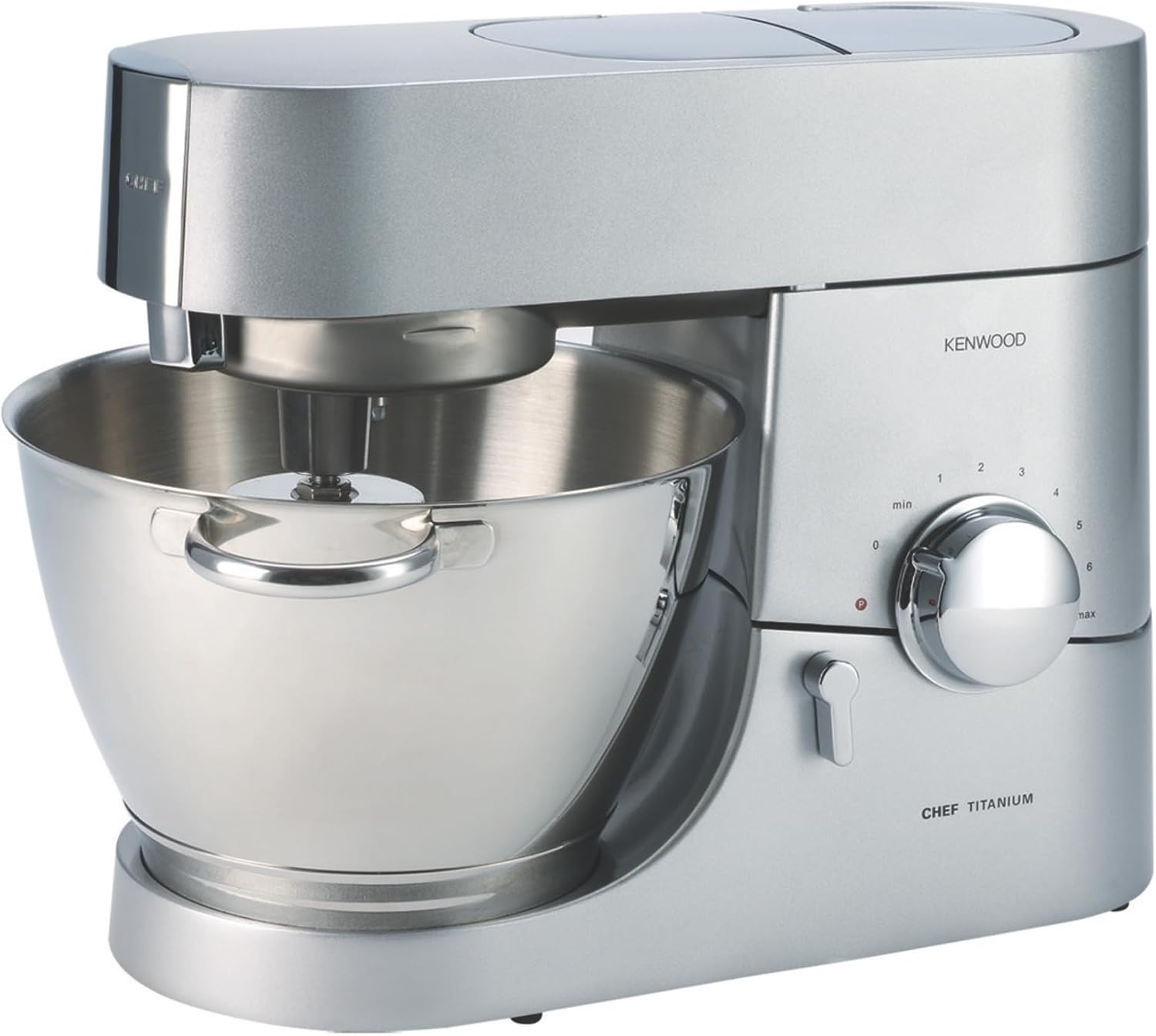
Kenwood Chef Titanium Kitchen Machine
800W motor with electronic variable speed control, a 5 qt work bowl, and three mixing tools included. This is the only machine here whose published power says it was built to knead.
The price puts it in a different budget entirely, and the bowl is smaller than the Cuisinart's despite costing more.
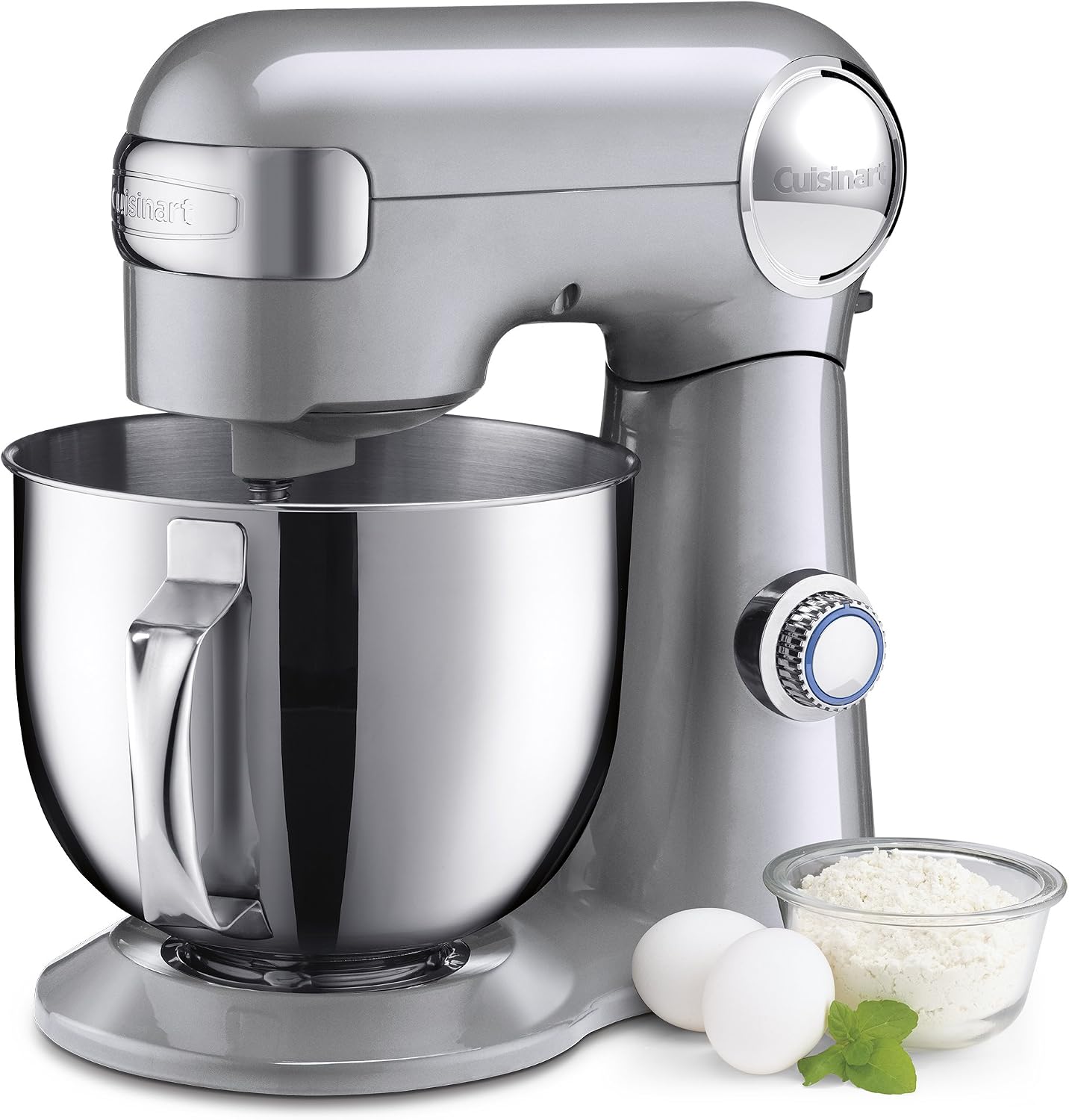
Cuisinart Stand Mixer SM-50BCNAS
12 speeds, a 5.5-quart bowl, and a dough hook, flat paddle, chef's whisk, and splash guard with pour spout all in the box. Best value of the four for a household that bakes weekly.
Cuisinart does not publish wattage for this model, and that omission matters to anyone who kneads stiff dough.
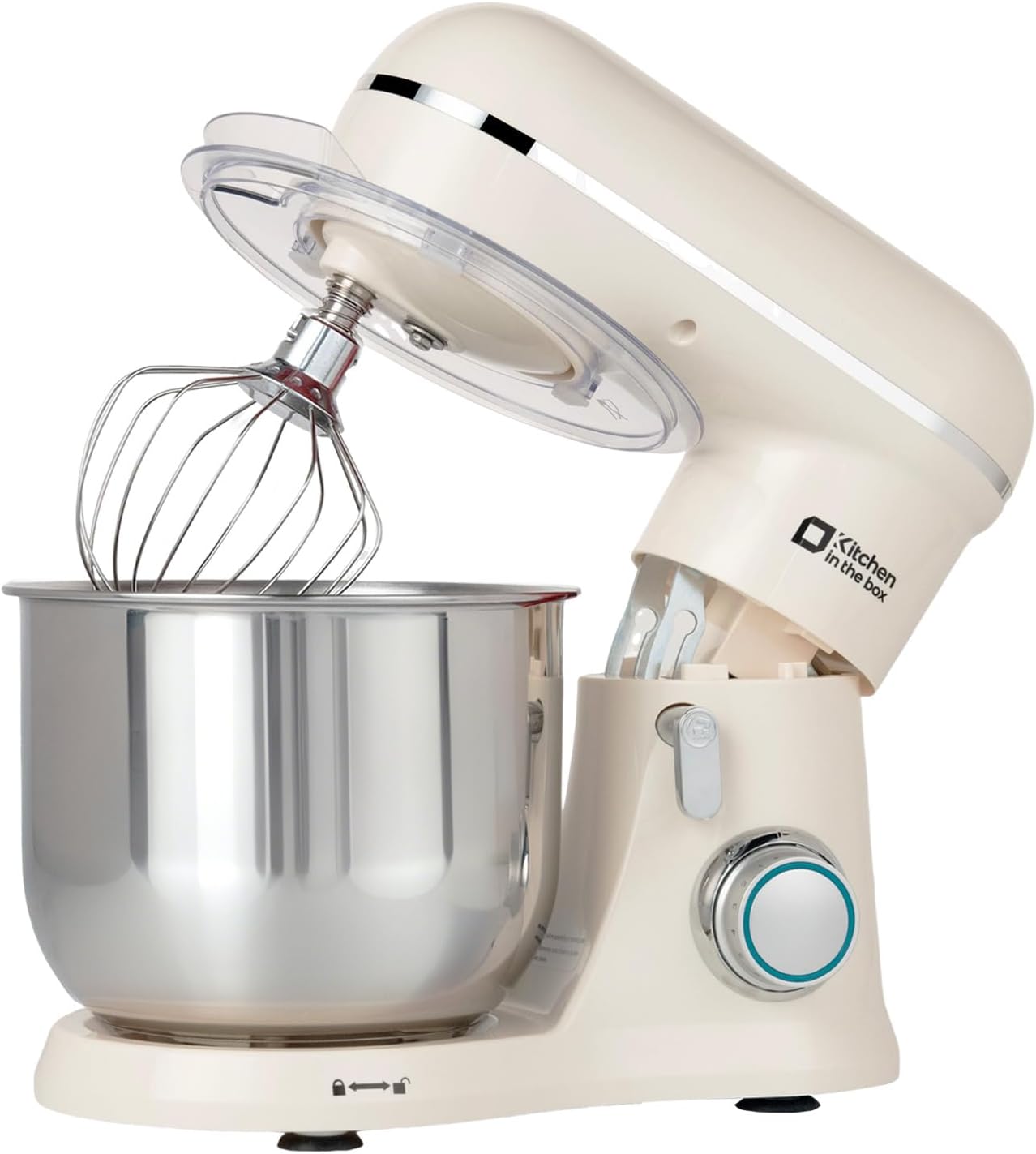
Kitchen in the Box Stand Mixer, 3.5 QT
Small footprint, light enough to move with one hand, and simple enough for a first mixer in a small kitchen.
A 3.5-quart bowl holds a single loaf at most, and no motor spec is published at all.
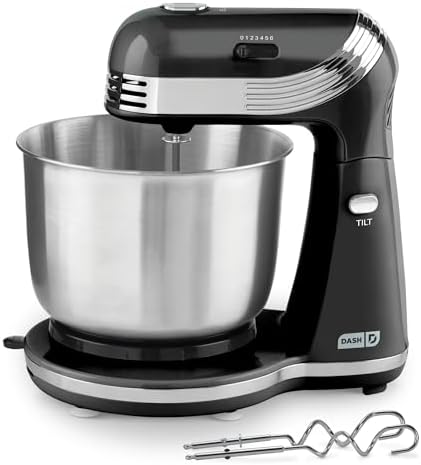
Dash Everyday Stand Mixer, 3-Quart
Six speeds, a stainless steel bowl, and a tilt head that makes scraping and adding easy. Red finish is genuinely cheerful on a counter.
3 quarts and six speeds is a creaming-and-whipping machine. Bread dough is not the job it was designed for.
Prices and availability were captured from Amazon Creators API and may change.
The motor is the mixer, and that is where I start
When a mixer lands in front of me, I do not look at the bowl. I look at the motor spec, and then I look at what happens to that spec when the dough gets stiff. Wattage tells you how much power the machine draws. It does not tell you how much twisting force reaches the dough hook, and those are two different numbers. But an unpublished wattage is its own kind of answer.
This is why the group splits so cleanly. The Kenwood publishes 800 watts and electronic variable speed control, which is the language of a machine that expects a load. The Cuisinart publishes 12 speeds and a dough hook in the box, which tells you the manufacturer expects dough work but leaves the motor question open. The two compact mixers publish neither, and a mixer with no published motor number is a mixer telling you to use it for frosting.
My rule for bread is simple: below 500 watts, you own a whipping machine. It will make a beautiful meringue. It will stall in a stiff dough and start smelling warm, and once you smell that, you have already shortened its life.
Kenwood Chef Titanium: the one built for the job
If you make bread more than once a week, this is where the money goes. The 800W motor with electronic variable speed control is the specification that matters most in this entire comparison, because variable speed under load is what separates a mixer that keeps turning from one that bogs down and heats up. A motor that holds its speed when the dough tightens is a motor that finishes the knead without cooking itself.
The 5 qt work bowl is stainless, dishwasher safe, and arrives with three mixing tools, which is a full working set rather than a starter kit. Five quarts is a real capacity for bread. That is enough room for a two-pound boule or a double batch of brioche, with space for the dough to climb the hook instead of balling up against the wall. For a bread baker, the work bowl and the tool set being included is the difference between buying a machine and buying a machine plus a shopping list.
The trade-offs are honest ones. It costs more than the other three, and its bowl is smaller than the Cuisinart's despite the higher price. If your kitchen is small or your budget is firm, that combination is hard to argue past. But if you are deciding between this and one of the compacts because the compact is cheaper, you are not comparing mixers. You are comparing a mixer to a mixer-shaped appliance.
Cuisinart SM-50BCNAS: the value pick for weekly bakers
The Cuisinart is the one I would recommend to most households, with one caveat I will get to. Twelve speeds is more control than most people will ever use, but the useful part is the low end, where you want a slow fold rather than a violent spin. A 5.5-quart bowl is the largest here, and it arrives with the full set: chef's whisk, flat mixing paddle, dough hook, and a splash guard with a pour spout. That pour spout sounds like a small thing until you are adding warm water to a dry flour mixture and would rather not wear it.
The dough hook in the box is the signal that this machine is meant for more than cake. A 5.5-quart bowl with a hook gives you room for a solid two-pound batch, and the included paddle covers the creaming and cookie work that most kitchens actually do most often. If you bake a loaf on Sunday and cookies on Wednesday, this is the machine that does both without asking you to buy anything else.
Here is my caveat, and it is the same one I would give a student in class: Cuisinart does not publish the wattage for this model. I am not going to invent a number for it, and I am not going to tell you it kneads stiff dough as confidently as an 800-watt machine, because I do not know that. What I do know is that a manufacturer that includes a dough hook on a 5.5-quart mixer expects you to use it, and that most home bakers make dough that is far less punishing than a bakery's. For sandwich loaves, pizza dough, and the occasional enriched bread, this is the best value of the four. For a steady diet of stiff sourdough at high hydration, I would want the published motor number before I committed.
Kitchen in the Box and Dash: the compact tilt-heads
These two belong in the same conversation because they are the same idea at the same size. The Kitchen in the Box mixer is a 3.5 QT electric mixer aimed at baking, and the Dash Everyday is a 3-quart tilt-head with six speeds and a stainless steel bowl. Both are small, light, and inexpensive relative to the other two. Both will make a fine batch of chocolate chip cookies, a bowl of buttercream, whipped cream for a pie, or a boxed cake that nobody at the table is going to interrogate.
What neither of them is, is a bread machine. Three quarts is roughly one loaf of dough, and only if you keep the hydration reasonable and the batch small. A tilt head on a light frame under a heavy load is a wobbler, and wobble is how you get a hook that pushes dough around the bowl instead of kneading it. Neither record publishes a motor specification, which is the clearest statement either manufacturer makes about intended use. I have said this before and I will keep saying it: if the motor number is missing, the marketing department has decided the number is not a selling point.
That is not a reason to avoid them. It is a reason to buy them for the right kitchen. If you live in an apartment with two feet of counter space, if you bake twice a month, if your idea of a project is a batch of muffins, a 3-quart tilt-head is a sensible purchase and a full-size machine is overkill. Buy the Dash if you want six speeds and a stainless bowl and you like the red. Buy the Kitchen in the Box if the 3.5-quart capacity and the smaller footprint suit your shelf. Just do not buy either one expecting it to knead your weekly sourdough, because the fifth loaf is where that plan falls apart.
Tilt head versus lift bowl
The Dash is a tilt-head design, where the head tips back and the bowl stays put. Most compact mixers are, because a tilt head is cheaper to build and easier to store under a cabinet. A lift bowl raises the bowl into a fixed head, and the bowl sits in a cradle that does not move. For bread, the lift design is sturdier. The bowl is locked into a frame rather than hanging under a hinge, and a hinge is exactly the part that develops play when you ask it to hold against stiff dough.
You will notice the difference in the sound. A tilt head under load rattles. A lift bowl hums. That rattle is not just noise. It is the head moving while the hook is supposed to be applying steady force to the dough, and steady force is what develops gluten.
Bowl capacity is a lie you should stop believing
A 5-quart mixer that stalls on two pounds of dough has a marketing problem, not a capacity problem. Bowl volume tells you how much air and batter will fit. It says nothing about how much dough the motor can turn. That is why the published motor number matters more than the bowl number in every one of these four listings, and why I would take a 5-quart machine with a real motor over a 5.5-quart machine with an unknown one for bread work specifically.
Dough also behaves differently from batter. Bread dough climbs a hook and wraps it. Batter splashes. A bowl sized for a cake batter is often too small for the same weight of dough, because dough needs room to move without climbing the wall and stalling the hook. If you are buying for bread, size the bowl to your dough, not to your cake.
Attachments decide the long-term relationship
A mixer with a pasta roller and a grinder is a kitchen system. A mixer with a proprietary attachment mount and nothing available for it is a gadget. The Cuisinart and the Kenwood both ship with a working set of tools, which means you can start baking the day the box arrives instead of ordering a dough hook separately. That matters more than most buyers expect, because the tool set is the part you touch every single time.
My honest position on bundles: most people buy one or two attachments and never touch the rest. Buy the mixer whose included tools cover what you actually bake. If that is bread, the hook is non-negotiable. If that is cake, the paddle and whisk are. Do not pay for a pasta roller you will use twice, and do not buy a mixer that forces you to purchase the one tool you need on day one.
Who should buy which
Buy the Kenwood Chef Titanium if bread is the reason you are shopping. It is the only machine here with a published 800W motor and electronic variable speed control, and that is the specification that decides whether a mixer survives a decade of weekly dough.
Buy the Cuisinart SM-50BCNAS if you bake often but not exclusively bread. The 5.5-quart bowl, 12 speeds, and full tool set make it the best value here, and the dough hook means it can handle a Sunday loaf. Just know that the motor spec is unpublished, so treat it as a general-purpose machine rather than a bread specialist.
Buy the Kitchen in the Box or the Dash Everyday if your counter is small, your budget is tight, and your baking is cookies, cakes, and frosting. Neither will knead a stiff dough without complaint, and neither is trying to.
What I check before I would recommend any of them
No mixer gets a full recommendation from me without a real bake, not a cake mix. That means a stiff dough, a full knead cycle, and a hand on the housing afterward to see how warm the motor gets. I will not tell you a machine is powerful because the box says so. I will tell you what the spec sheet says and what it leaves out, which is what this comparison does.
The spec sheets here are unusually clear about the split. One publishes 800 watts. One publishes a dough hook and stays quiet about power. Two publish neither, and their bowl sizes tell you why. That is enough to sort four mixers into two categories without guessing: machines that knead bread, and machines that make everything else beautifully.
If you take one thing from this, take the rule I give every class. Buy the motor you need for the dough you actually make, and stop shopping by bowl size. The bowl is a number. The motor is the mixer.