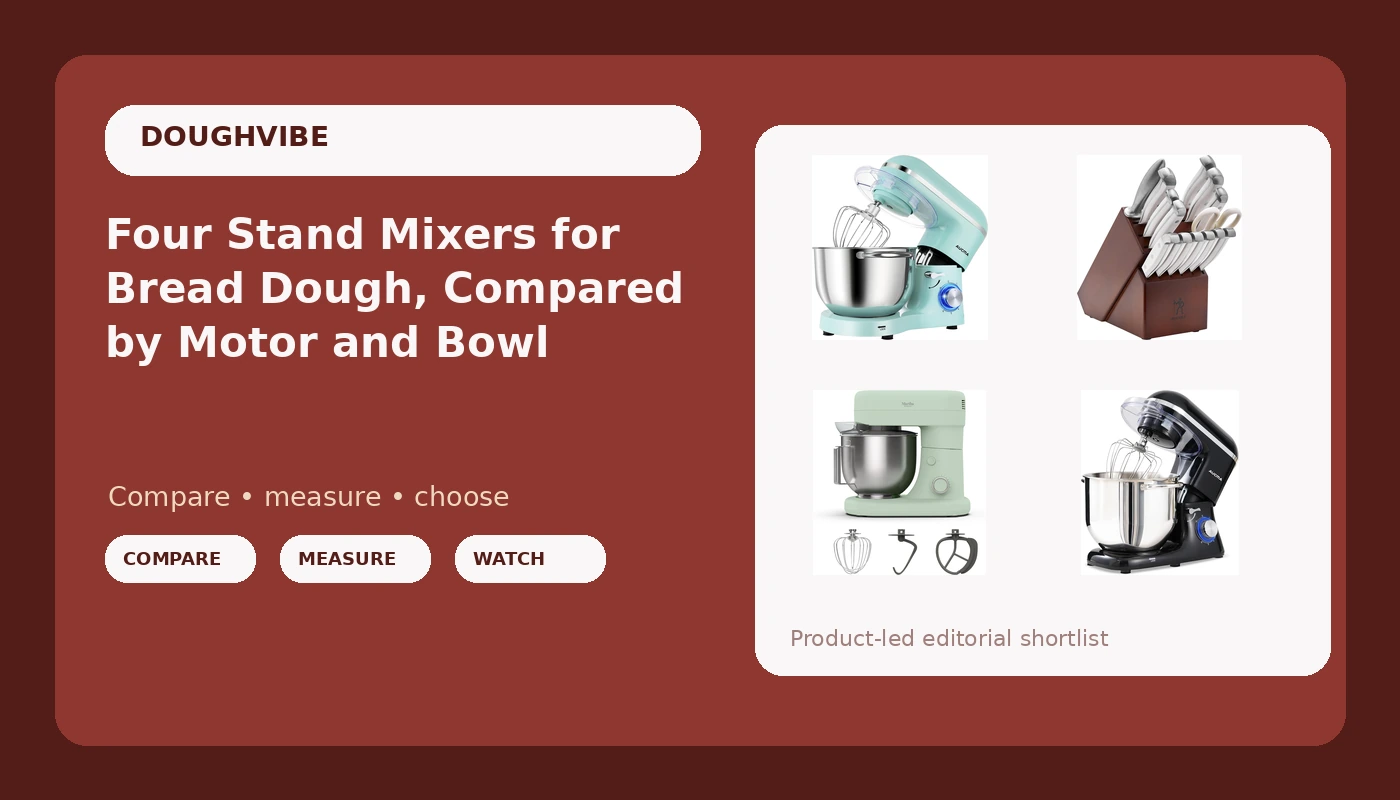
I kneaded dough by hand until my wrists gave out, which is how I ended up on the stand mixer side of history. Twenty years of baking, a decade of running a bakery, and now bread classes in Burlington, where the same question comes up every week: will this machine actually handle a two-pound loaf, or will it stall and start smelling hot? That question is the spine of this comparison of stand mixers for bread dough. Three mixers are on the table, plus one knife set that wandered into the roundup, and I am judging all of them the way I judge every mixer I meet: motor first, bowl second, marketing dead last.
For most bread bakers shopping in this range, the 8-quart Aucma with the 900-watt motor is where I would start, because it has the most headroom for stiff dough. The 6.5-quart Aucma is the middle child. The Martha Stewart 5.3-quart is a small-batch and cake machine. The Henckels knife set is not a mixer at all, it is what you reach for when you score and shape the loaf.
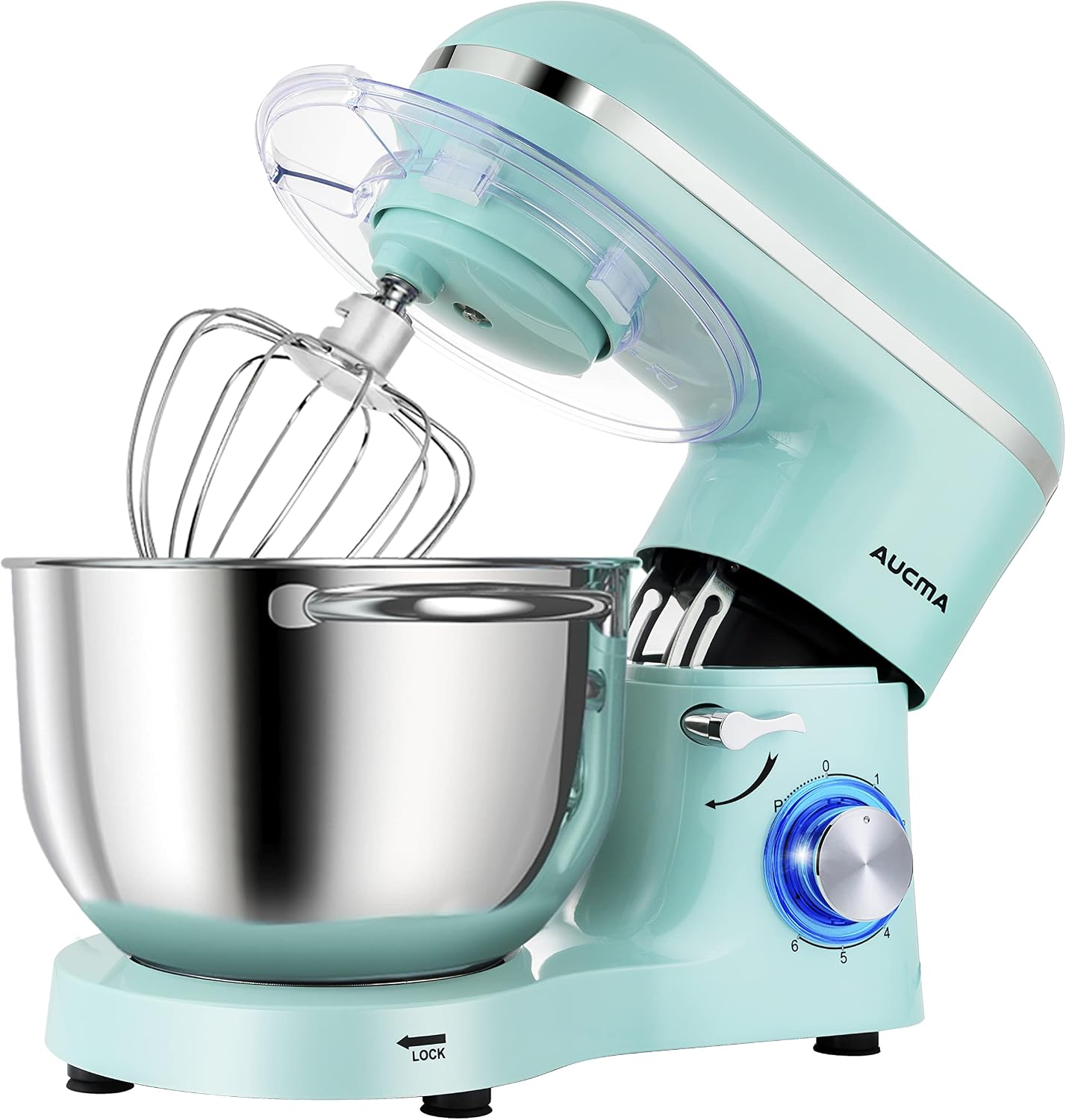
Aucma Stand Mixer, 6.5-QT, 660W, 6-Speed Tilt-Head (Blue)
660 watts and a 6.5-quart bowl at a size that still fits under a cabinet, with dough hook, wire whip, and beater in the box
Tilt head, so stiff dough will make it work; the bowl number says nothing about how much dough it can actually knead
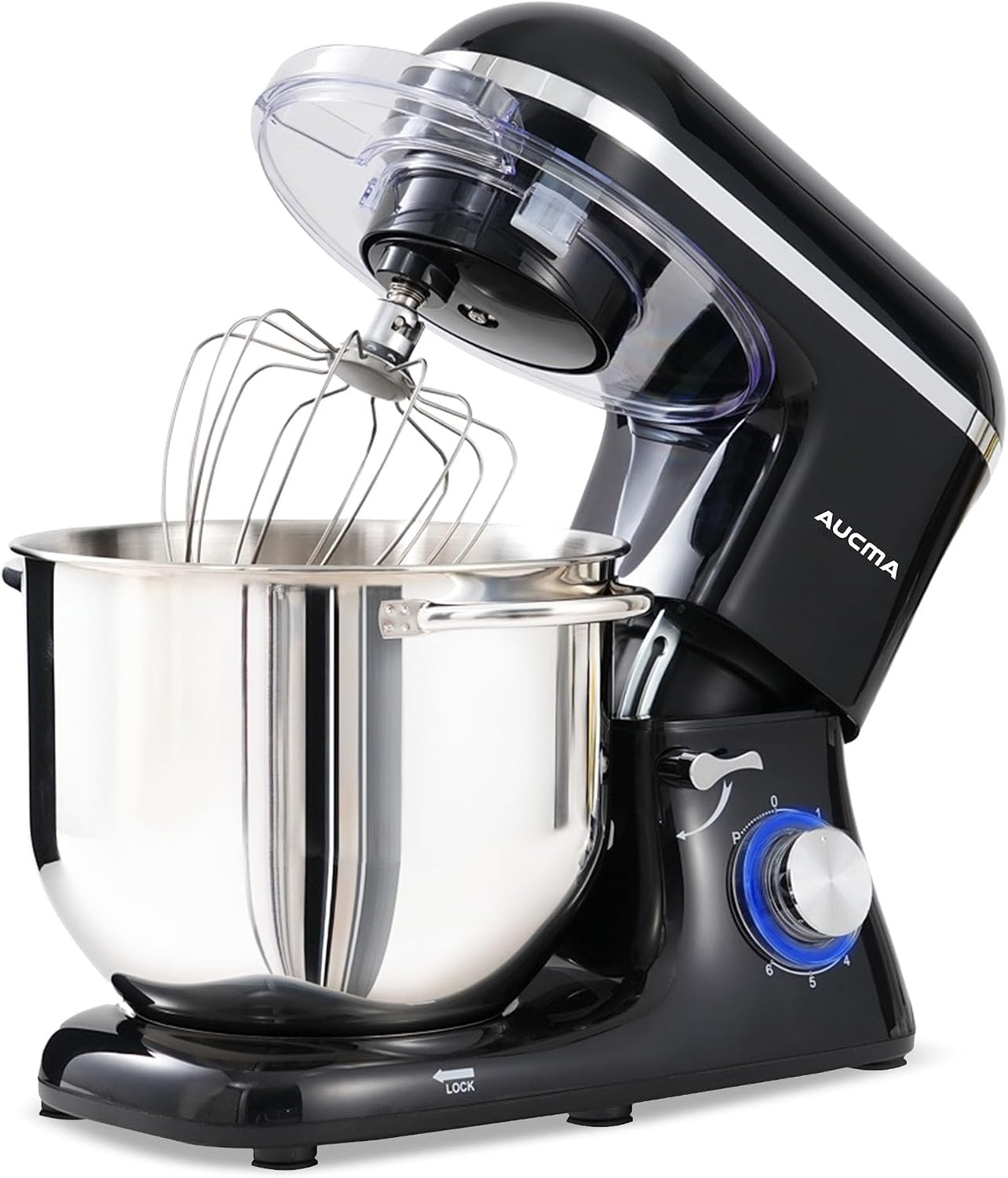
Aucma Stand Mixer, 8QT, 900W, 6-Speed Tilt-Head (Black)
The biggest motor and the biggest bowl here, which is exactly what a double batch of bread wants
An 8-quart tilt head is a lot of bowl hanging off one hinge, and it takes up real counter space
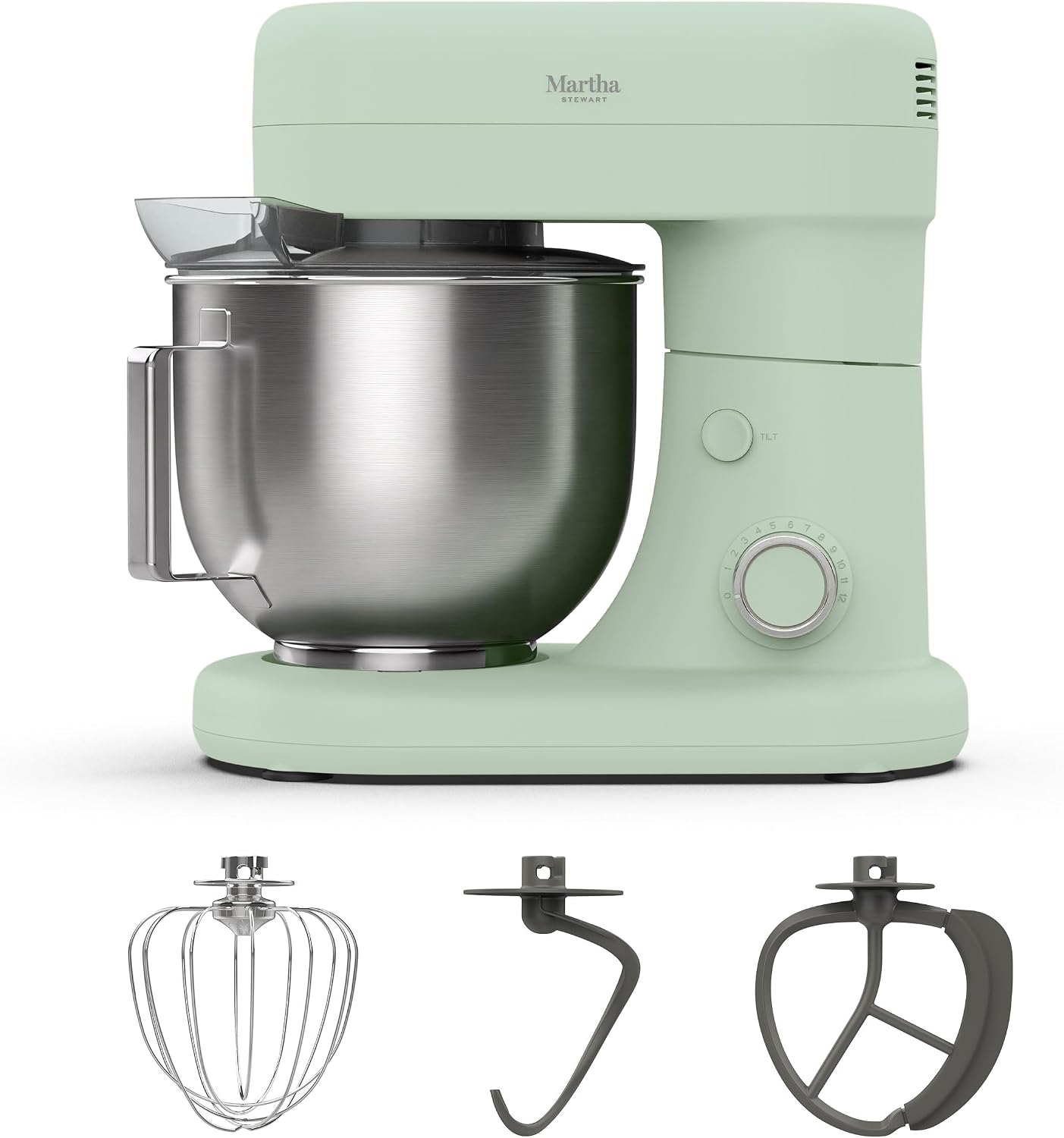
Martha Stewart 5.3QT Tilt Head Stand Mixer, 12 Speeds, Stainless Steel Bowl
Twelve speeds give finer control than a six-speed dial, and the stainless steel bowl is the right material for dough
5.3 quarts is the smallest bowl in this group, so bread volume runs out first; motor details are thinner than the Aucma listings
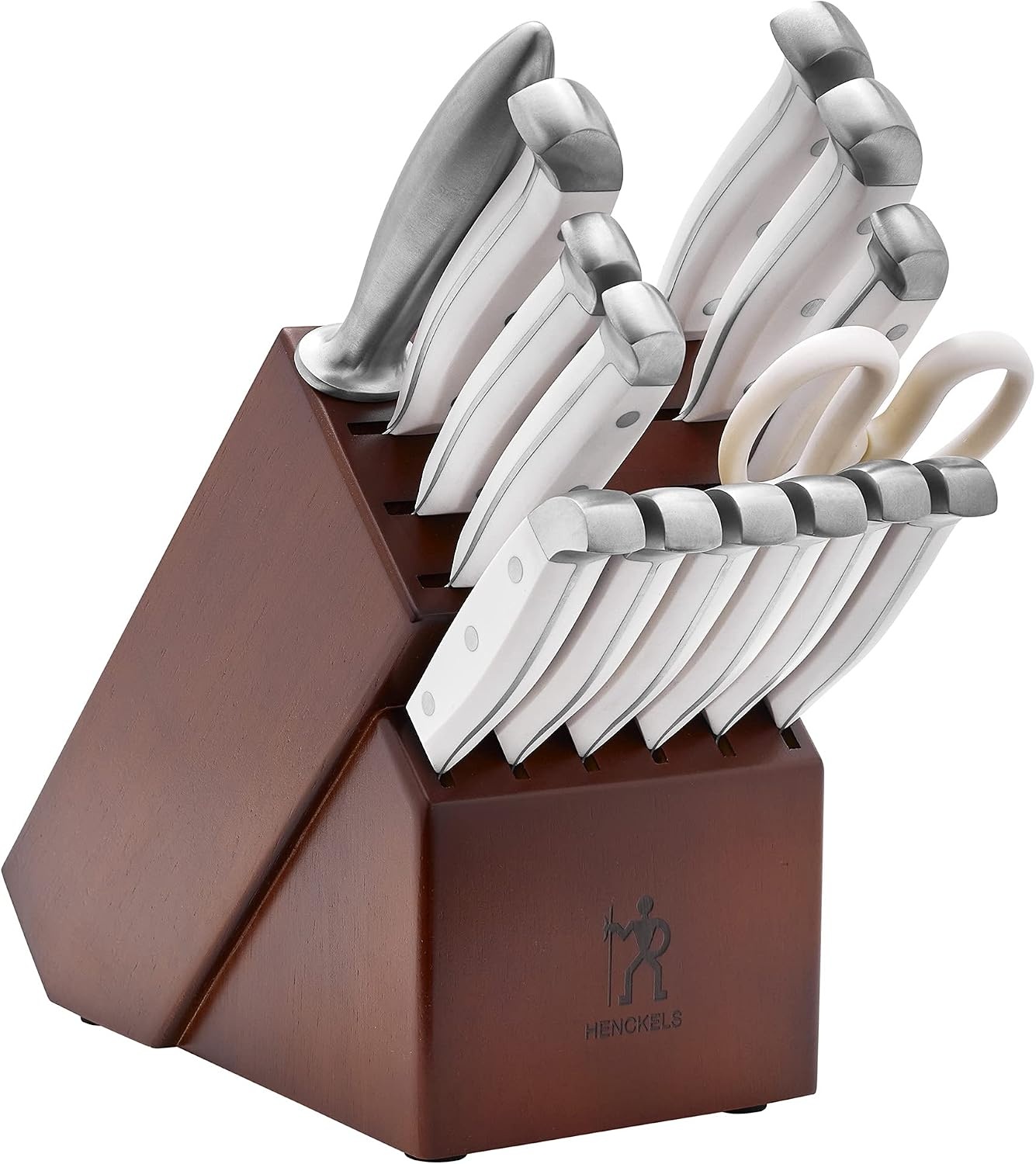
Henckels Statement 15-Pc Knife Set, Razor-Sharp, German Engineered, White
Fifteen pieces of German engineered cutlery covers scoring, shaping, and every vegetable that goes into the pot
It does not knead anything, and buying it as a mixer substitute is a category error
Prices and availability were captured from Amazon Creators API and may change.
What actually matters when you knead bread in a mixer
Wattage is the number everyone quotes and the number that explains the least. Watts measure power draw from the wall. Torque is the twisting force that actually turns a hook through a stiff dough, and a well geared 660-watt motor can out-knead a badly geared 900-watt one. You cannot read torque off a spec sheet, which is why I care more about how a mixer is built than about the biggest number in its title. When a motor smells hot after ten minutes of dough, that smell is the honest review.
Bowl capacity is the second lie. A 6.5-quart bowl does not hold 6.5 quarts of bread dough, not even close. Stiff dough is heavy, it climbs the hook, and it pushes against the side of the bowl. A practical working limit for a bowl that size is roughly half its volume in bread dough, and that is on a good day with a hook that spirals the dough instead of burying itself in it. If you are buying for bread, size your batches to the dough limit, not to the bowl marketing.
Tilt head versus lift bowl matters more than any other design choice for bread. On a lift-bowl machine the bowl locks into a cradle and rises into the head, which makes the whole assembly a fortress. On a tilt head, the head hinges back on a single joint, and under a stiff dough that joint is where wobble lives. Every mixer in this comparison is a tilt head, so that caveat applies to all three rows. It does not make them bad mixers. It makes them mixers you should not punish with a triple batch of bagel dough.
Attachments decide the long-term relationship. A dough hook, a wire whip, and a flat beater are the baseline, and all three mixers here include them. The question is what comes after. A mixer with a real attachment ecosystem is a kitchen system, a mixer without one is a single-purpose appliance with a nice paint job.
The Aucma 6.5-quart, 660 watts
This is the blue one, and it is the sensible middle of the group. Six hundred and sixty watts is not a toy number, and 6.5 quarts is a genuinely useful bowl for a household that bakes one or two loaves at a time plus the occasional batch of cookies. The six-speed dial covers the range you need: low for incorporating flour, middle for kneading, high for whipping cream on a Sunday.
What I like about it for bread is the shape of the deal. You get a bowl large enough to knead a two-pound dough without it trying to escape, and a motor that should hold up to weekly baking if you respect the dough limit. What I do not like is the tilt head, because that is the design compromise you are accepting at this price. Knead a stiff dough on speed two and give the machine breaks between loaves, and it will behave. Push it with a double batch of low-hydration dough and you are asking a hinge to do a job that a cradle does better.
The dough hook is the part that decides whether bread day is pleasant. A good hook climbs the dough and stretches it. A bad one just spins in the middle and lets the dough sit against the bowl. Give this one a try on a moderate dough first, around 65 percent hydration, and see how it moves before you ask it for anything stiffer. Visit on Amazon →.
The Aucma 8-quart, 900 watts
If you are buying one mixer for bread and you want the most machine for the money, this is the black one and it is the pick of the litter. Nine hundred watts and an 8-quart bowl is the combination that lets you think in double batches. Two loaves at once, or one big batch of enriched dough for a holiday, fits in a way it simply does not in a 5-quart machine. For a household that bakes seriously, that headroom is the whole point.
The trade-off is that you are hanging a very large bowl off a tilt head. Physics does not care about brand loyalty. The bigger the bowl and the stiffer the dough, the more the head wants to move, and the more careful you have to be about running it at a low speed and not crowding it past its working limit. The other cost is counter space. Eight quarts is a big footprint, and this is not a machine you tuck into a cabinet and forget.
For a bread baker, though, the arithmetic is simple. More motor and more bowl is more dough capacity, and dough capacity is what separates a mixer that kneads from a mixer that merely spins. If your weekly routine includes a couple of loaves and the occasional brioche, this is the one in this group that will not feel cramped by year three. Visit on Amazon →.
The Martha Stewart 5.3-quart, 12 speeds
Twelve speeds is more control than most people will ever use, and for certain jobs that control is real. Creaming butter, whipping egg whites, and bringing a delicate batter together all benefit from being able to step up in small increments instead of jumping from two to four. The stainless steel bowl is the right call for dough, since stainless takes a chill, cleans up without fuss, and does not hold onto smells the way some finishes do.
Where this mixer loses ground is bread volume. At 5.3 quarts it has the smallest bowl in the comparison, and that means the dough limit arrives sooner. One decent loaf, yes. A double batch of stiff dough, no. The listing also gives you less to go on about the motor than the Aucma listings do, and when I cannot see the power details spelled out, I assume the machine is built for cakes and batters first and bread second.
That is not an insult. Plenty of kitchens need a mixer for exactly that job. If your baking leans toward cookies, cakes, frostings, and the occasional soft dough, twelve speeds and a stainless bowl is a pleasant, capable machine. If your weekends revolve around sourdough, buy the bowl size and the motor instead. Visit on Amazon →.
The knife set that crashed the mixer party
I have to be straight with you about the Henckels Statement 15-piece set, because it is the odd one out and pretending otherwise would waste your time. It is not a stand mixer. It does not have a motor, a bowl, or a dough hook, and no knife set has ever kneaded a loaf. It earned its place in this roundup for a different reason: a bread kitchen is not complete with a mixer alone.
Think about what happens after the dough comes out of the bowl. You score the loaf, and a dull knife tears the surface instead of opening it cleanly. You shape, you trim, you break down a chicken for stock while the dough proofs, you chop the onions for the filling. Fifteen pieces of German engineered cutlery in white covers all of that, and it covers it in one purchase instead of five. Razor sharp out of the box is the part that matters most, because a knife that arrives dull tends to stay dull in a home kitchen.
So treat this row differently. It is the companion purchase, not the competitor. If you already have a knife block you trust, skip it. If your kitchen is held together by one paring knife and a bread knife from a discount bin, this is the upgrade that will change how cooking feels, and the mixer is the upgrade that will change how baking feels. Visit on Amazon →.
The trade-offs, stated plainly
Here is the honest summary of what you give up with each choice.
The 6.5-quart Aucma gives up stiffness tolerance. It is the balanced pick, and balance always means a ceiling somewhere.
The 8-quart Aucma gives up counter space and a bit of stability. You trade a hinge that moves for dough capacity, and for a bread baker that is usually the right trade.
The Martha Stewart gives up bowl volume and motor transparency. You gain speed control and a stainless bowl, which is a fair swap for a baker who is not chasing double batches.
The Henckels set gives up nothing except the fantasy that it belongs in a mixer comparison, which is my fault, not its own.
And all three mixers share one limitation worth repeating: they are tilt heads. If you bake stiff dough every week and you want the most stable design, a lift-bowl machine is the sturdier answer. Within this group, the 8-quart Aucma gets closest to that feeling simply because the motor has the least reason to complain.
Which one I would hand a friend
If a student asked me to point at one row and stop talking, I would point at the 8-quart Aucma. Nine hundred watts and eight quarts is the configuration that lets a home baker grow, and growth is what kills cheap mixers. The 6.5-quart Aucma is the right answer for a smaller kitchen or a smaller oven, and it will do a weekly loaf without drama if you keep batches reasonable. The Martha Stewart is the right answer for a baker whose mixer spends more time on buttercream than on dough. The knife set is the right answer for someone building a kitchen from nothing, and it is a better use of a hundred and seventy dollars than a second mixer you do not need.
What I check before recommending any mixer
Three things, every time. First, the motor, in real terms rather than the biggest number on the box. Second, the dough limit rather than the bowl volume, because those two numbers are not the same and only one of them applies to bread. Third, what the machine offers beyond the three attachments in the box, because a mixer you can grow with is a mixer you keep for a decade.
Notice what is not on that list: color, speed count, and the word powerful. Color is fine to care about, but it will not knead your dough. Speed count matters only if you use the middle settings. And powerful is a claim, not a measurement. Show me a hook climbing through a stiff dough for ten minutes without the motor smelling hot, and then we can talk.