Related: How to Tell If Your Mixer Has Enough Torque for Bread
I ran a bakery for ten years and taught bread classes after that, and I have kneaded enough dough by hand to know the exact moment my wrists were going to quit. A stand mixer is the best thing to happen to bread since the oven. The trouble is that a lot of machines sold as a stand mixer for bread dough are whipping machines wearing a dough hook like a costume.
I own three mixers. One has survived a decade of weekly bread, one handles double batches without complaint, and one was cheap enough that I bought it just to confirm it was bad. It was. That history is why I read a spec sheet in a fixed order: motor first, bowl second, attachments third, money last. Bowl size is the thing I care about least, and it is the thing the box shouts about loudest.
Start With the Motor, Not the Bowl
Torque is the twisting force that actually kneads. Wattage tells you how much power the motor draws, which is related but not the same thing. A 660-watt motor can still stall on a stiff sourdough if the gearing and the bowl geometry fight it, and a lower-wattage motor with good gearing can surprise you. The number on the box is a starting point, never a promise.
Bowl capacity marketing is worse. A five-quart mixer that stalls on two pounds of bread dough has a marketing problem, not a capacity problem. What matters is how much dough the motor can push through the hook before the housing gets warm and the smell changes. If a mixer smells hot after ten minutes of dough, it is not powerful enough for what you bought it for, and no spec sheet will tell you that. Only dough will.
Lift bowl versus tilt head matters more than most shoppers realize. A lift design raises the bowl on arms into the head, which makes the bowl a fortress and the whole machine stable under load. A tilt head is convenient for scraping and adding, and it wobbles when the dough tightens. For bread I want the fortress. For cookies I want the tilt. If you make both, you are choosing a compromise, and it helps to know which one you are choosing.
Garvee 6.7L Stand Mixer, 660W: The Big-Bowl Bet
On paper, this is the most bread-capable machine in this group. The Garvee lists a 660-watt motor, a 6.7-liter bowl, and ten speeds, in a silver finish. That combination puts it in the territory where double batches stop being a fantasy. A 6.7-liter working bowl is genuinely large, and ten speeds gives you a slow setting for folding and a fast one for creaming butter without dragging the whole bowl into the hook.
The 660 watts is the number I keep returning to, and it is also the number I refuse to trust alone. Wattage is power draw. Torque is what kneads. A mixer can draw 660 watts and still bog down the moment the dough turns stiff, and that moment is what separates a bread mixer from a cake mixer. So read this listing as a candidate rather than a verdict. It has the raw numbers to handle a two-pound loaf. Whether it does comes down to gearing and how the bowl holds dough against the hook.
The practical appeal is the bracket it sits in. This is a lot of rated motor and a lot of bowl for the money, and if your baking is weekly sandwich loaves, pizza dough, and the occasional brioche, that math matters. What you give up is the deep attachment ecosystem the big brands have built over decades, and spare parts availability is not something you can read off a listing.
If you feed a family, bake two loaves at a time, and want a large bowl without paying large-bowl money, this belongs on the shortlist. Watch the housing on your first stiff dough. That is your real review, not mine.
Hamilton Beach 4 Qt Electric Stand Mixer: The Small-Batch Answer
The Hamilton Beach 4 Qt is a different animal, and the name tells you so. Four quarts, seven speeds, and an easy-carry handle. Notice what that sentence does not include: a wattage figure. The listing leads with bowl size, speed count, and portability, which tells you where the design priority sits.
That is not a knock. It is a classification. Four quarts is a single-batch bowl. It is a sensible size for a small kitchen, a small household, or someone who bakes on weekends and does not want a machine parked on the counter permanently. The carry handle is a real feature if you store the mixer in a cabinet and haul it out on baking day, which is exactly what a lot of home bakers do.
Where I would slow down is bread. If the plan is a weekly sourdough with a stiff, low-hydration dough, a four-quart bowl is working near its limit, and any machine in this size class will make you listen to the motor. If the plan is cakes, cookies, whipped cream, quick breads, and an occasional soft dough, the smaller bowl becomes an advantage. Less dough climbing the hook means less scraping and a faster cleanup.
My rule has not changed in twenty years: if bread is the point, buy the most motor you can afford. This mixer is not sold as a bread machine, and the honest way to buy it is as a versatile everyday mixer for someone who bakes bread occasionally rather than religiously.
The Slicer Shredder Attachment: How a Mixer Becomes a System
Attachments decide the long-term relationship. A mixer that only mixes is a gadget. A mixer that grates, slices, and shreds is a kitchen system, and that is the entire argument for the hub on the front of a stand mixer.
This stainless steel slicer shredder attachment is built for KitchenAid stand mixers, with five blades and a dishwasher-safe body. Five blades is a useful spread: coarse and fine shredding for cheese and vegetables, slicing for cucumbers and potatoes, and the kind of prep that otherwise leaves you hunched over a box grater with your knuckles at risk.
Two things to check before you buy it. First, the fit. This is made for KitchenAid mixers, so it will not mount on the Garvee or the Hamilton Beach in this guide. If you own one of those, this attachment is not for you, and no adapter fixes that. Second, be honest about whether you will actually use it. I own attachments I have used three times and I am not proud of it. A grater you reach for weekly earns its space. A grater that lives in a drawer is a drawer ornament.
Where it does real work is cheese. Freshly shredded cheese melts better than the pre-shredded bag, which is dusted with starch to keep it from clumping. If you make pizza, macaroni and cheese, or gratins more than once a month, this attachment pulls its weight. Dishwasher safe also matters more than people admit, because the reason most cooks stop grating cheese by hand is the cleanup, not the grating.
Henckels Statement 15-Pc Knife Set: The Other Half of Prep
Here is what nobody says about stand mixers: the mixer handles the dough, and the knife handles everything around it. Splitting a boule, trimming a ragged edge off laminated dough, cutting butter into flour for biscuits, portioning a loaf for the freezer. A good knife is the second half of the job, and a dull one makes the first half feel like a waste.
The Henckels Statement 15-piece set is German engineered, with white handles, and it covers the range a home kitchen actually needs: a chef's knife for the heavy work, a paring knife for detail, and enough pieces that you stop nursing the one dull blade you have been using for years. Fifteen pieces also means you should read the block contents before you buy. Most cooks use three of those knives ninety percent of the time, and the rest are there so the block looks complete.
Razor-sharp out of the box is the claim, and for most home cooks that claim matters more than steel type. A sharp knife is safer than a dull one, because you are not forcing the blade through a tomato with your whole arm. If you have never owned a set that arrived genuinely sharp, the difference in prep time is not subtle.
The honest caution is the same one I apply to mixer attachments: buy the set you will maintain. Fifteen knives is a lot of edges. If you will not sharpen them, buy fewer knives and put the difference toward a sharpener. The mixer can run on its own. The knife needs a human.
How I Judge a Stand Mixer Before It Earns Counter Space
Four questions, in this order.
What is the real motor power, not the bowl size? A 6.7-liter bowl and a 660-watt motor are two separate claims, and only one of them kneads. I look for the motor figure first and treat the bowl figure as a container, not a capability.
How does it handle stiff dough? The test is a two-pound, low-hydration loaf. Not a cake mix, not a soft brioche. Stiff dough is where motors confess. A machine that walks across the counter or slows audibly under a tight dough has told you everything.
Lift bowl or tilt head, and does it wobble? Stability under load is the whole game for bread. A head that shakes when the dough tightens is a head that will eventually loosen.
Would I trust it with a decade of weekly baking? That is the only horizon that matters. A mixer is a ten-year purchase or it is a mistake you make twice.
Stand mixer and prep gear comparison
Specs below come straight from the listings. Anything a listing does not state, I have left unstated rather than guessed, because a guessed spec is how people end up disappointed.
| Product | Key specs from the listing | What it is for |
|---|---|---|
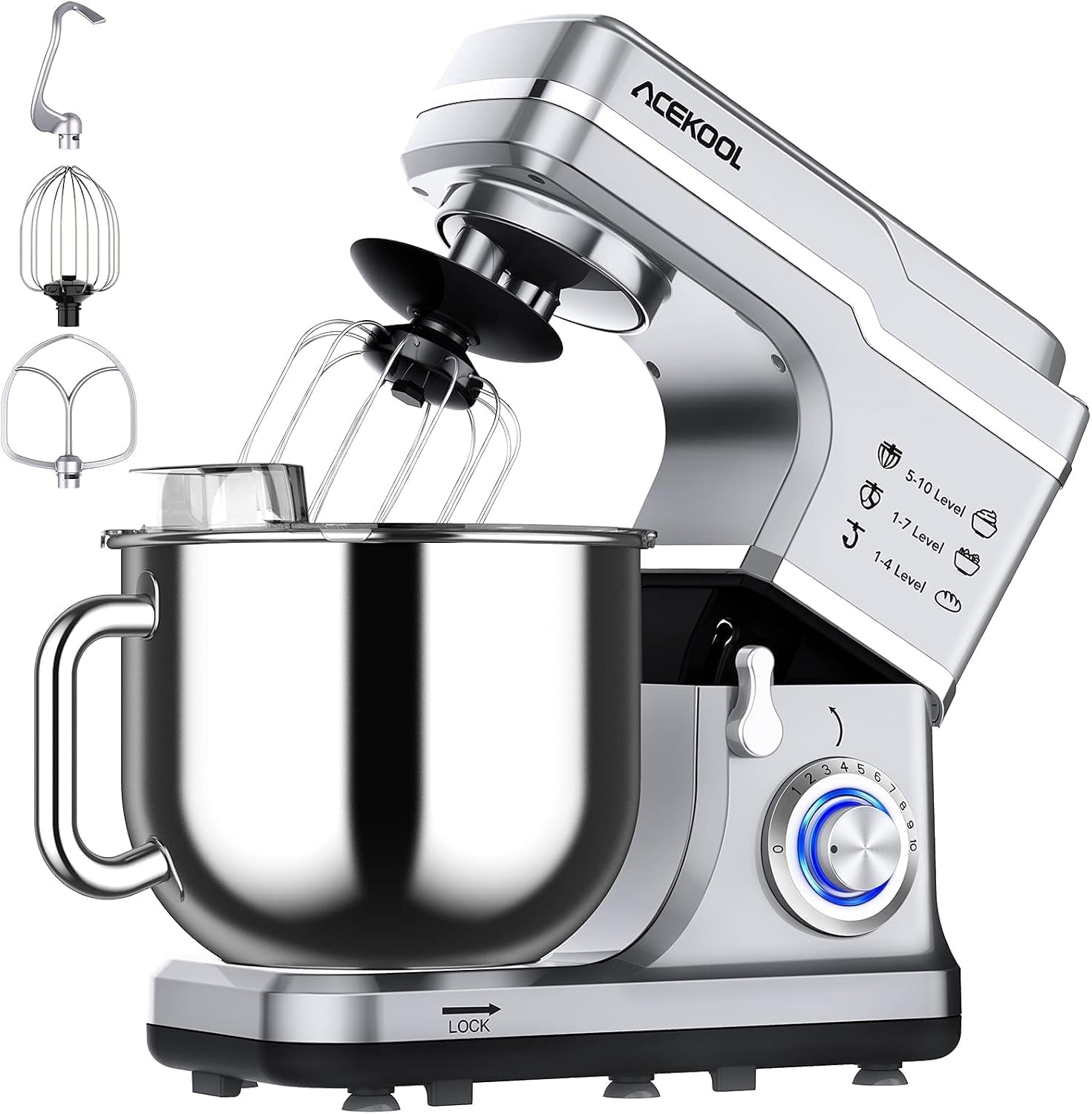 Visit on Amazon → Garvee 6.7L Stand Mixer |
660 watts, 6.7-liter bowl, 10 speeds, silver | Big batches and double loaves |
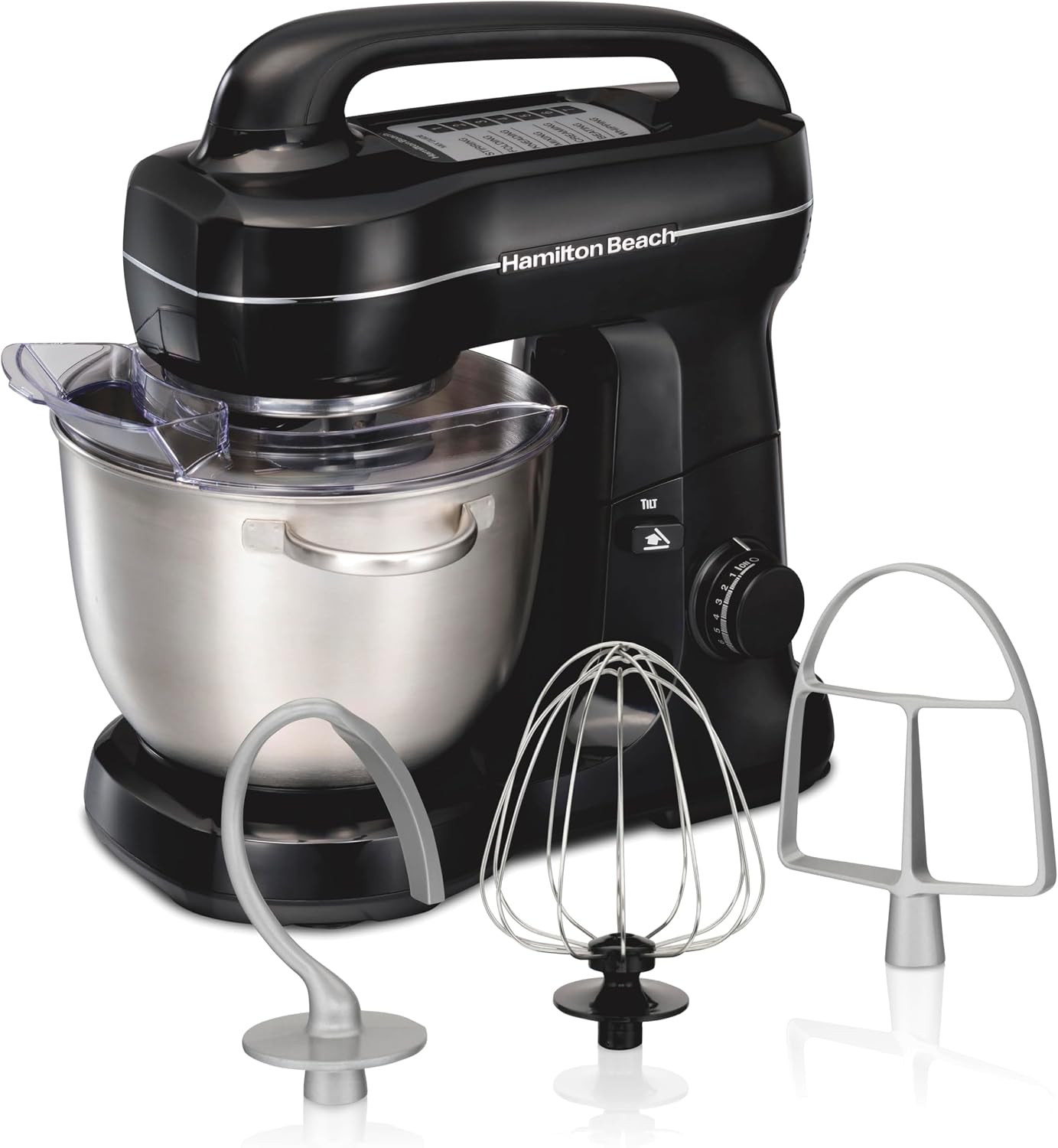 Visit on Amazon → Hamilton Beach 4 Qt Electric Stand Mixer |
4-quart bowl, 7 speeds, easy-carry handle | Everyday mixing in a small kitchen |
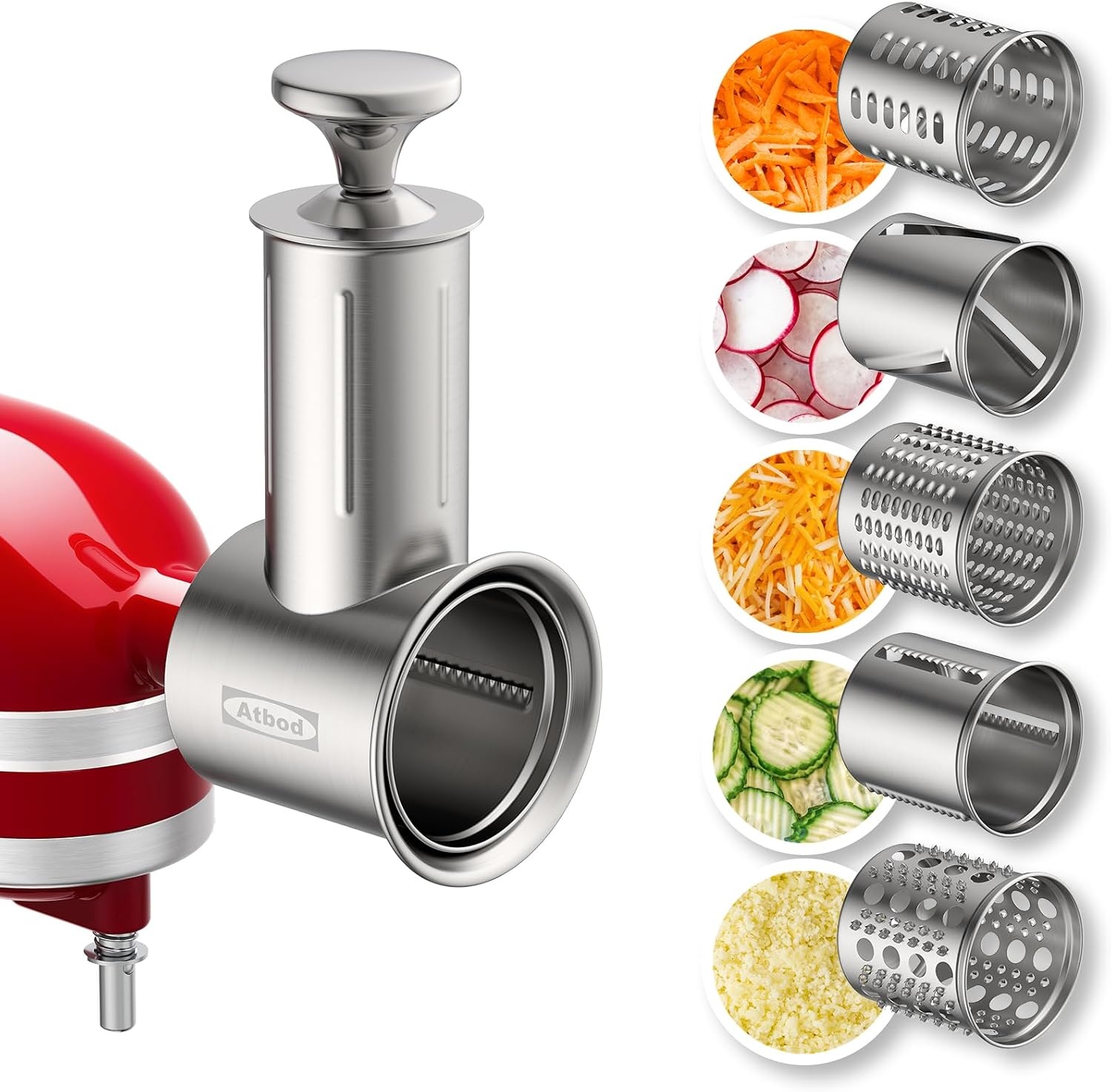 Visit on Amazon → Stainless Steel Slicer Shredder Attachment |
Fits KitchenAid stand mixers, 5 blades, dishwasher safe | Cheese, vegetables, slicing and shredding |
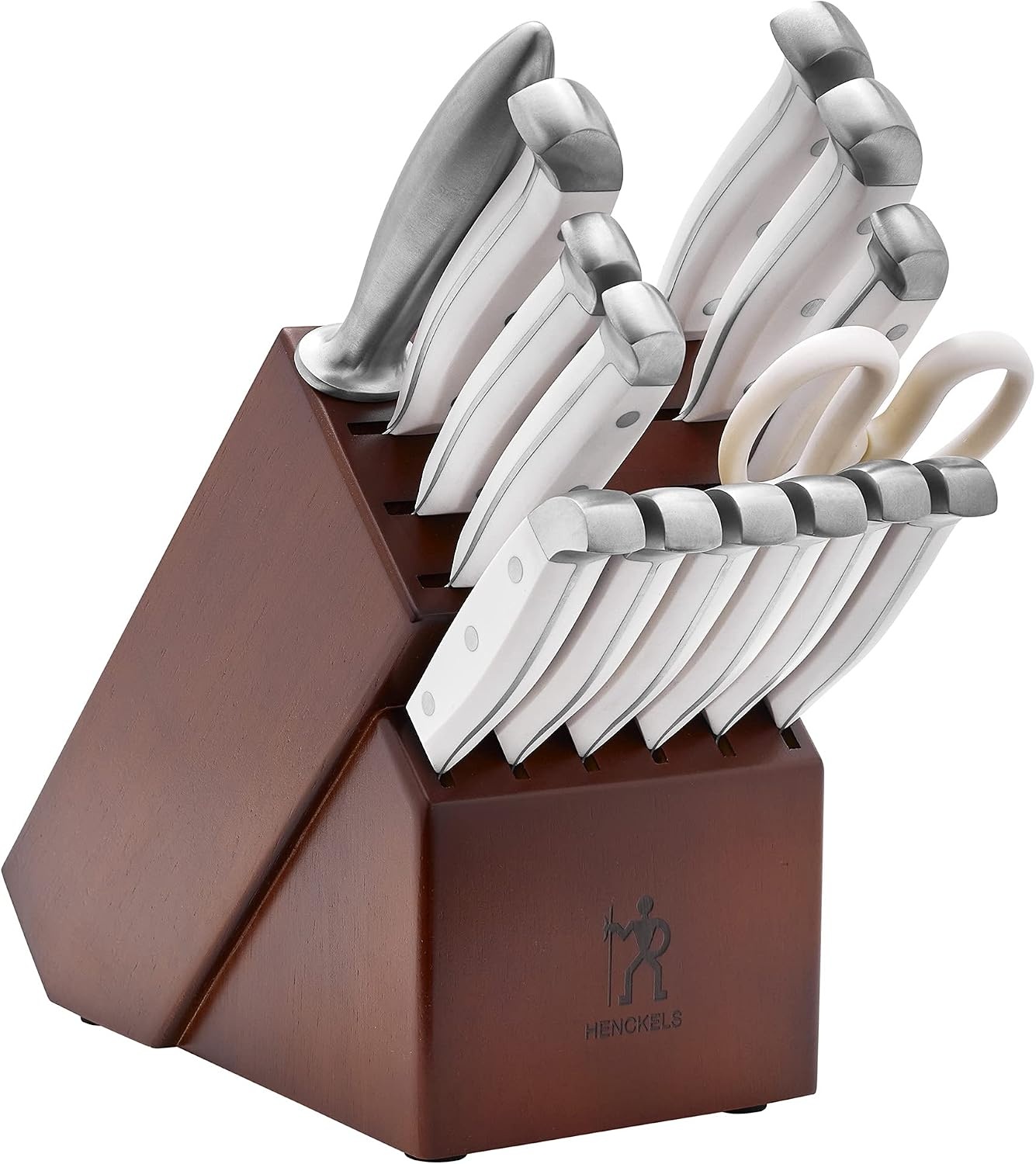 Visit on Amazon → Henckels Statement 15-Pc Knife Set |
15 pieces, German engineered, white handles | Cutting, trimming, and portioning |
The pattern in that table is simple. Motor and bowl size determine what the mixer can do. The attachment determines whether the mixer becomes a system. The knife determines how pleasant the hour around the mixer is.
Should you buy the Garvee 6.7L Stand Mixer?
Yes, if bowl size and rated motor per dollar are your priorities. A 660-watt motor and a 6.7-liter bowl is a serious combination on paper, and for weekly loaves, pizza dough, and the occasional enriched dough, it is aimed squarely at what a home bread baker needs. Visit on Amazon →.
The condition is the one I apply to every mixer without a brand reputation behind it: run a stiff dough first. Two pounds, low hydration, ten minutes. If the housing stays reasonable and the head stays steady, you bought a bread mixer. If it smells hot, you bought a mixer for cakes, and now you know before you built a routine around it. That single bake is worth more than any review, including this one.
Should you buy the Hamilton Beach 4 Qt Electric Stand Mixer?
Yes, if you bake in single batches and you want a mixer that stores in a cabinet. Four quarts, seven speeds, and a carry handle describe a machine designed for convenience in a small kitchen, and that is a legitimate set of priorities. Cakes, cookies, frosting, whipped cream, quick breads, and soft doughs are all squarely in its lane. Visit on Amazon →.
No, if a weekly stiff sourdough is the reason you are shopping. In that case save longer and buy more motor and more bowl, because the four-quart class is not built for heavy dough at volume, and you will spend the money twice.
The bottom line
Buy the mixer for the dough you actually make, not the dough you imagine making. If that dough is stiff and frequent, put your money in motor and bowl size, which points at the Garvee. If it is soft and occasional, the Hamilton Beach 4 Qt keeps your counter and your budget clear. Then, if you already own a KitchenAid, the slicer shredder attachment turns that mixer into a prep station, and the Henckels set makes the hour around it faster and safer. The motor is the mixer. Everything else is what you build around it.