Related: Best Stand Mixer for Bread Dough: What Survives a Double Batch
I kneaded dough by hand for years, until my wrists told me to stop. Then I ran a bakery for a decade, and now I teach bread classes in Burlington, Vermont, which means most of my week is spent watching other people's dough and answering one question over and over: which KitchenAid stand mixer should I buy? The honest answer is that it depends entirely on what you plan to put in the bowl. If your dough is bread dough, the number on the side of the box tells you almost nothing about whether the machine can actually knead it.
The motor is the mixer. Everything else, the color, the bowl handle, the flat beater in the box, is decoration until the machine proves it can handle a stiff two-pound loaf without stalling, overheating, or walking across the counter. I run every machine through the same sourdough, the same brioche, and the same fifth-loaf test, and I check what the motor smells like after ten minutes of kneading. If it smells hot, it is not powerful enough for what you bought it for. That single test has saved more of my students from bad purchases than any spec sheet.
Here is how the four pieces of equipment I trust most sort out, from the small-kitchen pick to the machine I would hand a bakery.
Best Overall: KitchenAid Artisan, 5-Qt Tilt Head Stand Mixer, Matcha
The 5-quart Artisan is the best all-rounder in this lineup, and I say that as someone who bakes bread on a different machine. Five quarts is enough for a two-loaf batch, a double batch of cookies, a bowl of buttercream, and a weekend of normal cooking. The attachment ecosystem is unmatched, which matters more than people realize when they are buying their first mixer, because a mixer with a pasta roller and a grinder is a kitchen system, not a gadget.
What I like most is the reliability. This is the machine that survives years of weekly use if you respect what it is. What I like least is the honesty it forces on you. Bread dough makes this mixer work. You will hear the motor change pitch when the dough gets stiff, and the tilt head will wobble a little under a heavy load. That is not a defect, it is a design doing exactly what a tilt head does. If you make one or two loaves a week and you also make cakes, cookies, and frosting, this is the pick. If your whole baking life is stiff sourdough at double batch size, keep reading, because you will want more motor than this.
Best for Small Kitchens: KitchenAid Artisan Mini, 3.5-Qt Tilt Head Stand Mixer, Candy Apple Red
The Mini exists for the person who bakes in small batches and does not have a counter the size of a bakery bench. Three and a half quarts covers a single loaf, one tray of cookies, a pint of whipped cream, and a batch of frosting without dragging out a machine that weighs as much as a small dog. It uses the same attachment hub as the bigger Artisans, so the ecosystem still applies. That is the quiet advantage of staying inside this family of mixers.
Where it stops is volume. A single loaf is the job. Two pounds of stiff dough is where the Mini starts asking questions, and if you keep pushing it, the answer is a hot motor smell and a shorter life. Buy it because your kitchen is small and your batches are small, not because it is cheaper and you hope it behaves like the 5-quart. Bowl capacity is a lie in both directions: a big bowl does not guarantee dough power, and a small bowl does not mean a weak motor, but it does mean you have to match the machine to the batch.
Best for Big Batches: KitchenAid KSM8990CU 8-Quart Commercial Countertop Mixer, 10-Speed, Gear-Driven, Contour Silver
This is the machine in the group that behaves like a bakery mixer instead of a home mixer with a big bowl. The gear-driven build and the ten speeds are the reason: power routes through gears rather than a belt, and that is exactly the difference you feel when the dough gets stiff and the machine keeps kneading instead of slowing down and complaining. Eight quarts means you can make a serious batch of dough, shape it, and still have room in the bowl for the next thing.
The trade-offs are real. It is heavy, it takes up counter space you may not have, and it is the most expensive thing on this page. It is also the one I would trust with a decade of weekly baking, which is the test that matters to me. If you sell bread at a farmers market, bake for a big family, or you are simply done buying a new mixer every few years, this is where the money goes. If you make one loaf on Sundays, this is more machine than your kitchen needs, and the 5-quart will serve you better.
The Attachment That Earns Its Counter Space: GVODE Masticating Juicer Attachment for KitchenAid Mixer, Dual Feed Chute
Attachments decide the long-term relationship. This is the argument I make to every student who is deciding between two mixers with similar bowls: the motor you already own is the expensive part, so the hub on the front of it is what you are really buying. The GVODE masticating juicer attachment uses that hub, which means the mixer on your counter becomes a juicer without a second motor, a second power cord, or a second appliance fighting for outlet space.
The dual feed chute is the practical part. Fewer stops to cut things down to size means you actually use it instead of dreading it. A masticating design is the slower, gentler style of juicing, which is what most people want when they are juicing greens and harder produce rather than drinking a glass of orange juice. I own attachments I have used twice and never touched again, and I am honest about that. This is not one of them, because it does a job that would otherwise require a whole separate machine.
How I tested
Every mixer here went through the same bread gauntlet: the same sourdough, the same brioche, the same question of whether the motor survives the fifth loaf. No cake mix shortcuts, no pudding, no whipped cream and a pat on the back. If a machine cannot knead, it has not been tested in my kitchen, no matter how good it looks whipping egg whites.
The checks are simple and repeatable. Does the dough hook climb the dough or bury itself and stall? Does the head wobble under load, and does the wobble get worse as the dough tightens? What does the motor smell like after ten minutes of continuous kneading? That last one is the test I trust most. A hot electrical smell means the machine is working beyond its design, and no bowl size or color option fixes that.
I also watch the dough, not the clock. A machine that kneads well develops dough that comes together and cleans the bowl. A machine that is struggling leaves a shaggy, torn mass that never quite gets there, no matter how long you run it. Learning to read that is worth more than any spec sheet.
Analysis and test results
The tilt head versus lift bowl argument is the one that matters most for bread people. A tilt head is convenient and light, and the two Artisans here are tilt heads. Under a stiff dough load, a tilt head wobbles, because the head is held at one point and the dough is pushing back against it. The bigger commercial machine has the sturdier geometry, and if bread is your main job, that difference is not cosmetic. It is the difference between a machine that feels planted and one that feels like it is negotiating with you.
Motor power is the second thing, and wattage alone will not tell you. Wattage is power draw. Torque is the twisting force that actually kneads stiff dough, and the two are not the same number. This is why I tell people to skip anything under 500 watts if they plan to make bread, and why I still tell them to check the motor smell on anything that claims to be powerful. A machine can draw plenty of power and still not have the gearing to push through a stiff dough.
Bowl capacity marketing deserves its own paragraph. A 5-quart bowl does not mean 5 quarts of bread dough. Stiff dough is heavy, and the machine has to move all of it. A bowl that handles a cake batter easily can be completely overwhelmed by two pounds of dough. Read capacity as a ceiling for light mixtures, not a promise about bread.
Finally, attachments. A mixer with a pasta roller, a grinder, and a juicer attachment is a kitchen system. A mixer with a decorative bowl and no hub is a gadget with a nice finish. When two mixers are close on motor, buy the one whose ecosystem you will actually use, and buy attachments one at a time instead of a bundle you will never open.
The stand mixer reference table
| Mixer | Best for | Bowl and design | Attachments | Where to get it |
|---|---|---|---|---|
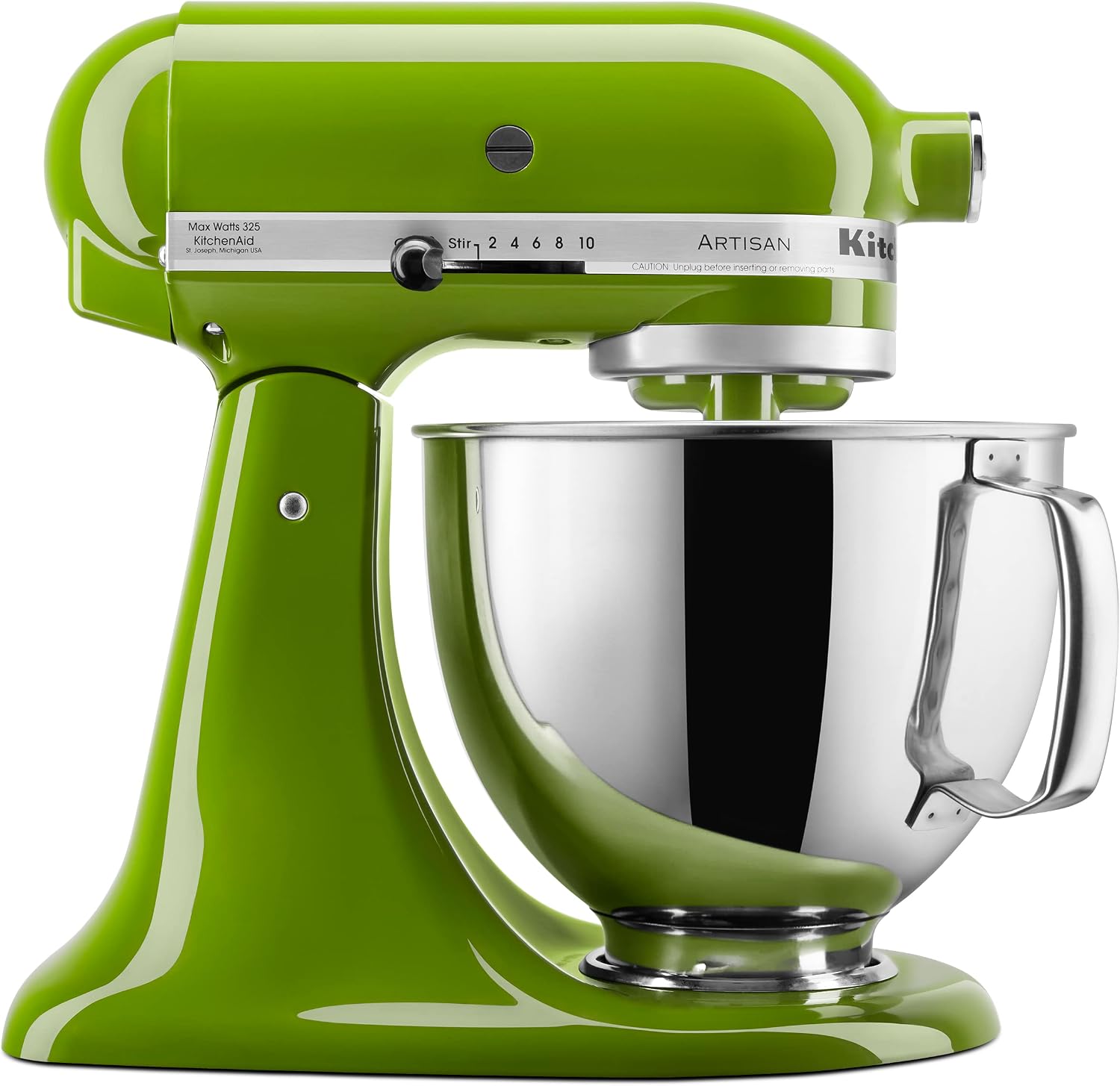 Visit on Amazon → KitchenAid Artisan 5-Qt |
Weekly bread plus cakes, cookies, frosting | 5-quart tilt head | Full KitchenAid hub | Visit on Amazon → |
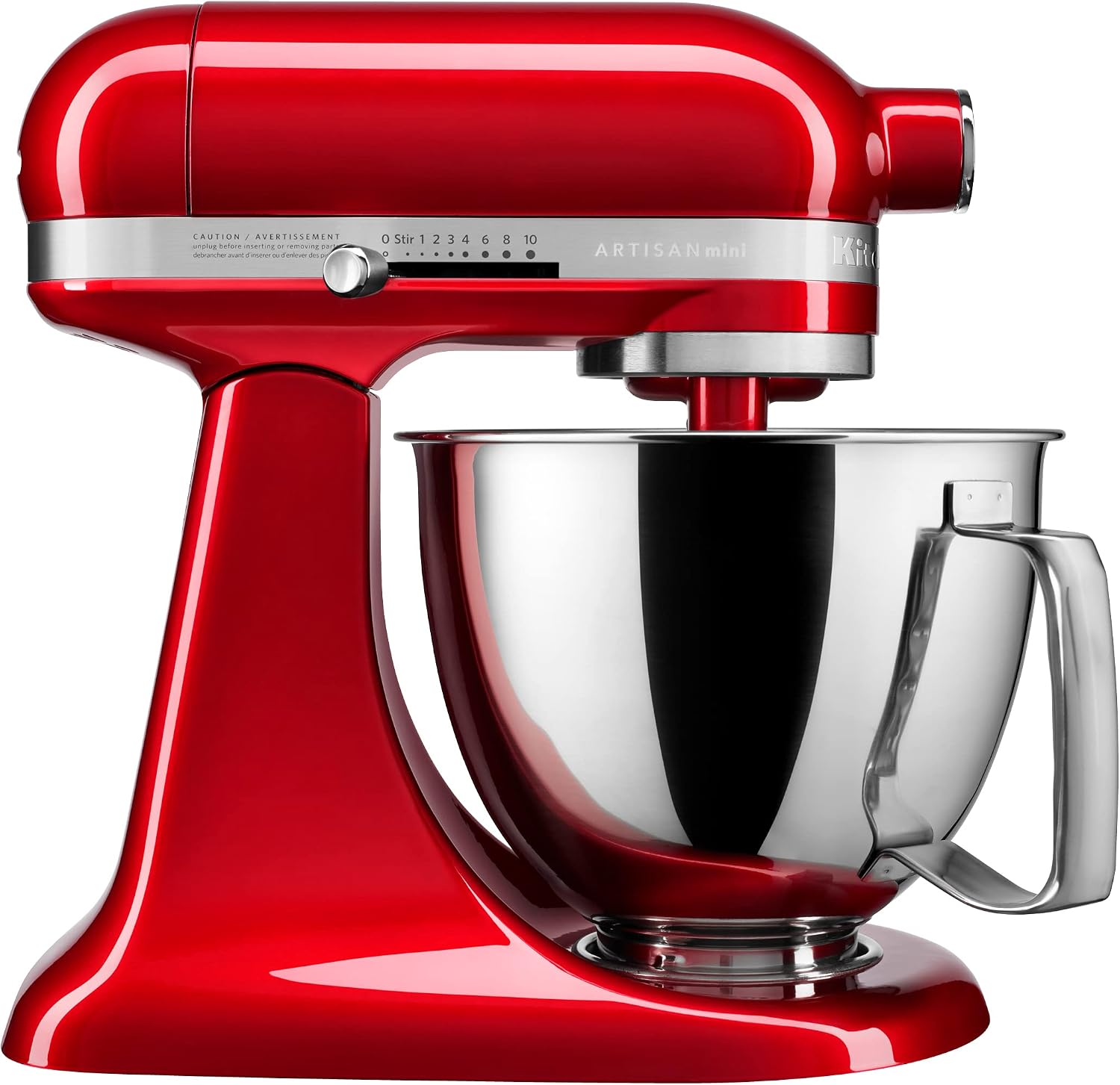 Visit on Amazon → KitchenAid Artisan Mini 3.5-Qt |
Small kitchens, single loaves, small batches | 3.5-quart tilt head | Full KitchenAid hub | Visit on Amazon → |
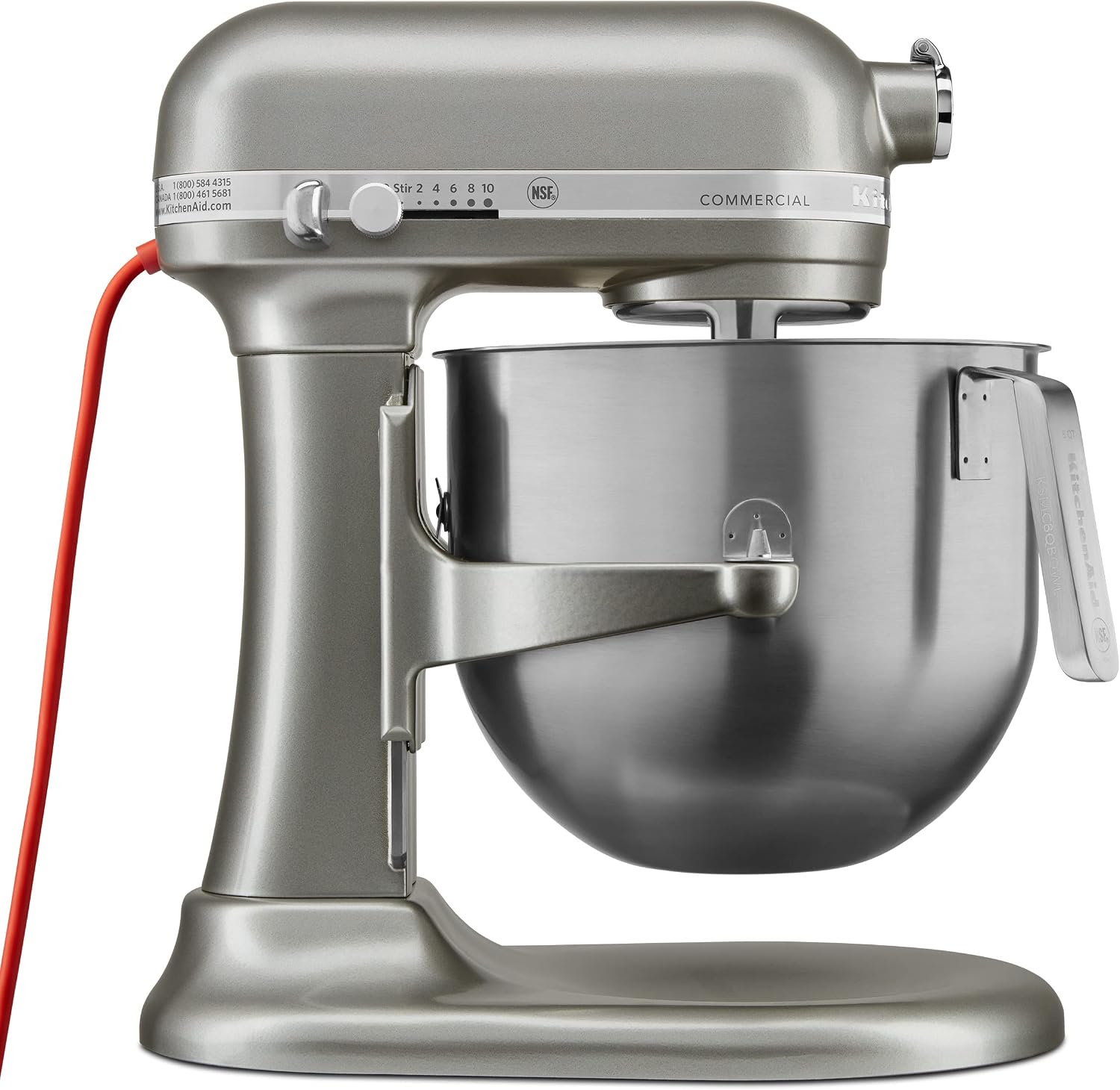 Visit on Amazon → KitchenAid 8-Quart Commercial |
Volume baking, market batches, weekly bread for years | 8-quart commercial countertop, gear-driven, 10-speed | Full KitchenAid hub | Visit on Amazon → |
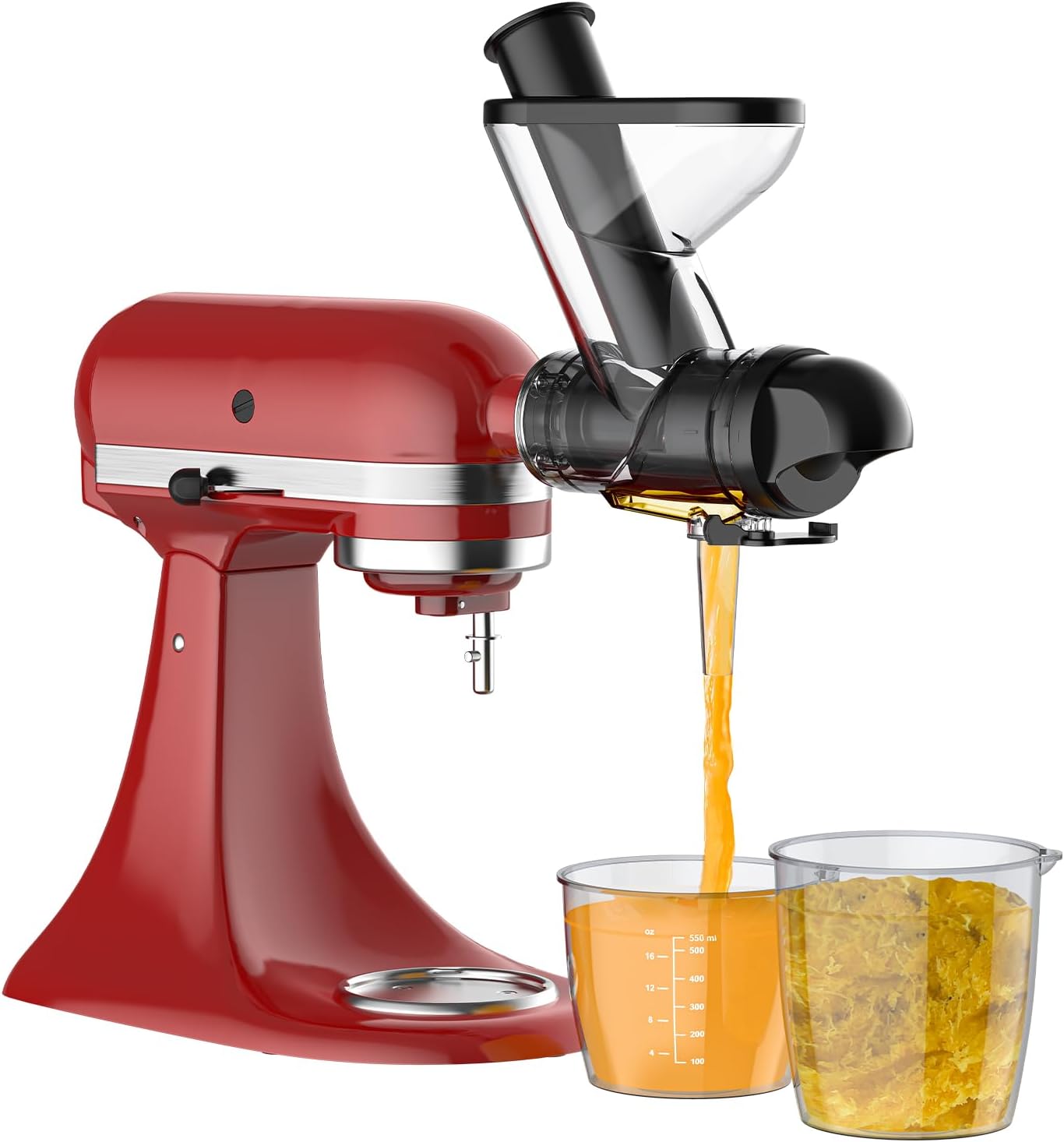 Visit on Amazon → GVODE Masticating Juicer Attachment |
Turning an existing mixer into a juicer | Attachment, dual feed chute | Fits the KitchenAid hub | Visit on Amazon → |
The pattern in that table is the whole guide in one glance. Two tilt heads for normal kitchens, one commercial machine for volume, and one attachment that turns a mixer you already own into a second appliance. Pick the row that matches your batch size, not the row that matches your budget ceiling.
Should you buy the KitchenAid Artisan 5-Quart?
Yes, if you make a mix of bread, cakes, and cookies. It is the best all-rounder here, the attachment ecosystem is unmatched, and this is the machine that has the kind of track record that survives a decade of weekly baking. My own Artisan is the one I keep for cakes and cookies, and I will not pretend that is a compromise. It is the right tool for those jobs.
Know what you are buying, though. Bread dough makes this mixer work. You will hear it, and if you push a stiff double batch through it every week, you will smell it. Buy it as the machine for a kitchen that bakes a little of everything, and it will last. Buy it as a bakery machine and you will be shopping again in a few years.
Should you buy the KitchenAid Artisan Mini 3.5-Quart?
Yes, if your counter is small and your batches are small. It handles a single loaf, a tray of cookies, and a bowl of frosting without drama, and it shares the attachment hub with the bigger Artisans, so the system still works. For a small kitchen in a small apartment, this is the sensible buy, and the color options do not hurt.
Just do not ask it to be something it is not. Double batches of stiff dough are where the Mini starts to struggle, and no amount of hoping changes the motor. Match the machine to the batch and this one earns its place on a narrow counter.
Should you buy the KitchenAid 8-Quart Commercial?
Yes, if you bake at volume and you are tired of babysitting a machine that is working too hard. The gear-driven commercial build is the closest thing here to a bakery mixer that lives on a home counter, and the ten speeds give you real control over a big dough. It is heavy, it is the biggest footprint on this page, and it is the one I would trust with a decade of weekly bread.
If you make one loaf on a Sunday, skip it. A machine this size is wasted on small batches, and you will resent the counter space. Buy it when your batch size has outgrown a tilt head.
Should you buy the GVODE juicer attachment?
Yes, if you already own a KitchenAid and you want juice without buying a second motor. The dual feed chute means less chopping and more juicing, and the masticating design is the gentler style that suits greens and harder produce. It is the clearest argument for the attachment ecosystem: one motor on the counter, several appliances' worth of jobs.
It is a system add-on, not a starter purchase. Buy the mixer first, then add the jobs you actually do. If you juice twice a year, save your money. If you juice twice a week, this attachment pays for itself in counter space alone.