Related: Stand Mixer Attachments Worth Buying
I spent ten years running a bakery before I moved to Burlington and started teaching bread classes, and in that decade I learned that almost every stand mixer for bread dough gets sold on the wrong number. The box talks about quarts. The box talks about speeds. Neither number tells you whether the machine can push a stiff sourdough around the bowl for ten minutes without the motor housing getting hot enough to smell like a hair dryer. That smell is the tell. Once you know it, you cannot un-know it.
So this is the guide I wish I had when I was buying my first mixer for a bakery that could not afford a Hobart. The four machines here run from a compact three-quart tilt head to an eight-quart monster, and I judged every one of them the way I judge every mixer that comes through my kitchen: what does the motor actually do when the dough fights back, and what does the bowl geometry do when the dough climbs the hook. No cake mixes. Bread, or nothing.
Best Overall for Bread: Kenwood Chef Titanium Kitchen Machine
The Kenwood Chef Titanium is the machine in this group with a motor number that means something. An 800W motor, electronic variable speed control instead of a handful of preset clicks, a five-quart stainless steel work bowl that lifts off and goes in the dishwasher, and three mixing tools in the box. You do not have to buy a dough hook separately before you can bake your first loaf, which sounds like a small thing until you have priced a dough hook.
Variable speed control matters more than most people give it credit for. With a stepped switch you get a fixed set of choices and you live with them. With electronic control you can start a stiff dough at a crawl and creep up as the gluten develops, which is how you keep a hook from climbing out of the bowl and how you keep a strong motor from dumping all its torque into a dough that has not relaxed yet. That is the difference between kneading and wrestling.
If you bake bread weekly and you want one machine to carry you for years, this is the one I would point you to first. The trade-offs are the money and the fact that a five-quart bowl is a five-quart bowl. If you routinely make four loaves at once, read the next section and think hard about whether the extra volume is worth what you give up in control.
Best Value for Big Batches: Aucma Stand Mixer
A 900W motor and an eight-quart bowl. On paper that is the most mixer per dollar in this group, and if your problem is volume, if you are feeding a crowd or baking four loaves on a Sunday, that bowl solves a real problem. The Aucma ships with the three tools you actually need: a dough hook, a wire whip, and a beater. Black finish, six speeds, and a tilt head.
The thing I would watch is that tilt head. Eight quarts of stiff dough is a lot of mass hanging off a hinge, and a hinge under load is where I have seen wobble start. That does not make this a bad machine. It makes it a machine you buy for big batches of moderate dough, plus cakes, cookies, and quick breads, rather than a five-loaf day of tight sourdough at the very top of its capacity. Fill it sensibly and it earns its counter space.
For the money, this is the value pick in the group. Just do not confuse a big bowl with a motor that has the stamina to match it. Both numbers matter, and only one of them gets printed in quarts on the front of the box.
Best Budget Pick: Cuisinart SM-50FR
This is a renewed 5.5-quart Cuisinart in brushed chrome, which means someone else opened the box first and you keep the savings. Renewed is not a dirty word in my kitchen, but it is a reason to read the listing carefully before you click, because condition notes and what is covered vary from seller to seller.
What you get is a 5.5-quart mixer with a bowl size that handles a standard two-loaf batch without drama. It mixes. It kneads. It is the machine I would hand to someone who wants to bake bread once a week and does not want to spend four hundred dollars finding out whether they will stick with it. The compromise shows up in the long game: the motor is not in the same class as the Kenwood, and the accessory ecosystem is smaller, so you are buying a mixer rather than the first piece of a kitchen system. For a first mixer on a budget, that is a fair trade.
Best for Small Kitchens: Dash Everyday Stand Mixer
Three quarts, six speeds, a tilt head, a stainless steel bowl, and a footprint that will not take over your counter. The Dash Everyday is a genuinely useful machine at the job its name describes: everyday recipes. Cookie dough, cake batter, whipped cream, pancakes on a Saturday morning, a single loaf of sandwich bread if you are patient with it.
Where it stops is stiff bread dough at volume. A three-quart bowl holds less dough than most bread recipes call for, and compact tilt-head mixers are built to be light, which is the entire point of buying one. This is the machine for the baker who wants help with the mixing, not the baker who wants the mixer to knead while they shape the next batch. Buy it for what it is and you will be happy with it. Buy it expecting a bread machine and you will be shopping again in a year.
How I judge a stand mixer
I do not start with cake. Cake tells you almost nothing, because a mixer that creams butter and sugar is doing the easiest job in the kitchen. I start with a two-pound lean dough at moderate hydration, mixed on the hook until it clears the bowl. Then brioche, which is the real test, because you are adding butter to a dough that is already fighting you. Then the fifth loaf, because the fifth loaf is where weak motors start to complain out loud.
Three things I am watching the whole time. First, does the head or the bowl move under load, or does the machine sit still and do the work. Second, how hot does the housing get after ten minutes of stiff dough, because heat is the sound a motor makes when it is dying. Third, does the hook actually knead, meaning does the dough climb and stretch around it, or does the hook just spin in the hole it dug for itself.
And the numbers I ignore: bowl size used as a stand-in for capability, the word powerful in a bullet point with no wattage next to it, and any attachment bundle that costs more than the mixer it attaches to.
What the specs actually tell you
Wattage is how much electricity a motor can pull. Torque is what it does with that pull when the dough pushes back. A 900W motor in a tilt-head machine and an 800W motor with electronic speed control are not the same tool, even though the first number is larger. Control is what lets you feed torque into a stiff dough gradually instead of all at once, and gradual is how gluten develops without the machine walking across your counter.
Bowl geometry is the other half of the story. A bowl that is too wide for the hook's reach leaves a ring of unmixed flour on the wall while the hook spins in the middle. A bowl that is too narrow stalls the dough against the sides and turns kneading into a traffic jam. This is why I care more about how a mixer handles two pounds of dough than about how many quarts the box claims, and why an eight-quart bowl is a promise the head design has to keep.
Then there is heat. Every motor gets warm. The question is whether it gets warm and keeps working or gets hot and starts to smell like a hair dryer. That is not a measurement you can put on a spec sheet, and it is the single most useful thing I know about any mixer I have ever owned.
Stand mixer comparison table
Same information in one place. Prices move, so check the listing, but the bowl size, the motor, and the controls are what they are.
| Mixer | Bowl | Motor | Controls | Best for | Price |
|---|---|---|---|---|---|
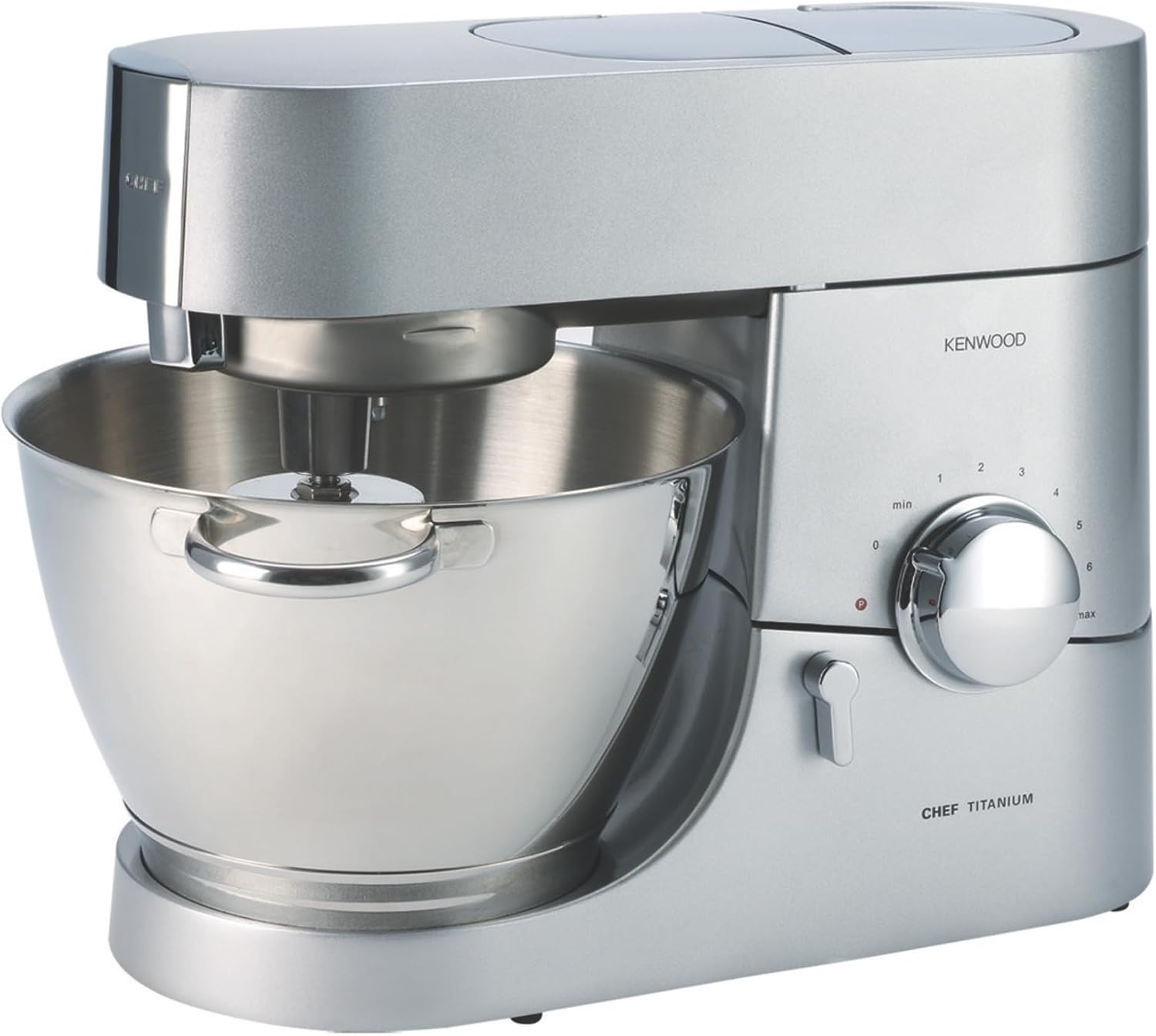 Visit on Amazon → Visit on Amazon →Kenwood Chef Titanium Kitchen Machine |
5 qt stainless work bowl | 800W | Electronic variable speed | Stiff dough, weekly bread, long sessions | Check current Amazon price |
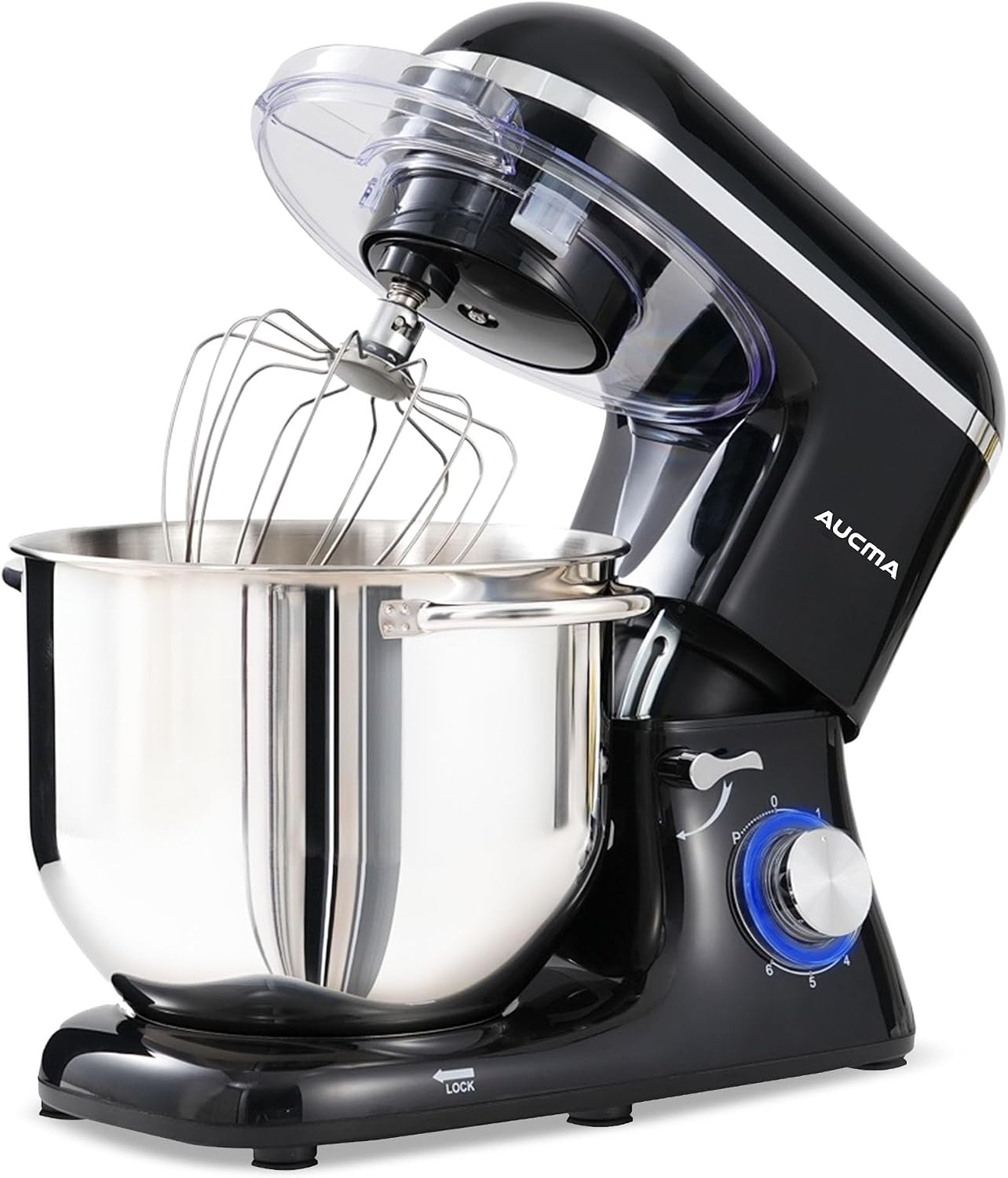 Visit on Amazon → Visit on Amazon →Aucma Stand Mixer |
8 qt | 900W | 6-speed tilt head | Big batches, double recipes, cakes and cookies | $149.98 |
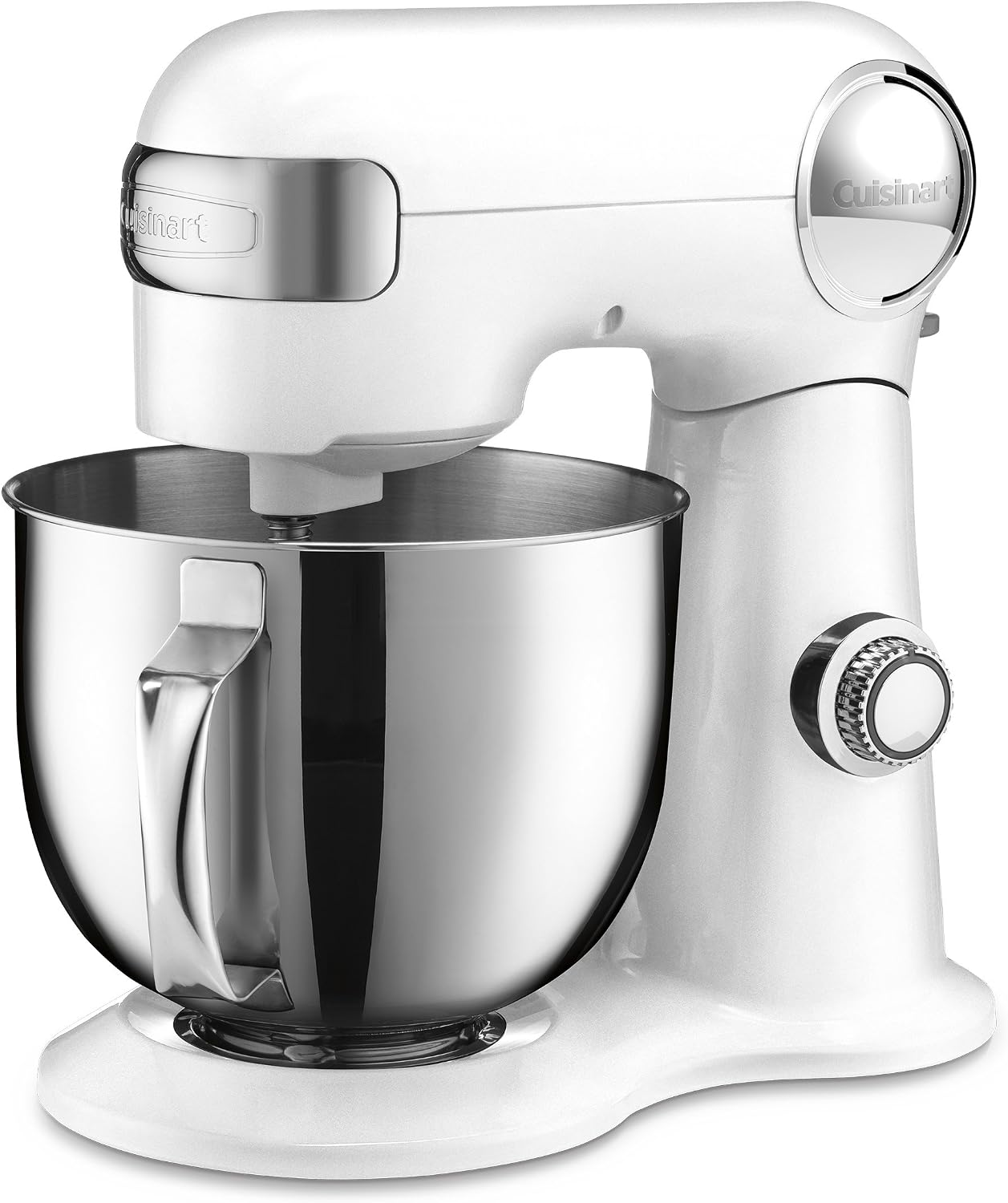 Visit on Amazon → Visit on Amazon →Cuisinart SM-50FR |
5.5 qt, renewed | Not stated in the listing | Not stated in the listing | First mixer, two-loaf batches, tight budget | $189.99 |
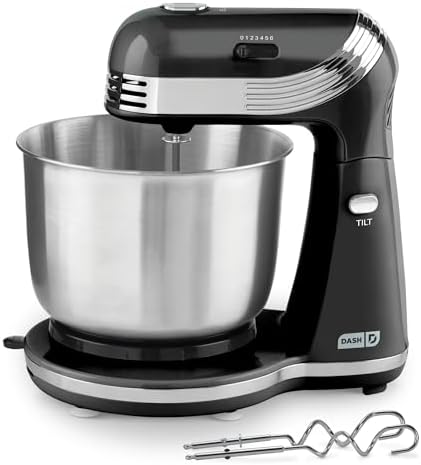 Visit on Amazon → Visit on Amazon →Dash Everyday Stand Mixer |
3 qt stainless steel bowl | Not stated in the listing | 6-speed tilt head | Small kitchens, cakes, quick breads, single loaves | $69.99 |
Do you need a lift-bowl mixer for bread?
For bread people, a lift bowl beats a tilt head, and I will say that plainly. The bowl on a lift design sits in a cradle and does not move, so all the energy goes into the dough instead of into a hinge. A tilt head is not doomed, and plenty of people bake good bread on one for years, but a tilt head plus a large bowl plus stiff dough is the combination where I have seen the wobble start. In this group the Aucma pairs an eight-quart bowl with a tilt head, which is exactly the pairing to think about honestly before you buy. Match the machine to your real batch size and the design argument mostly takes care of itself.
Attachments are the long game
If you want a mixer that grows into a pasta roller or a grinder, buy the machine with the motor and the ecosystem to support it, and understand that you are paying for a system rather than a mixer. If you want a mixer that makes bread, buy the motor and skip the bundle. I own attachments I have used twice. The motor is the part you cannot upgrade later.
Should you buy the Kenwood Chef Titanium Kitchen Machine?
Yes, if bread is the point. It has the motor, the electronic speed control, the five-quart stainless work bowl, and the three tools in the box. It is the machine in this group I would trust with a decade of weekly dough, and the control lets you treat a stiff dough gently instead of hammering it. Check current Amazon price and compare it against what you would spend replacing a cheap mixer twice.
Should you buy the Aucma Stand Mixer?
Yes, if volume is your problem and your dough is moderate. Nine hundred watts and eight quarts is a lot of capacity for the money, and the dough hook, wire whip, and beater cover most of what a home kitchen does. Just be realistic about loading a tilt head that full with stiff bread dough. Buy it for big batches, not for the tightest dough you can imagine. Check current Amazon price first.
Should you buy the Cuisinart SM-50FR?
Yes, if this is your first mixer and you want to find out whether you will actually bake. A renewed 5.5-quart machine covers two-loaf batches, cakes, and cookies, and it saves you money on a design you can grow out of later without regret. Read the listing notes on condition before you buy, and check current Amazon price against a new unit so you know the renewed discount is real.
Should you buy the Dash Everyday Stand Mixer?
Yes, if your kitchen is small and your baking is cakes, cookies, and quick breads. Three quarts and six speeds in a compact tilt head is a sensible machine for everyday recipes, and it will not eat your counter. It is not a bread mixer at volume, and I would not ask it to be. Check current Amazon price, and if weekly sourdough is in your future, put the money toward the Kenwood instead.