Related: How to Tell If Your Stand Mixer Can Actually Knead Bread
I kneaded dough by hand until my wrists gave out. I ran a bakery for ten years before I moved to teaching bread classes in Burlington, Vermont, and somewhere in the middle of that I decided the stand mixer is the greatest kitchen invention since the oven. So when somebody asks me to name a stand mixer for bread dough, I do not start with bowl size or color.
I start with the motor, because the motor is the mixer. Everything else, the bowl, the hook, the pretty shell, is downstream of one question: can it turn a stiff two pound loaf without smelling hot after ten minutes? If the answer is no, you did not buy a bread mixer. You bought a cake mixer with ambitions.
The four products in this guide are not four versions of the same thing. One is a heavy dough machine with a 900 watt motor and an 8.5 quart bowl. One is a 5 quart tilt-head with a stainless steel bowl and ten speeds. One is a small 3.2 quart mixer built for daily small batches. And one is not a mixer at all, but the cheapest upgrade a KitchenAid owner can make. Here is how they sort out.
Best for Heavy Dough: Kitchen in the box 8.5 QT
This is the machine in this group built for the job most mixers fail at. The listing gives you two numbers that tell the whole story together: 900 watts and an 8.5 quart bowl. A big bowl keeps a double batch from climbing the hook and crowding itself into a stall. A big motor is what turns stiff dough instead of grinding against it. The name says heavy dough, and the specs back it up.
Here is the nuance about wattage, though. Wattage tells you how much power the motor draws. Torque tells you whether it can actually knead. They usually travel together, but not always, which is why I never buy a mixer on wattage alone. What I want to know is whether it holds speed when the dough gets tight. A machine that bogs down and slows is a machine that is heating up, and heat is what kills mixers.
If you bake two or three loaves at a time, or you are the person who brings bread to every family gathering, this is the one to look at first. An 8.5 quart bowl is genuinely large, and that is the point. Just measure your counter before you fall in love. 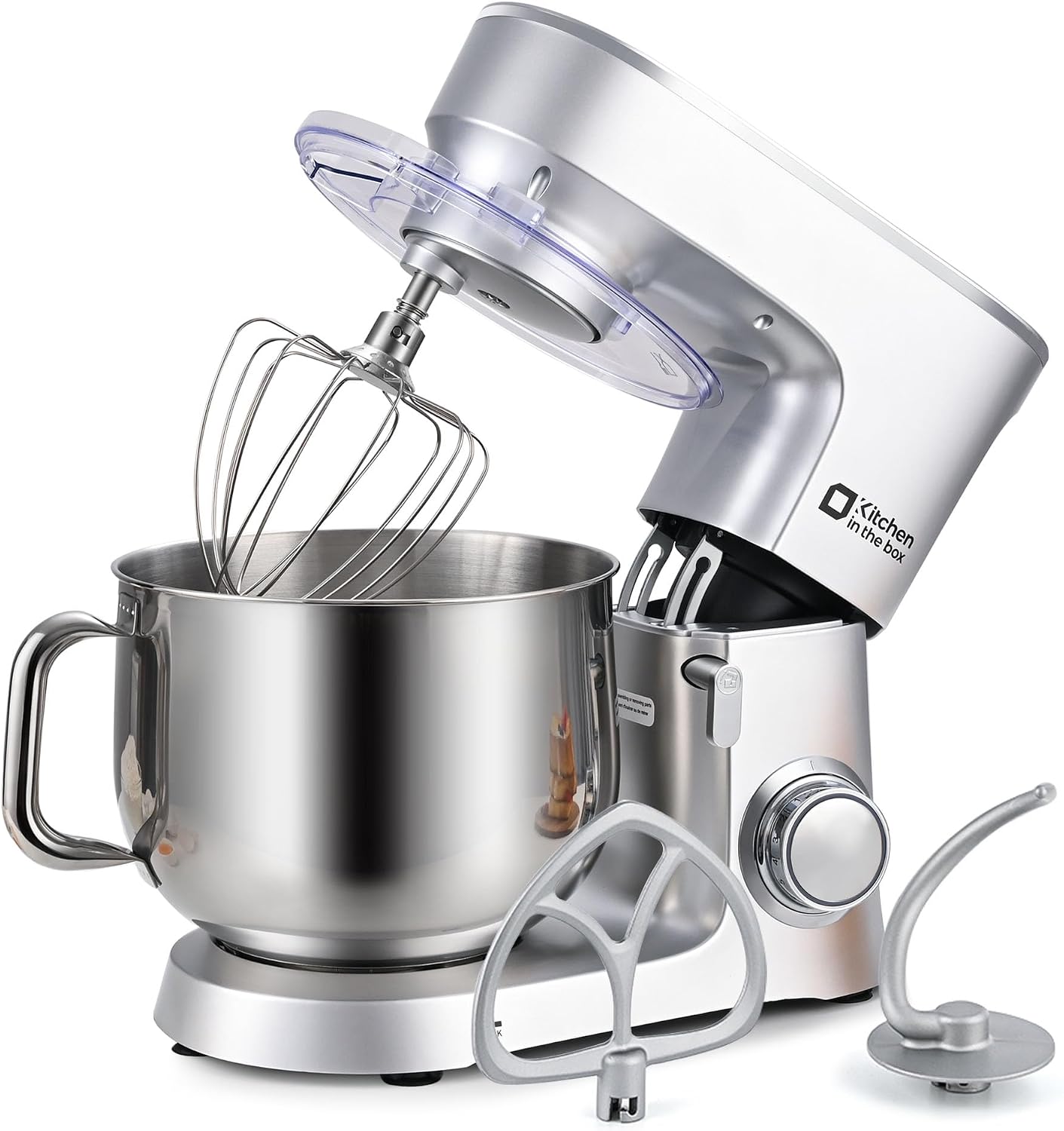 Visit on Amazon →
Best All-Rounder: SMEG SMF03
Ten speeds, a 5 quart stainless steel bowl, a tilt head, and a finish that looks like a 1950s appliance in the best possible way. If you want one mixer that lives on the counter and does not need to be hidden when guests arrive, this is it.
A tilt head is a real design choice, and bread people should understand what it means. The head lifts up and back so you can pull the bowl out. It is easier to load, it needs less vertical clearance, and it is what most home kitchens have. What it does not have is the braced stability of a lift bowl design, where the bowl rises into a fixed head. Under a stiff dough, the tilt head is the one that wobbles. That does not make it bad. It makes it a mixer for cakes, cookies, buttercream, and bread at normal hydration, not for a wet, heavy sourdough you are trying to push hard.
The stainless steel bowl matters more than people give it credit for. It holds temperature, it does not scratch, and it will outlive the machine's plastic parts by a decade. Ten speeds is also more useful than it sounds, because low speeds are where dough lives. 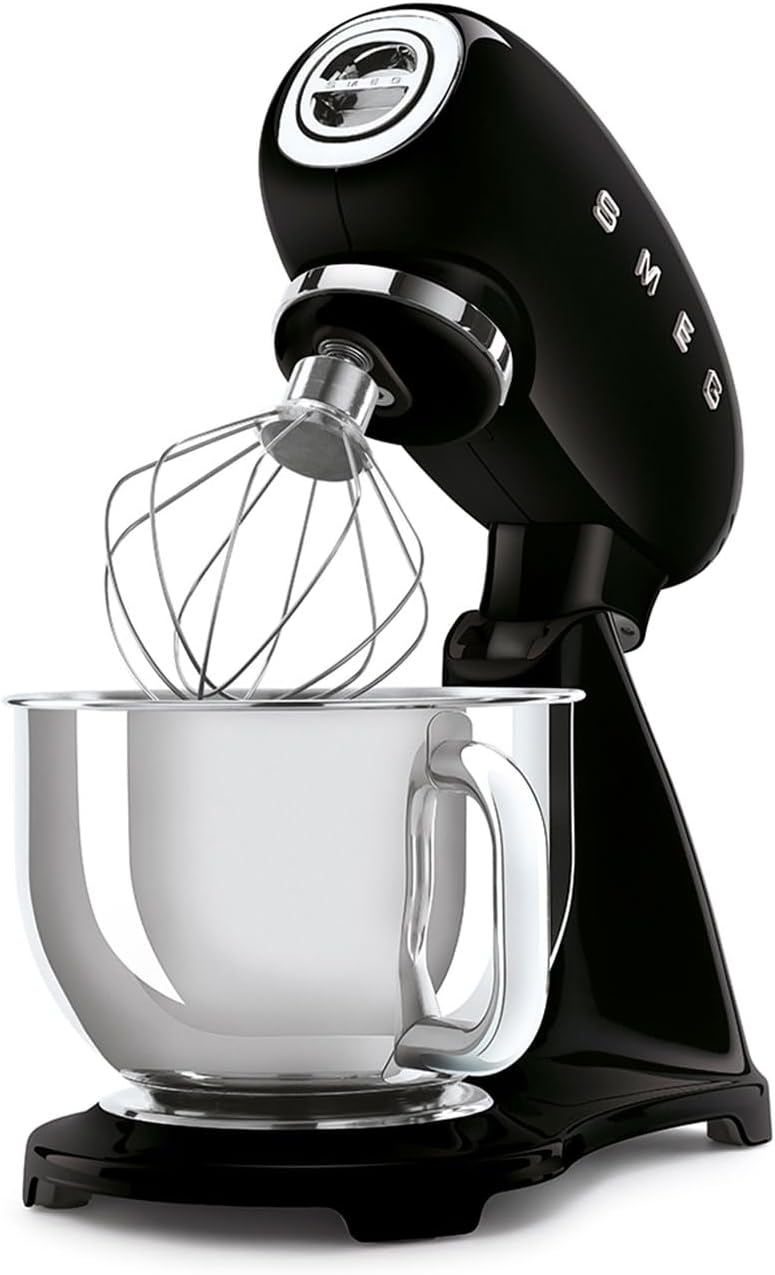 Visit on Amazon →
Best Small Mixer: Kitchen in the box 3.2 Qt
Portable, lightweight, six speeds, and it arrives with an egg whisk, a dough hook, and a flat beater. That is a complete small toolkit in one box, and for a lot of kitchens it is all the mixer anyone actually needs.
Be honest about what 3.2 quarts means. That is a one loaf, one cake, one batch of cookies machine. The bowl will not hold a double batch of anything, and it is not supposed to. But if you bake a single loaf on the weekend, or you cook for two, a small mixer that lives on the counter and gets used daily beats a heavy machine that lives in a cupboard. The included attachments do more work than people expect: a whisk for cream and egg whites, a beater for batter, a hook for the occasional dough. Three tools, one footprint, no shopping for extras.
What it is not is a bakery machine. If your goal is a two pound loaf of stiff dough every week, save for the 8.5 quart instead. Small mixers are whipping machines with a hook in the box, and there is nothing wrong with that as long as you buy it knowing it. 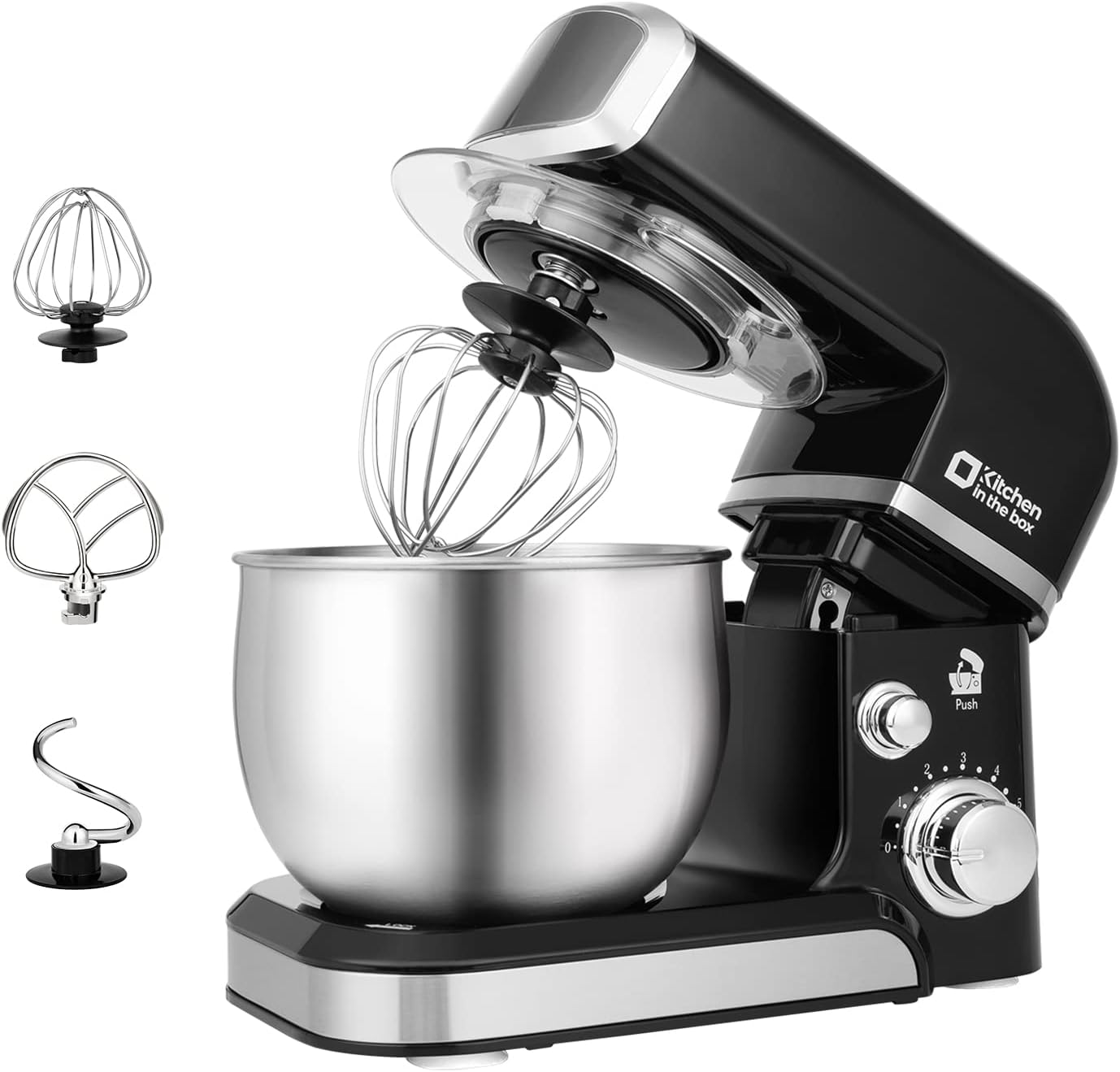 Visit on Amazon →
The Cheapest Real Upgrade: Stainless Steel Dough Hook Attachment
This is the one item here that is not a mixer, and it is the one I would buy first if I already owned a mixer. It is a stainless steel dough hook made for KitchenAid 4.5 to 5 quart tilt-head models, which is the standard size that has been sitting in a million kitchens for decades.
Why replace a hook you already have? Because most stock hooks are coated, and coatings chip. Once the coating flakes, you are looking at bare metal under a finish that is going into your dough. A stainless hook does not flake, it cleans up in the sink in seconds, and it climbs the dough the way a hook is supposed to instead of burying itself in the middle of it. It is a small purchase that changes how an existing machine behaves on bread day, and it is the cheapest way to make the mixer you already own better at the job people complain about most.
Check the fit before you order. This hook is for 4.5 to 5 quart tilt-head KitchenAid mixers, not for lift bowl models and not for other brands. 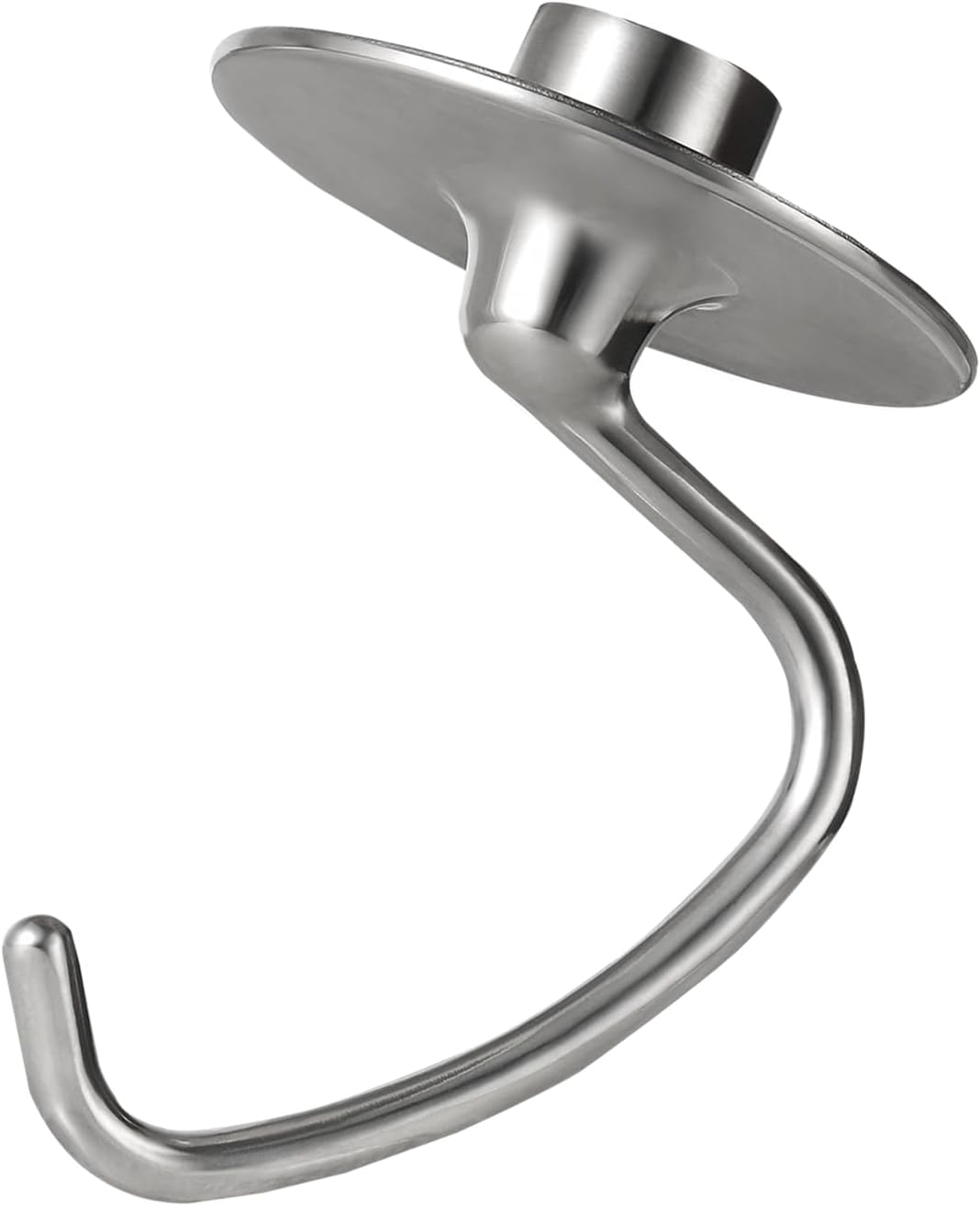 Visit on Amazon →
How I judge a stand mixer
Every machine gets the same gauntlet. The same sourdough, the same brioche, the same "does the motor survive the fifth loaf" question. A mixer that whips cream beautifully can still stall on bread dough, because whipping and kneading are two different jobs, and only one of them punishes a motor.
So I ask four things. What is the real motor power, not the bowl size? How does it handle stiff bread dough? Lift bowl or tilt head, and does it wobble under load? And would I trust it with a decade of weekly baking? That last one is the real test, because most mixers do not die in month one. They die in year three, quietly, in the middle of a Christmas bake.
I also do the smell check. If a motor smells hot after ten minutes of dough, it is not powerful enough for what you bought it for, and no amount of bowl capacity marketing fixes that. And I do not call anything "powerful" without seeing it work a stiff dough, because the word means nothing on a product page.
What the numbers actually mean
Bowl capacity is a lie. A 5 quart mixer that stalls on two pounds of bread dough has a marketing problem, not a capacity. The number on the box is volume, and volume tells you nothing about whether the motor can turn what you put in it. When you compare these machines, compare the bowl and the motor together, because either one alone is a half answer.
Wattage versus torque is the other thing people get wrong. Wattage is power draw. Torque is twisting force, and torque is what handles stiff dough. You will rarely see torque printed anywhere, so you read it the only way that works: by how the machine behaves when the dough tightens up. A mixer that holds its speed is a mixer with torque. A mixer that slows and whines is a mixer that is overheating.
Lift bowl versus tilt head is a genuine fork in the road. The bowl on a lift design is a fortress, braced and stable, and that is what heavy dough wants. The tilt head is convenient and it is what most of us own, but it is a wobbler under load. Pick based on the stiffest dough you actually make, not the softest.
Attachments decide the long term relationship. A mixer with a real ecosystem behind it is a kitchen system, not a gadget, and that is why a single stainless dough hook can matter more than a feature list. Bundles are usually filler. The one attachment you will use every week is the one worth buying.
The comparison table
Every link below goes to the product it belongs to. Prices change constantly, so check them at the source rather than trusting a number in a table.
| Product | Best for | Bowl | Speeds | Price |
|---|---|---|---|---|
| Visit on Amazon → Kitchen in the box 8.5 QT |
Heavy dough, double batches | 8.5 qt | 900 watt motor | $159.99 |
| Visit on Amazon → SMEG SMF03 |
All-rounder that lives on the counter | 5 qt | 10 speeds | $599.95 |
| Visit on Amazon → Kitchen in the box 3.2 Qt |
Small daily batches, small kitchens | 3.2 qt | 6 speeds | $69.99 |
| Visit on Amazon → Stainless Steel Dough Hook |
Upgrading a KitchenAid you own | Fits 4.5 to 5 qt tilt-head | Not a mixer | $24.99 |
Should you buy the Kitchen in the box 8.5 QT?
If bread is the reason you are shopping, yes. A 900 watt motor and an 8.5 quart bowl are the two numbers that matter for stiff dough, and this machine is built around both of them instead of around a color. It is the pick here for double batches, weekly loaves, and the kind of baking where you would rather have too much machine than exactly enough.
The trade off is space. An 8.5 quart bowl is big, the machine under it is heavy, and it will not hide in a cabinet you have to fight with. That is the honest cost of a real bread mixer. If you make one small batch a month, this is more machine than you need.
Should you buy the SMEG SMF03?
Yes, if you want a single mixer that handles cakes, cookies, buttercream, and bread at normal hydration without being an eyesore. Ten speeds, a stainless steel bowl, and a 5 quart tilt-head is a sensible, pleasant machine to live with, and the stainless bowl will still be going long after the trendy parts of the design stop mattering.
Just know what a tilt head is. The head moves, so heavy dough is where you feel the wobble. That is not a defect, it is a design, and it is the right design for most kitchens. If your weekly bake is a stiff sourdough you are trying to push to the limit, the 8.5 quart machine is the better answer, and you already knew that before you read this far.
Should you buy the small Kitchen in the box or the dough hook?
Buy the 3.2 quart if you want a light, portable mixer for daily small jobs and you are not asking it to be a bread machine. Six speeds and three attachments in one box is a fair deal for a kitchen that bakes in small batches.
Buy the stainless steel dough hook if you already own a KitchenAid 4.5 to 5 quart tilt-head. It is the smallest purchase on this page and the one most likely to change how your bread day goes. You do not need a bakery mixer. You need one that will not quit on your weekly bread, and sometimes that means fixing the tool you already have.