Related: Best Stand Mixer for Bread: What Actually Survives a Stiff Dough
The fastest way to waste money on a stand mixer is to buy one that looks strong and quits the first time you load it with a stiff dough. I have been baking for twenty years and ran a bakery for a decade before I started teaching bread classes in Burlington, Vermont, and in that time I have learned that shopping for a stand mixer for bread dough comes down to one question: can the motor do the work, or is this a cake mixer wearing a big bowl?
Bowl size is the loudest number on the box and the least useful one. A three-quart mixer that holds its speed through a two-pound loaf beats an eight-quart mixer that smells hot after ten minutes of kneading, every single time. So the four machines below are sorted by what they are built to do, not by how much dough a marketing department says they can hold.
Two design details matter more than any spec sheet. The first is lift bowl versus tilt head: a lift bowl rises on arms into the mixer head, which makes it a fortress under load, while a tilt head hinges back and can wobble when dough fights back. The second is the attachment ecosystem, because a mixer with a pasta roller and a grinder is a kitchen system, and a mixer with nothing is a gadget with a bowl.
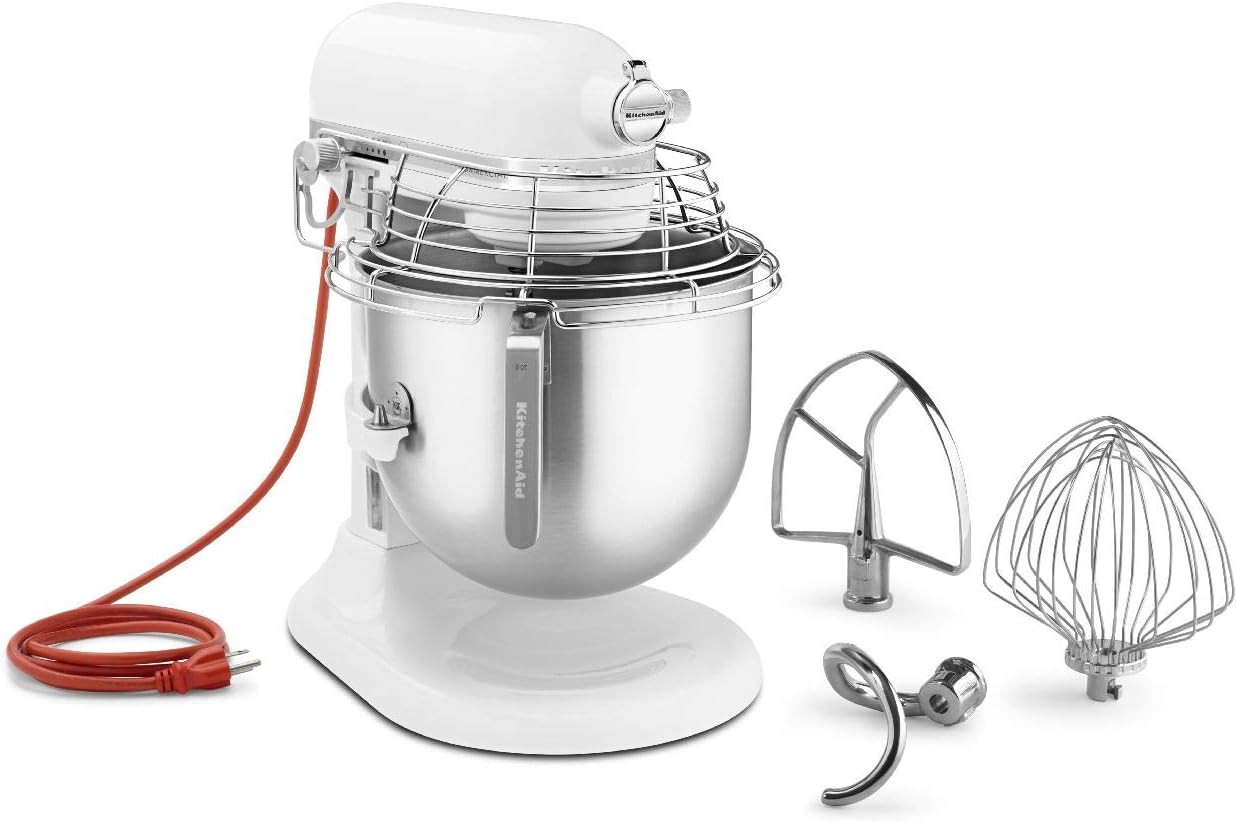
Best Overall for Bread: KitchenAid Commercial Series 8 Quart Bowl-Lift Stand Mixer
This is the machine I would hand a bread baker who wants one mixer for the next decade. It is a bowl-lift design with an eight-quart stainless steel bowl and a bowl guard, and that combination is the whole point. The bowl locks onto arms and rises into the head, so nothing is hinging or wobbling while a stiff dough climbs the hook.
Eight quarts is genuinely big. It is the difference between one loaf and a Saturday of baking, and it is the size that makes a double batch of brioche feel routine instead of like an event. The bowl guard is a small thing that turns into a big thing once you have watched a dough hook throw flour across a kitchen.
The trade-offs are the ones that come with commercial gear. It is heavy, it takes up real counter space, and it costs more than most people spend on a kitchen appliance. If you bake one loaf a week and a birthday cake twice a year, this is more machine than you need. If you bake bread the way other people do laundry, the capacity and the bowl-lift geometry are worth both the money and the counter.
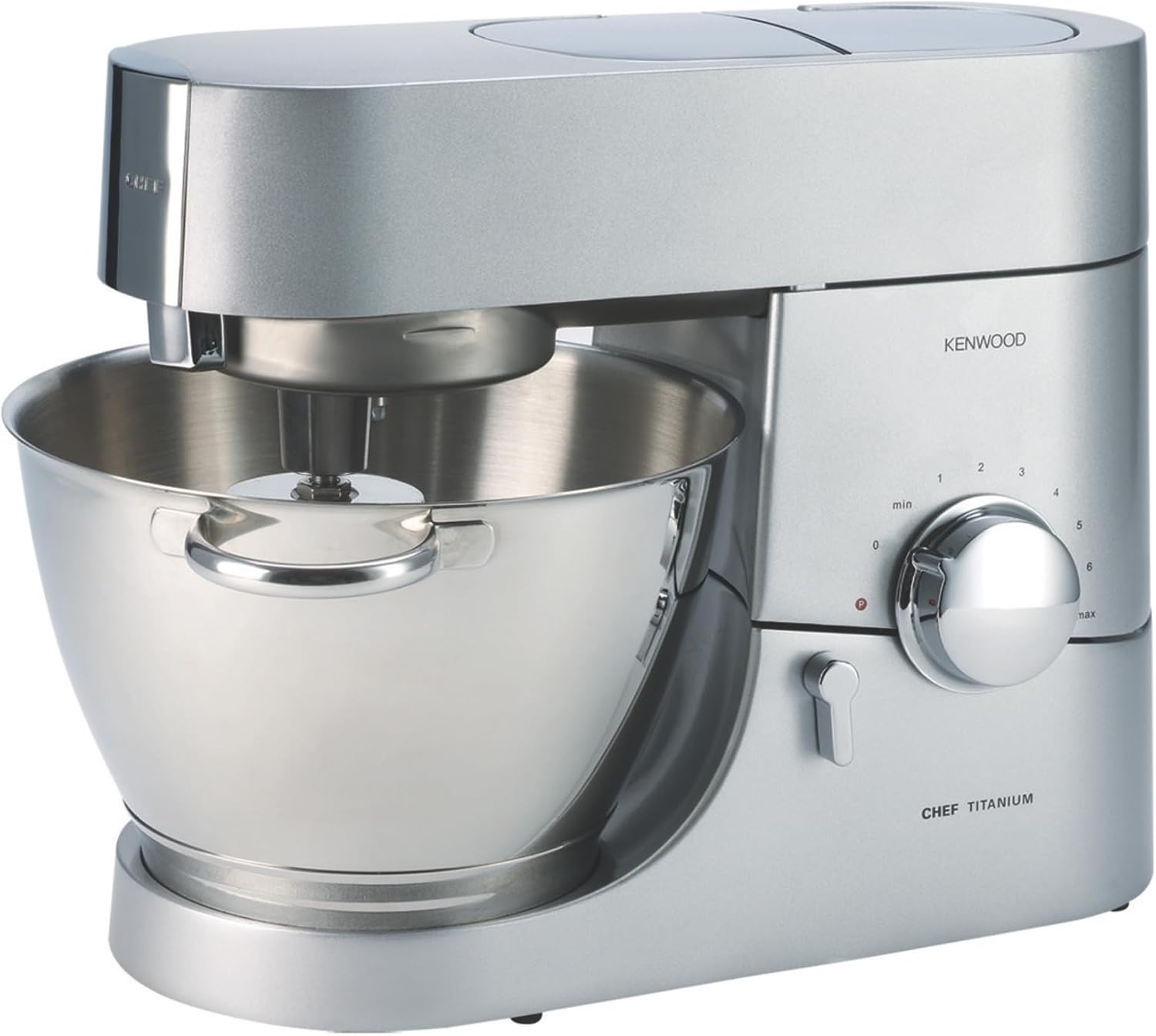
Best Value for Serious Home Bakers: Kenwood Chef Titanium Kitchen Machine
The Kenwood Chef Titanium sits in the middle of this group and is the one I would point most home bakers toward. It is a five-quart machine with an 800-watt motor and electronic variable speed control, and variable speed is not a gimmick when you knead. You want to start slow so the flour hydrates before the hook starts working the dough, and you want to nudge the speed up without hunting through detents.
It ships with a dishwasher-safe work bowl and three mixing tools, which covers whisking, beating, and kneading without adding a shopping list to your purchase. Five quarts is the sweet spot for a household that bakes weekly: enough room for a two-loaf batch, small enough to live on the counter instead of in a closet.
That 800-watt motor is the number to pay attention to here, because it is the spec that tells you this machine was built to work rather than to look busy. Pair it with a spiral dough hook and a dough you have not pushed past its hydration limit, and it will handle a weekly bread routine without complaint.
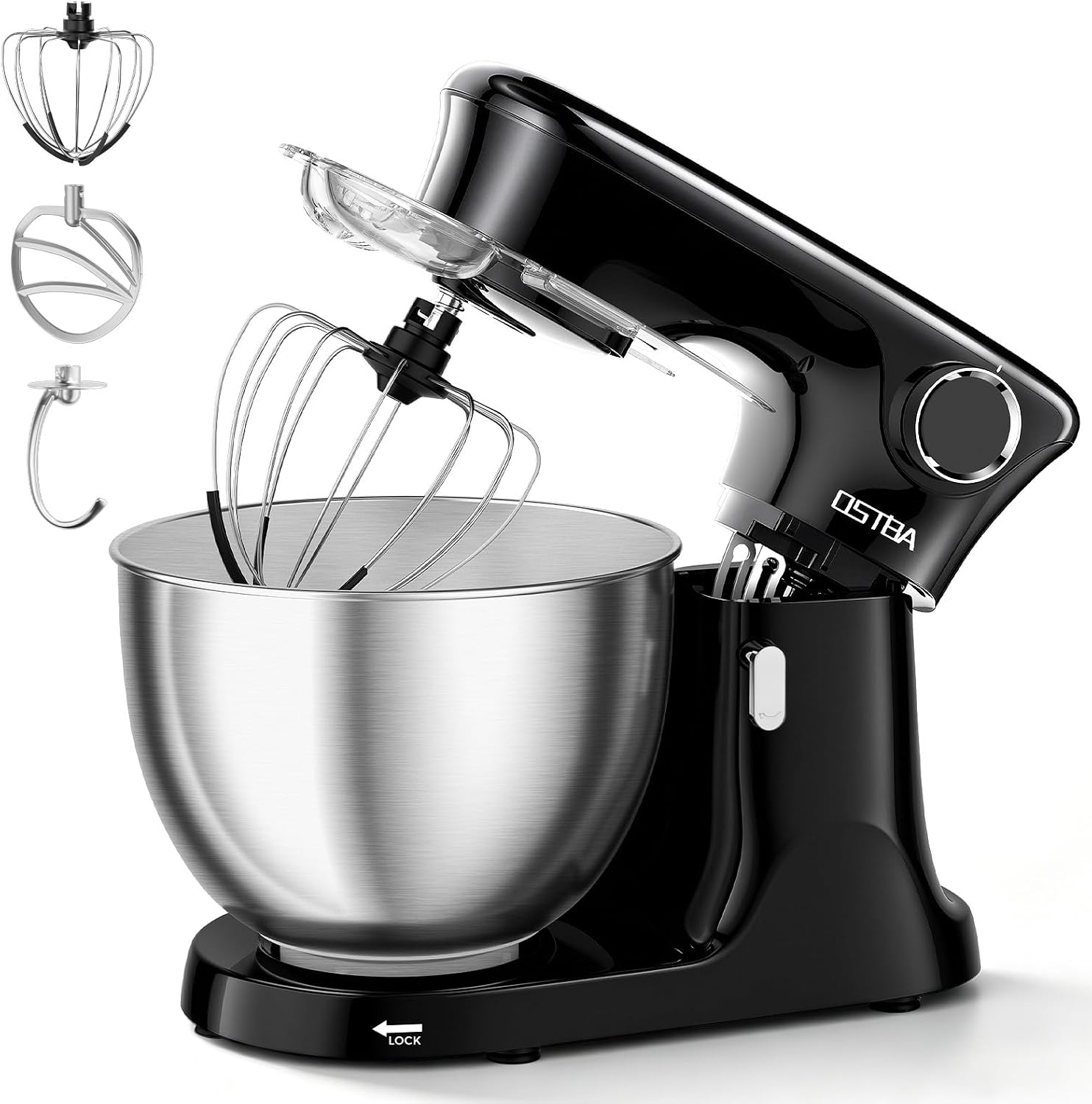
Best Big-Batch Budget Pick: OSTBA Stand Mixer, 8.5QT
The OSTBA is the capacity play. An 8.5-quart bowl at a budget price is a lot of mixing room for the money, and for a household that bakes in volume, holiday cookies, multiple loaves, a big batch of dough for a crowd, that room matters more than a brand name on the side of the head.
Here is the honest framing: capacity is not the same thing as torque. A big bowl with a modest motor will handle cookie dough, cake batter, whipped cream, and a soft enriched dough without complaint. What it will not do is pretend to be a commercial machine on a very stiff, low-hydration dough, and no budget mixer will. Buy it for the volume, keep your dough on the softer side of your recipe range, and give the motor a rest between batches instead of running three stiff doughs back to back.
If you are feeding a family and your baking is mostly cakes, cookies, and sandwich bread, this is a lot of mixer for the money. If your weekend is four sourdough loaves at 70 percent hydration, save longer and buy the lift bowl.
Best Compact Mixer for Small Kitchens: Dash Everyday Stand Mixer
The Dash Everyday is the smallest machine here: a three-quart tilt-head with six speeds and a stainless steel bowl, finished in red so it reads as a kitchen accessory rather than equipment. That is the point of it. It is for small kitchens, small batches, and bakers who make a single loaf, a batch of muffins, or a bowl of frosting and do not want a fifty-pound machine to do it.
Be realistic about what three quarts and a tilt head means. This is a mixer for everyday recipes, which is what the name promises, and it does those well. It is not a bread machine. If you push a stiff dough through it, you will hear the motor change pitch and you will see the head move under the load. Use it for what it is built for and it will earn its counter space, especially in an apartment where every inch is contested.
How I tested
Testing a mixer is not a fifteen-minute job, so I do not treat it like one. My method is the same for every machine: a stiff sourdough, a soft enriched brioche, a cookie dough, and a whipped cream test, then I keep using the machine until the newness wears off. That last part is the real test. Almost any mixer feels fine on day one.
The bread bake is the one that matters. I look for three things. Does the hook climb the dough, or does it bury itself in the middle of it? Does the bowl stay planted, or does the whole machine walk across the counter? And after ten minutes of kneading, what does the motor smell like? A machine that smells hot after ten minutes of dough is not powerful enough for what you bought it for, no matter what the box claims.
I also check the boring details, because they decide whether you actually use the thing: how hard the bowl is to seat, whether the head locks with one hand, how loud the machine is at kneading speed, and whether the tools are dishwasher-safe. A mixer you avoid using is worse than no mixer at all.
Analysis and test results
Wattage tells you how much power a motor draws. Torque tells you whether it can actually knead. Those are two different numbers, and almost no product page separates them, which is why the stiff-dough test exists. A machine can list an impressive motor and still stall when a low-hydration dough tightens up under the hook.
Bowl geometry is the other half of the story. A lift bowl is a fortress. The bowl locks into arms and the head never moves, so all the motor's effort goes into the dough instead of into rattling the machine. A tilt head is convenient and easier to load, and for cakes, cookies, and soft doughs it is perfectly fine. Under a heavy dough it is a wobbler, and wobble is energy that never reaches the gluten.
Capacity has limits that have nothing to do with the number stamped on the bowl. A large bowl full of stiff dough asks more of a motor than the same bowl full of batter, because dough resists. That is why I judge capacity by dough, not by quarts. The mixer that can handle two pounds of stiff dough comfortably is worth more than the mixer that claims more quarts and stalls at one and a half.
Attachments decide the long-term relationship. A mixer that takes a pasta roller, a grinder, and a shredder becomes a kitchen system you keep for fifteen years. A mixer with a proprietary attachment mount and two available tools is a gadget. Check what exists for the machine before you buy it, not after.
One more note on sound and smell, because they are the cheapest diagnostic tools you own. A motor under load should sound steady. If the pitch drops when the dough tightens, the machine is working past its comfort zone. If it smells hot after ten minutes, it is telling you the truth about its size.
The stand mixer reference table
This is how the four machines line up on the things that matter in a working kitchen. Use it as a starting point, then match it to what you actually bake in a normal week.
| Mixer | Design and capacity | Best for | Where to buy |
|---|---|---|---|
 Visit on Amazon → Visit on Amazon →KitchenAid Commercial Series Bowl-Lift |
Bowl-lift, 8 quart, stainless bowl guard | Weekly bread and double batches | Visit on Amazon → |
 Visit on Amazon → Visit on Amazon →Kenwood Chef Titanium |
5 quart, 800W motor, variable speed, three tools | The all-round weekly baker | Visit on Amazon → |
 Visit on Amazon → Visit on Amazon →OSTBA Electric Kitchen Mixer |
8.5 quart bowl | Big batches of batter and soft dough | Visit on Amazon → |
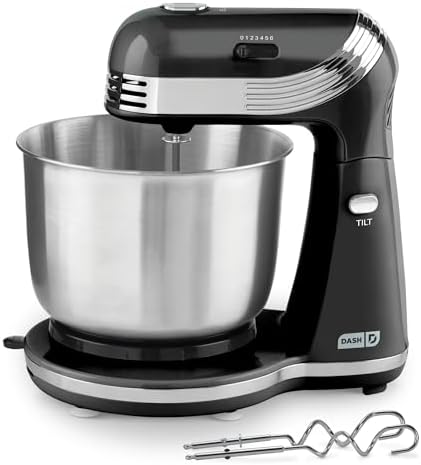 Visit on Amazon → Visit on Amazon →Dash Everyday Stand Mixer |
Tilt-head, 3 quart, 6 speeds | Small kitchens and small batches | Visit on Amazon → |
The pattern is simple. As the bowl gets bigger and the dough gets stiffer, the case for a lift bowl gets stronger. As the kitchen gets smaller and the batches get lighter, the case for a compact tilt head gets stronger. Everything in between is a question of how much bread you actually bake.
Should you buy the KitchenAid Commercial Series?
Yes, if bread is the reason you are shopping. The bowl-lift design with the eight-quart bowl and the bowl guard is built for the exact job that kills lesser mixers, and it is the one machine here I would trust with a decade of weekly baking. It is heavy, it is expensive, and it will own a corner of your counter. For a serious bread baker, that is a fair trade.
Should you buy the Kenwood Chef Titanium?
Yes, for most households. Five quarts, an 800-watt motor, variable speed control, a dishwasher-safe bowl, and three tools is a package that handles bread, cake, and cookies without asking you to choose a specialty. If you want one mixer that does everything competently and nothing badly, this is the sensible middle of this group.
Should you buy the OSTBA or the Dash?
Buy the OSTBA if volume is your problem and your doughs are on the softer side. An 8.5-quart bowl at a budget price is a lot of mixing room, and for cookies, cakes, and sandwich bread it will keep up. Buy the Dash if space is your problem and your batches are small. The three-quart tilt head is a genuine everyday mixer for a compact kitchen.
Skip both if your plan is four stiff sourdough loaves every weekend. That is not a budget job and it is not a compact job. That is the reason lift bowls exist.