I have kneaded enough dough by hand to know the exact moment my wrists start filing complaints. I spent a decade running a bakery before that, and now I teach bread classes in Burlington, Vermont, which means most of the questions I field are not about hydration or starter. They are about machines. People want to know whether the mixer they are eyeing can handle real bread dough or whether it is a cake mixer wearing a dough hook as a costume. So here is the honest version of that conversation, built around four products that keep landing in the same shopping carts: three stand mixers and one attachment that turns a mixer into something else entirely.
The single biggest thing to take away is that the motor is the mixer. Wattage is a number on a box. Torque is what actually drags a stiff dough around a bowl. A machine can list 660 watts and still bog down on a two-pound sourdough if the gearing and the bowl geometry are not built for that load, and a lower-wattage machine designed around kneading can walk through the same dough without drama. Bowl capacity is the second trap. A "6.5-quart" label describes the volume of the bowl, not the amount of bread dough that bowl can genuinely handle, and those two numbers are not the same.
The short answer: if bread is the point, the Bosch Universal Plus bundle is the machine I would put my money on, and the KitchenAid Classic Series bundle is the better fit for a kitchen where cakes, cookies, and frosting come first. The Aucma is the budget gamble with the biggest numbers on paper, and the GVODE juicer attachment is not a mixer at all, so buy it only if a compatible KitchenAid mixer already lives on your counter.
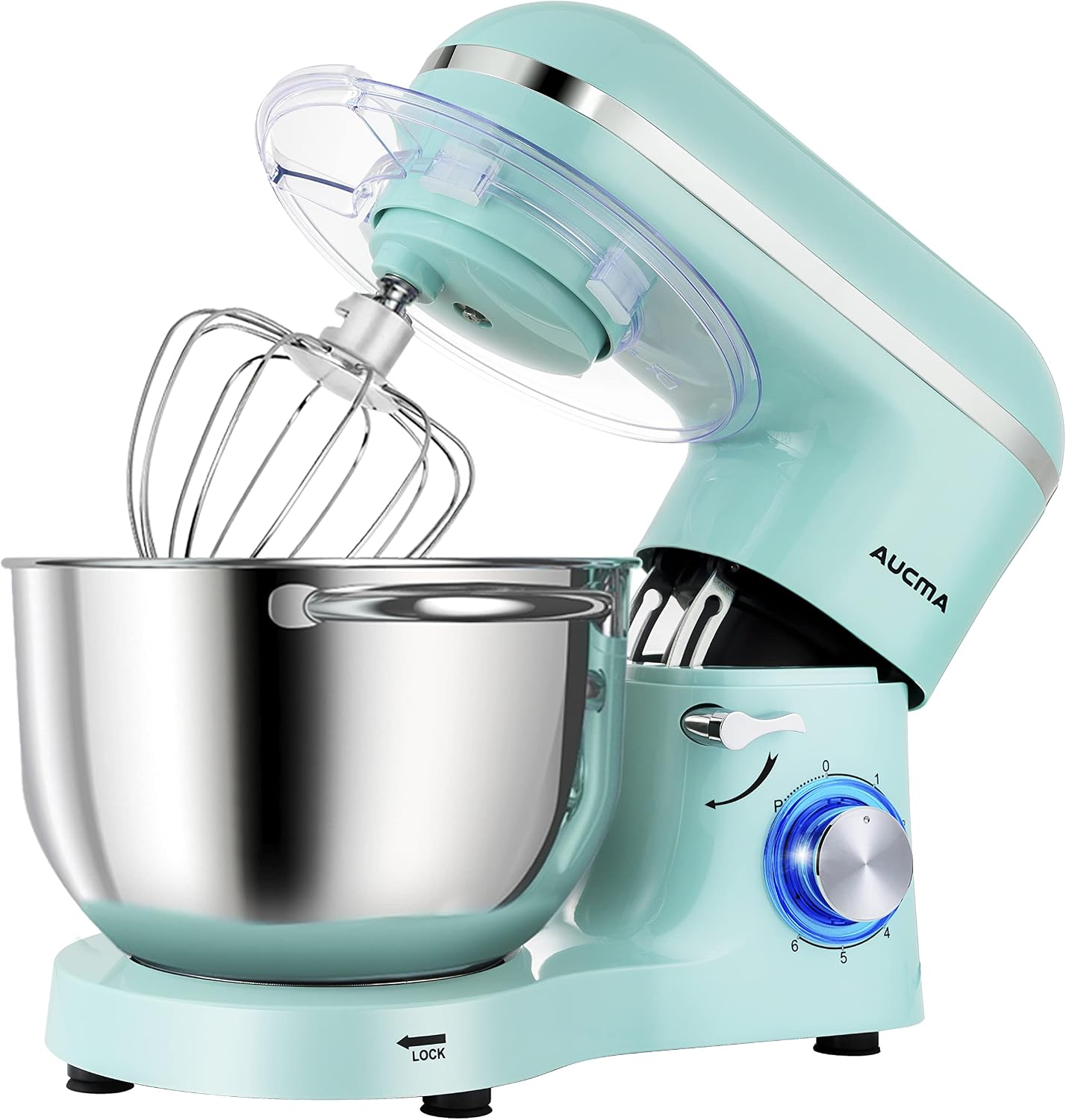
Aucma Stand Mixer, 6.5-QT 660W 6-Speed Tilt-Head
Biggest bowl and the highest wattage figure of the three mixers, plus dough hook, wire whip, and beater in the box
Tilt head, and a big bowl number says nothing about whether the motor has the torque for stiff dough
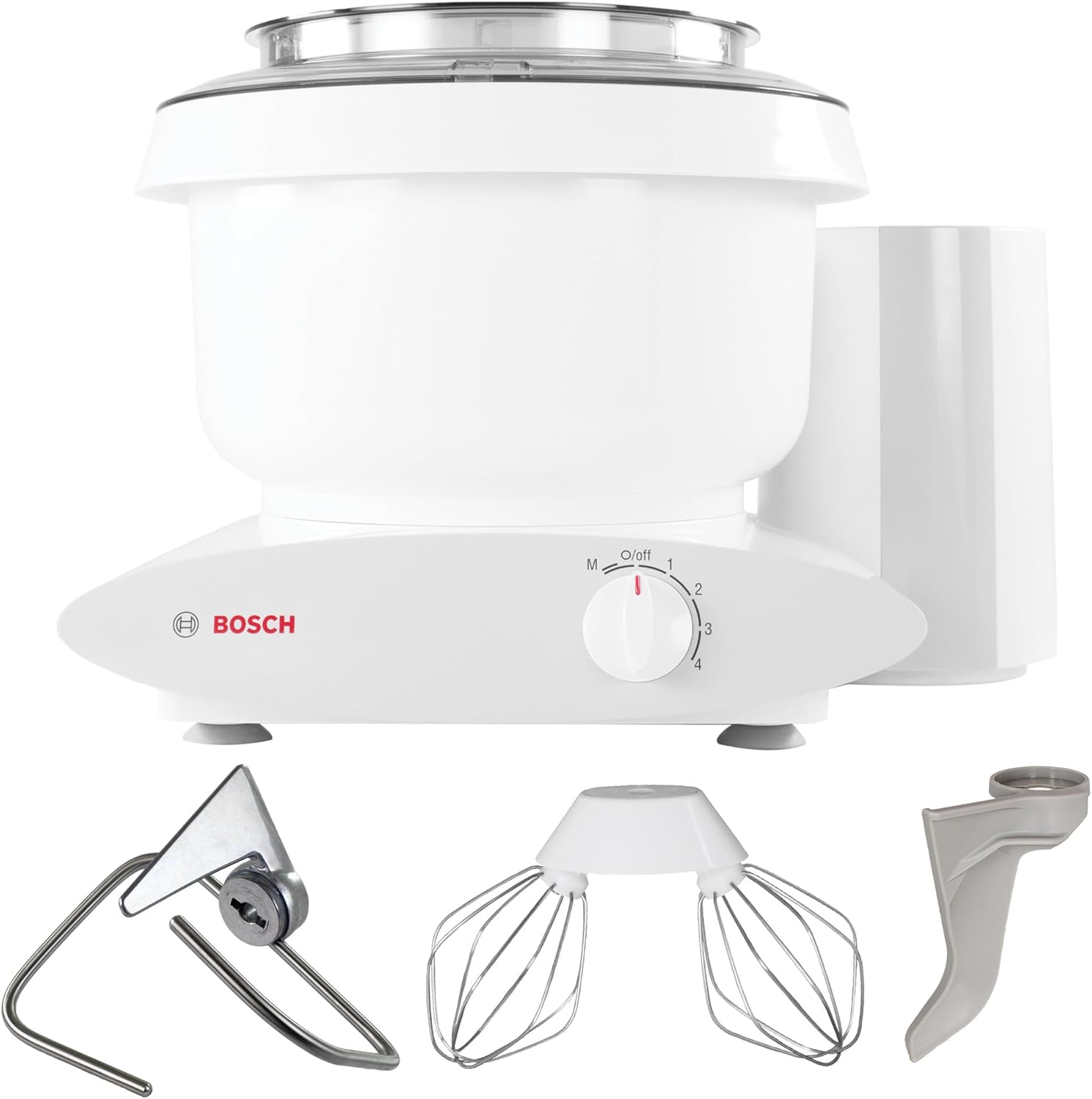
Bosch Universal Plus Stand Mixer, 500 Watt, 6.5 Quarts, with NutriMill Dough Hook Extender Bundle
A 6.5-quart bowl and a 500-watt motor aimed at kneading, with wire whips, a dough hook, and a dough hook extender included
The most expensive option here, and the bundle extras only pay off if you actually bake bread
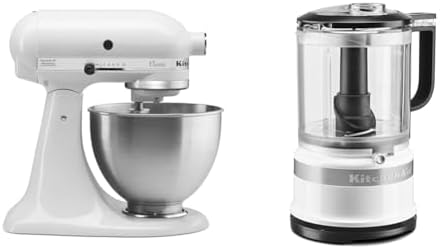
KitchenAid Classic Series 4.5 Quart Tilt-Head Stand Mixer with 5 Cup Food Chopper
Two appliances in one box, plus the KitchenAid attachment hub that decides the long-term relationship
Smallest bowl of the three mixers, so the smallest realistic batch of bread dough
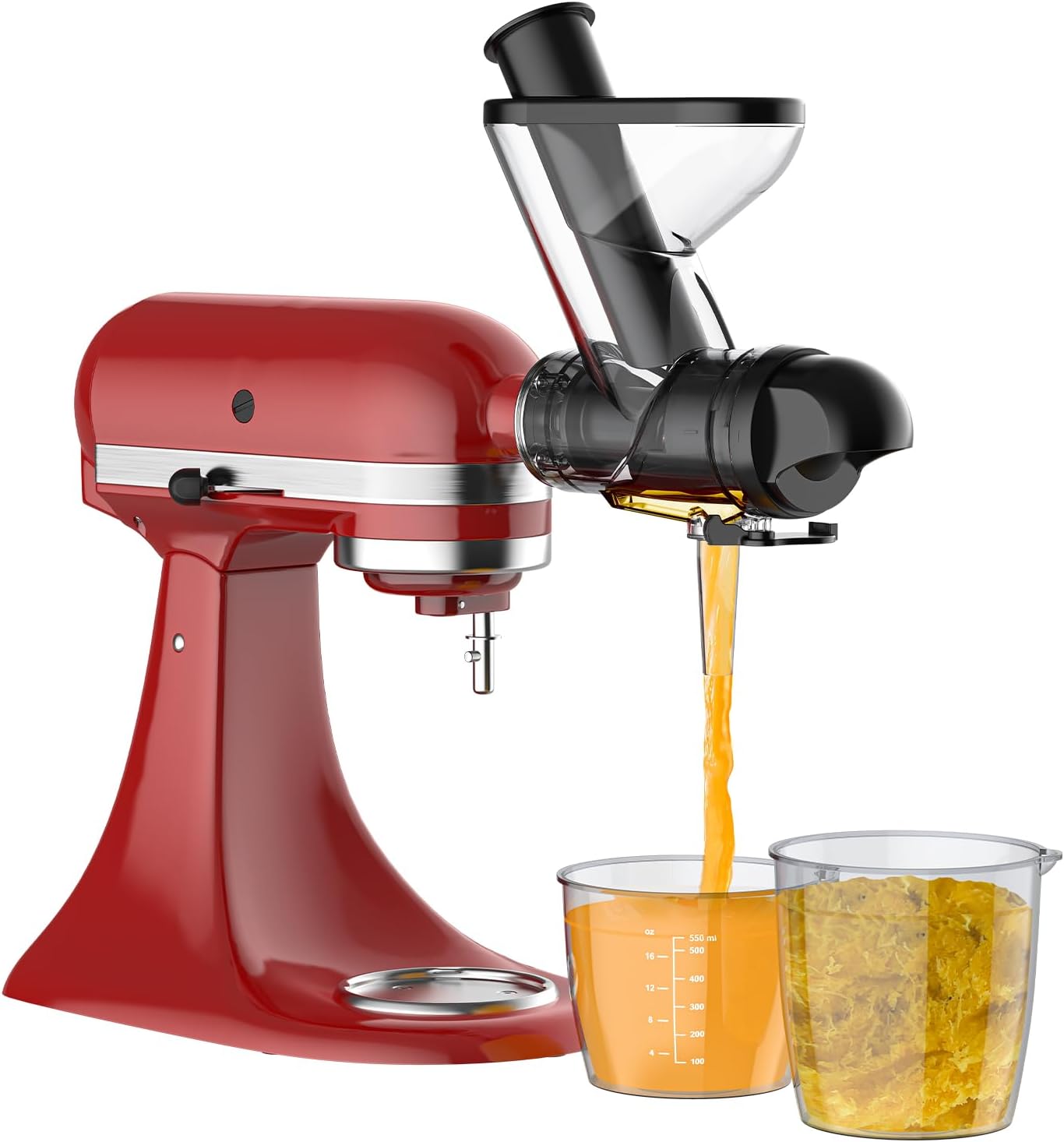
GVODE Masticating Juicer Attachment for KitchenAid Mixer, Dual Feed Chute
Adds slow-crush juicing to a mixer you already own, with a dual feed chute and no second motor base to store
Does nothing for bread, and it is useless without a compatible KitchenAid mixer to attach it to
Prices and availability were captured from Amazon Creators API and may change.
How I judge a mixer for bread
I ask four questions, in this order. First, what is the real motor situation? Not the wattage on the sticker, but whether the machine is geared to keep turning when the dough resists. Second, how much dough will the bowl actually take before the hook starts climbing and the motor starts complaining? Third, is the head a tilt design or a lift design, and does it wobble when the load gets heavy? Fourth, what can you attach to it later, because the attachments decide whether a mixer is a kitchen system or a one-job gadget.
There is a fifth question, and it is the one nobody puts in a product listing: what does the motor smell like after ten minutes of kneading? If it smells hot, it is not powerful enough for what you bought it for. That smell is the honest spec sheet.
Aucma 6.5-QT 660W tilt-head: the big-numbers budget play
On paper, this is the loudest entry in the group. Six and a half quarts, 660 watts, six speeds, a dough hook, a wire whip, and a beater, all in one box at the lowest price of the three mixers. For someone moving up from a hand mixer and mostly making cookie dough, muffin batter, and the occasional single loaf, that combination is genuinely appealing. It is also the machine most likely to end up in a cart because of the wattage number alone, which is exactly the mistake I want you to avoid making.
Here is the problem with shopping that way. Wattage measures power draw, not twisting force at the hook. A tilt-head machine has a hinge at the back, and under a stiff dough that hinge is a wobble point, which is why bread people tend to prefer a bowl that rises on arms into a fixed head. The Aucma is a tilt head with a large bowl, and large bowls invite large batches. If you fill a 6.5-quart bowl with a double batch of stiff dough, you are asking a hinge and an unverified gear train to do a job that a lift-bowl design does with less drama.
That does not make it a bad mixer. It makes it a mixer with a ceiling, and the ceiling is set by dough stiffness, not by bowl volume. Buy it if your baking is batter-forward and your bread is occasional. Visit on Amazon →
Bosch Universal Plus bundle: the bread-first machine
This is the one I would hand to a student who told me they bake two or three loaves a week and want one machine that will not quit. The Bosch Universal Plus carries a 500-watt motor and a 6.5-quart bowl, and the bundle includes wire whips, a dough hook, and a NutriMill dough hook extender. Notice that the wattage is lower than the Aucma and I am still calling it the stronger bread machine. That is not a contradiction. It is the whole point of the article. A 500-watt motor built around kneading will outwork a 660-watt motor that was not, and the dough hook extender is a telling inclusion: it exists for bakers who work in smaller or stiffer batches and want the hook to keep contact with the dough instead of letting it ride up and spin.
The trade-offs are real. It costs the most of the three mixers, and if your baking is 90 percent birthday cakes, you are paying for kneading capability you will rarely use. The bundle extras are only worth their space if bread is the reason you are shopping. But if you have ever stood over a mixer at minute eight of a stiff dough, listening to the motor change pitch, you already know why this is the pick. Visit on Amazon →
KitchenAid Classic Series 4.5 quart with the food chopper
This bundle is two products in one box: a 4.5-quart tilt-head stand mixer in white, and a separate 5-cup food chopper. That is a useful pairing for a small kitchen, because the chopper handles onions, nuts, and crumbs without dragging out a full-size machine, and the mixer covers the mixing and whipping.
The catch is capacity. At 4.5 quarts, this is the smallest bowl of the three mixers here, which means the smallest realistic batch of bread dough. You can absolutely make a loaf in it. You cannot make three loaves at once, and you should not push a single stiff dough past the point where the tilt head starts working harder than the dough does. What you get in exchange is the KitchenAid attachment hub, and that is not a small thing. A mixer with a hub becomes a pasta machine, a grinder, a spiralizer, or the juicer attachment below, one purchase at a time. That ecosystem is why so many kitchens keep a KitchenAid around for a decade. Visit on Amazon →
GVODE masticating juicer attachment: an accessory, not a mixer
This one belongs in the comparison only because it keeps appearing alongside mixers, and that placement is misleading. The GVODE attachment is a masticating juicer with a dual feed chute that mounts on a KitchenAid mixer. It does not mix anything, it does not knead anything, and it cannot be used on its own. If you do not already own a compatible KitchenAid mixer, this purchase makes no sense, because you would be buying a head without a body.
If you do own one, the appeal is obvious. A masticating juicer crushes produce slowly rather than shredding it at high speed, which is the style people choose for greens and dense vegetables, and the dual feed chute means less pre-cutting at the counter. It also means one motor base on the counter instead of two, which in a small kitchen is the difference between a usable workspace and a storage problem. Just be honest about what it is. It is a juicer that borrows your mixer. It will never help you bake bread. Visit on Amazon →
The numbers that mislead: watts, quarts, and speed counts
Three specs get marketed hardest and tell you the least.
Watts describe how much electricity a motor can draw, not how much twisting force reaches the hook. This is why a 500-watt machine built for dough can outperform a 660-watt machine built for batter, and why I never rank mixers by wattage alone.
Quarts describe bowl volume, not dough capacity. A bowl is a container; a dough batch is a load with resistance, and the two stop being related once the dough gets stiff. My rule of thumb is that the practical dough batch is smaller than the bowl suggests, and the gap widens as the dough stiffens.
Speed counts are mostly noise. Six speeds or ten speeds does not matter if the lowest setting is too fast for kneading and the highest setting is too slow for whipping cream. What matters is whether the slow end is slow enough to fold dough without heating it and the fast end is fast enough to build a meringue.
Which one for which baker
If you bake bread weekly and want one machine to carry you for years, the Bosch Universal Plus bundle is the answer, and the dough hook extender in the box tells you the manufacturer expected you to knead.
If you want the best all-rounder and you already know you will collect attachments, the KitchenAid Classic Series bundle is the sensible starting point. Smaller bowl, smaller batches, enormous upgrade path, plus a food chopper you will use more than you expect.
If your budget is the deciding factor and your baking leans toward cakes, cookies, and quick breads, the Aucma gives you the largest bowl and the most mixing tools for the least money. Just do not ask it to be something it was not built to be.
If you own a KitchenAid mixer and you juice, the GVODE attachment is the cheapest way to find out whether masticating juicing fits your routine, because the expensive part, the motor, is already on your counter.
The bottom line
Buy the motor you need, not the bowl you were sold. Every machine here will whip cream and cream butter. The differences only show up when the dough gets stiff, the batch gets big, and the mixer has to prove it was designed for the job rather than decorated for it. For bread people, that means the Bosch bundle. For everyone else, pick the bowl size and the attachment ecosystem that match the baking you actually do, and check the motor's mood after ten minutes of kneading. If it smells hot, you have your answer.