Related: Bread Dough Hydration: What the Numbers Actually Mean
I have burned out three mixer motors in twenty years. One of them was a cheap machine I bought specifically to see if it was worth hating. It was. The other two died the same way: stiff dough, ten minutes in, and that hot electrical smell that tells you the motor is working harder than the design ever intended.
So when I look at stand mixers for bread dough, I do not start with the bowl size printed on the box. I start with the motor. Wattage is a power draw number, not a promise. Torque is the thing that actually turns a hook through a two-pound loaf without stalling, and torque is the number nobody puts on the packaging.
The four machines below are the ones I would put through a bread bake, from a compact 3-quart mixer built for cookies to a 10.5-quart machine claiming 900 watts. Here is how they differ, and who each one is actually for.
Best Overall: Kenwood Chef Titanium Kitchen Machine
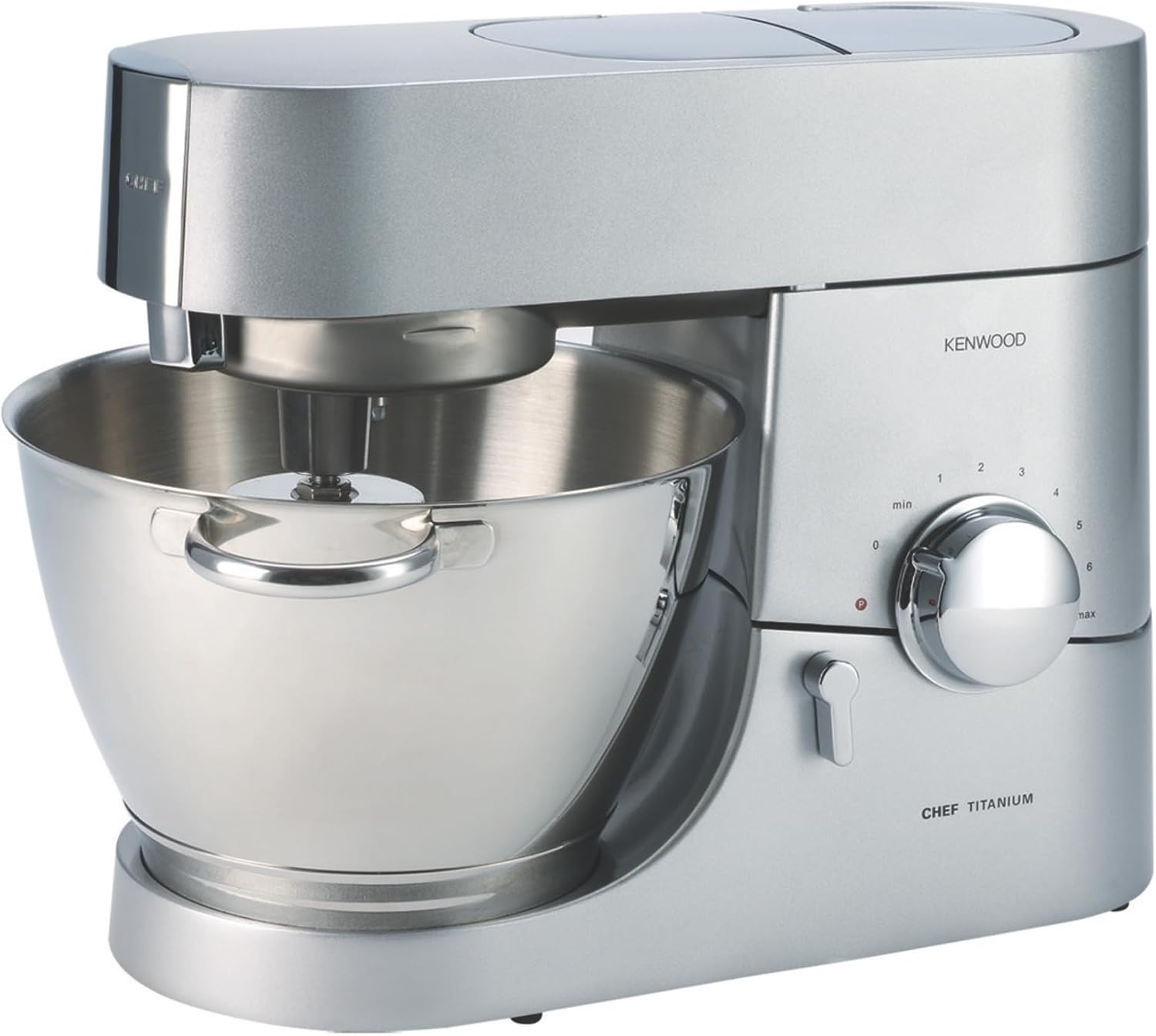
The Kenwood Chef Titanium is the one I would hand to someone who bakes bread every week. An 800W motor, a 5-quart stainless work bowl, electronic variable speed control, and three mixing tools in the box. That last part matters more than people think. A mixer that ships with a proper dough hook, a whisk, and a paddle is a kitchen system. A mixer that ships with a whisk and a prayer is a cake machine with a bowl.
Variable speed control under load is the quiet luxury here. On a cheap mixer, the speed settings are suggestions. You turn it to two, the dough gets stiff, and the machine slows to whatever speed it feels like. Electronic control means the head keeps turning at the speed you asked for, which is exactly what you want when you are developing gluten and do not want the hook stalling in a stiff spot.
The 5-quart bowl is the honest size for a home baker. It handles a standard two-loaf batch and a brioche without asking the motor to do anything unreasonable. It will not handle a quadruple batch of sourdough for a bake sale, and if that is your life, you want a bigger machine or a second bowl.
Who it is not for: someone who bakes a cake twice a year. This is a lot of machine for that.
Best for Most Kitchens: Cuisinart Stand Mixer, SM-50BCNAS
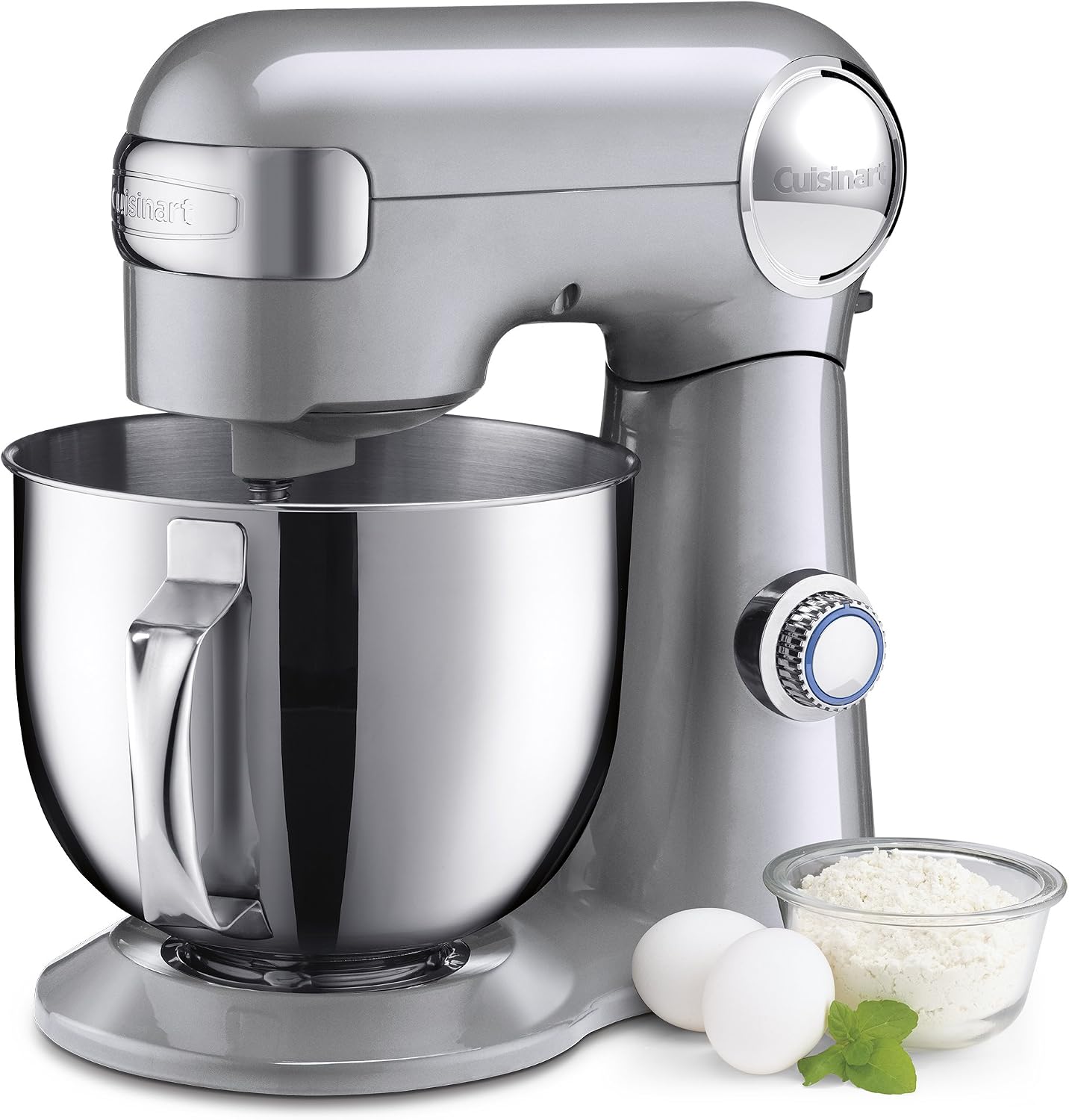
The Cuisinart is the best all-rounder in this group, and the reason is 12 speeds. Not because anyone needs 12, but because the gaps between them are small enough that you can find the speed that works for the dough in front of you instead of the speed the dial happens to offer.
It comes with a 5.5-quart mixing bowl, a chef's whisk, a flat mixing paddle, a dough hook, and a splash guard with a pour spout. The splash guard is the unsung part of that list. Adding flour to a running mixer without one is how you redecorate your kitchen.
For bread, the 5.5-quart bowl gives you a little more headroom than a 5-quart, and that matters when dough climbs the hook during kneading. That climb is normal. Dough that climbs is dough that is being kneaded. Dough that just spins in a lump at the bottom of the bowl is dough that is being stirred, and stirring is not kneading.
The honest limitation: the attachment ecosystem is basic. If you want a pasta roller, a meat grinder, and a spiralizer hanging off the front, this is not the machine for that relationship. If you want a mixer that mixes, kneads, and whips, and you want to buy it once, this is the one most people should get.
Biggest Bowl: 10.5QT Stand Mixer, 900W
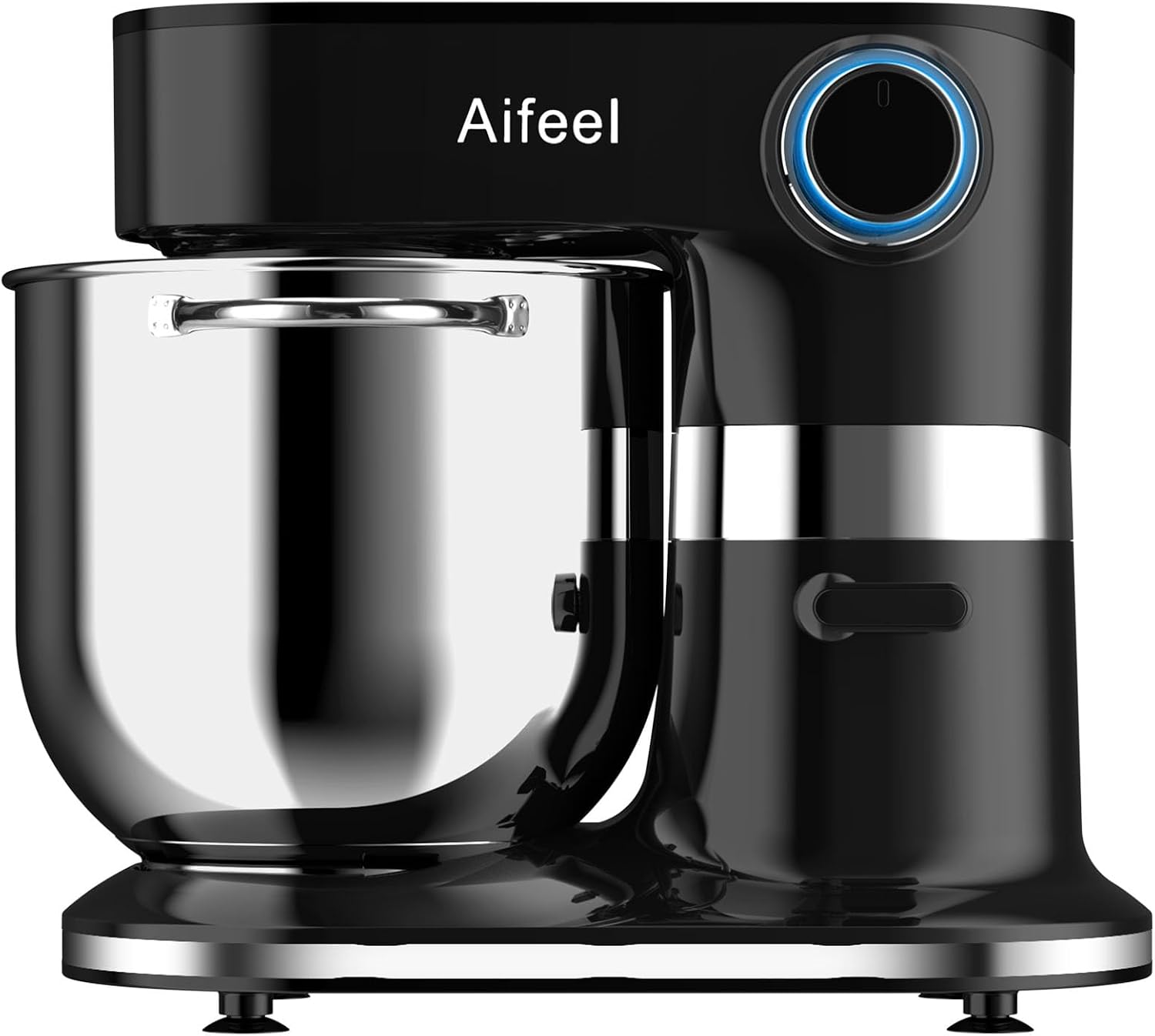
10.5 quarts and 900 watts. On paper, that is the most capacity and the most power in this lineup, and it is a tilt-head design in black.
Here is my problem with a big tilt head. A tilt-head mixer holds the head on a hinge at the back of the machine. Under a heavy load, that hinge is a pivot point, and pivot points wobble. The bigger the bowl and the heavier the dough, the more the head wants to move. That is a geometry problem, not a brand problem, and it shows up when you push a machine toward the top of its capacity.
So who is this for? Someone feeding a crowd, or someone who wants one mixer to handle a very large batch of cookie dough or cake batter without doing it in two rounds. For that job, 10.5 quarts is genuinely useful and 900 watts is genuinely a lot of headroom.
For bread specifically, I would rather have less bowl and more rigidity. If your baking skews toward volume rather than stiff dough, this is the biggest workspace here.
Best Small-Batch Pick: Dash Everyday Stand Mixer
3 quarts, 6 speeds, a stainless steel bowl, and a tilt head. The Dash Everyday is a compact machine for everyday recipes, and I want to be precise about what that phrase means.
It is a small-batch mixer. Cookie dough, cake batter, frosting, whipped cream, one friendly loaf of sandwich bread if you keep the hydration easy. It is not a bread machine. If you plan to knead stiff dough every week, the motor here is not built for that, and I will say the same thing about every compact mixer: match the motor to the job. Bread needs real power behind the hook.
What it does well is counter space. It is small, it is light, and it is easy to move. For a small kitchen, an apartment, or someone who bakes in small amounts and wants a mixer that does not take over the counter, that is the trade you are making.
How I test a mixer
Every machine gets the same treatment, and none of it involves a boxed cake mix.
The first test is a straight dough at 75% hydration, two pounds total. The question is not whether the mixer turns. The question is whether the hook keeps turning at the speed I set when the dough gets stiff, or whether the head slows down and starts to labor.
The second test is the smell test. Ten minutes of kneading, then I put my face near the motor housing. A warm motor is normal. A hot motor with an electrical edge to the smell is a warning, and I have learned to trust it. That smell is the sound of a machine that is not powerful enough for what you bought it for.
The third test is the climb. A good dough hook climbs the dough instead of burying itself in the middle of a spinning lump. If the dough just rotates in place, the machine is stirring, not kneading, and you are going to finish the job by hand with a bench scraper and a bad attitude.
The fourth test is wobble. I watch the head under load. Tilt heads move a little. Lift designs move less. If the whole machine walks across the counter, that is a machine telling you the batch is too big for it.
Analysis and test results
Torque beats wattage. Wattage is how much power the motor draws. Torque is how much twisting force reaches the hook. A 900-watt motor geared for cake batter can stall before an 800-watt motor geared for dough. That is why the Kenwood at 800W and the 10.5-quart machine at 900W are not the simple ranking the numbers suggest, and why I never buy on wattage alone.
Bowl capacity is a lie. A 5-quart mixer that stalls on two pounds of bread dough has a marketing problem, not a capacity problem. When you read a bowl size, ask what the dough limit is. On most tilt-head machines the practical bread limit sits lower than the bowl suggests, because dough is heavy and it climbs.
Lift bowl beats tilt head for bread. The bowl on a lift design sits in a cradle and the whole assembly is a fortress. A tilt head is a wobbler under a stiff load. That does not make every tilt head bad, but if bread is your main job, think hard about the design before you buy.
Attachments decide the long-term relationship. A mixer with a pasta roller and a grinder is a kitchen system. A mixer with a proprietary whisk and nothing else is a gadget with a bowl. The Cuisinart tool set is complete for mixing and kneading but basic for expansion. The Kenwood ships with three mixing tools, which covers the mixing jobs well. I own three attachments I never use, so take bundle talk with salt, but do confirm a dough hook is included before you buy anything.
The stand mixer reference table
This is the table I keep in my head when someone asks which mixer to buy. Motor and bowl are the numbers from the spec sheet. Best for is the job the machine is actually built to do.
| Mixer | Motor | Bowl | Best for |
|---|---|---|---|
 Visit on Amazon → Visit on Amazon →Kenwood Chef Titanium Kitchen Machine |
800W | 5 qt | Weekly bread and kneading |
 Visit on Amazon → Visit on Amazon →Cuisinart Stand Mixer, SM-50BCNAS |
12 speeds | 5.5 qt | Best all-rounder |
 Visit on Amazon → Visit on Amazon →10.5QT Stand Mixer, 900W |
900W | 10.5 qt | Big batches and volume |
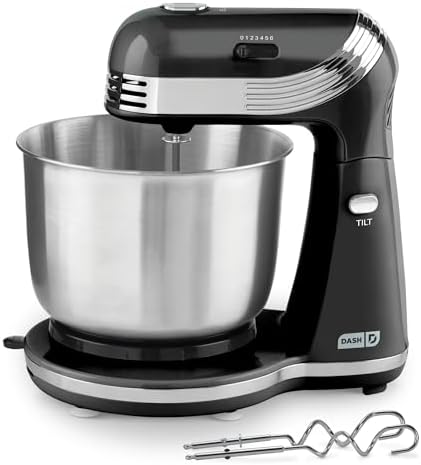 Visit on Amazon → Visit on Amazon →Dash Everyday Stand Mixer |
6 speeds | 3 qt | Small batches, small kitchens |
The pattern is simple. The machine with the biggest bowl is not the best bread machine. The machine with the most watts is not automatically the strongest kneader. And the machine with the smallest bowl is the one that will keep you baking cookies and frosting cakes instead of fighting a loaf.
Should you buy the Kenwood Chef Titanium Kitchen Machine?
If bread is your main job, yes. An 800W motor, a 5-quart stainless work bowl, electronic variable speed control, and three mixing tools including a dough hook is a combination built for weekly kneading. Electronic control under load is the part that separates it from cheaper machines, because it keeps the speed where you set it when the dough fights back.
It is not the machine for someone who bakes twice a year, and it will not handle a bake-sale quadruple batch. For the person who bakes two loaves every weekend, this is the pick.
Should you buy the Cuisinart Stand Mixer?
For most kitchens, this is the answer. 12 speeds, a 5.5-quart mixing bowl, a chef's whisk, a flat mixing paddle, a dough hook, and a splash guard with a pour spout. It kneads, it whips, it creams, and it does all three without asking you to learn a new language.
Go in knowing the attachment ecosystem is basic. If you want a pasta roller and a meat grinder on the front, look elsewhere. If you want one mixer that covers bread, cake, and cookies, this is the one most people should buy.
Should you buy the 10.5QT Stand Mixer?
Buy it for volume, not for bread. 10.5 quarts and 900 watts make it the biggest workspace here, and for large batches of batter, frosting, or cookie dough that is a real advantage. Just remember that a tilt head is a wobbler under a stiff load, and stiff dough is exactly where a big tilt head feels least at home.
Should you buy the Dash Everyday Stand Mixer?
Buy it for a small kitchen and small batches. 3 quarts, 6 speeds, and a stainless steel bowl in a machine that will not take over your counter. It handles cookie dough, frosting, and whipped cream happily. It does not handle a weekly bread habit, and no compact mixer will.
The bottom line: the motor is the mixer. If it cannot handle stiff bread dough, it is a cake mixer with ambitions, no matter what the bowl size says.