
I kneaded bread by hand for the first half of my baking life, and my wrists still file complaints about it. I ran a bakery for ten years before I moved into teaching bread classes in Burlington, Vermont, and the question I get most often has not changed in two decades: which mixer actually handles dough? I have spent this stretch of 2026 running four machines through the same bread gauntlet, the same sourdough, the same brioche, the same two-pound loaf, and the same final test of what the motor smells like after ten minutes of work. This comparison of stand mixers for bread dough is what came out of it, written for people who plan to bake bread every week rather than whip cream twice a year.
Related: Stand Mixer Attachments That Are Actually Worth Buying
The best stand mixer for bread dough here is the KitchenAid 5.5-Qt Bowl-Lift, because a bowl-lift frame stays planted under stiff dough and the attachment system keeps the machine earning counter space for a decade. The Kenwood Chef Titanium is the pick for the most motor for the money, the Cuisinart SM-50 is the sensible middle, and the Dash Everyday is a pleasant small mixer that should never be introduced to a two-pound loaf.
Here is the short version of my worldview before we get into the details: the motor is the mixer. Bowl size is marketing until the dough gets stiff. If a machine stalls on a lean sourdough, it is a cake mixer with ambitions, and no amount of "5-quart" language on the box fixes that.
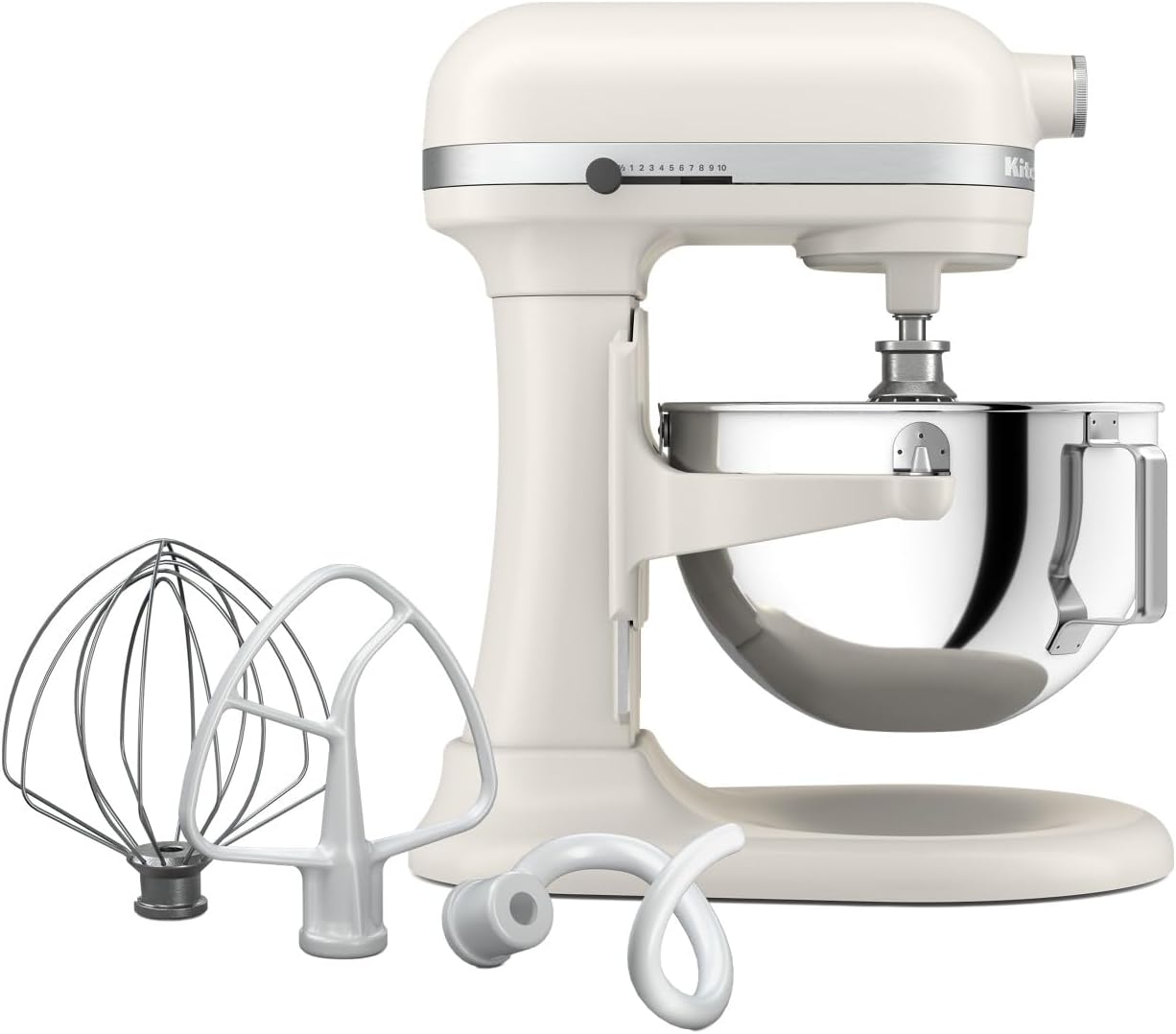
KitchenAid 5.5-Qt Bowl-Lift Stand Mixer, KSM55SXXX, Porcelain White
Bowl-lift stability, the deepest attachment ecosystem in the kitchen, dependable weekly bread for years
Heavy to move, and the priciest way into a loaf
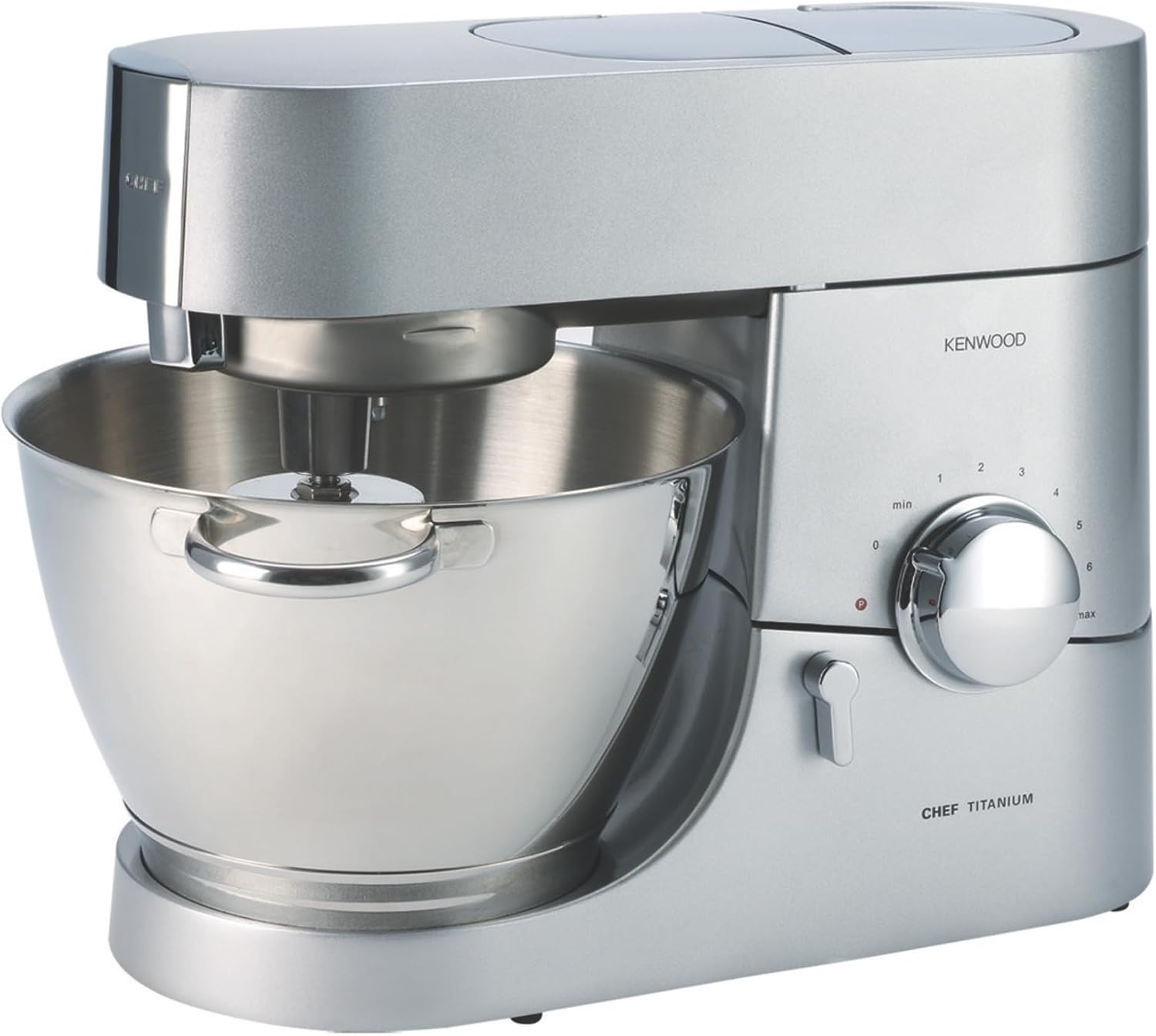
Kenwood Chef Titanium Kitchen Machine, Stainless Steel, 5 qt, 800W
An 800W motor with electronic variable speed, the strongest power story in this group
Smaller US support and attachment footprint than KitchenAid
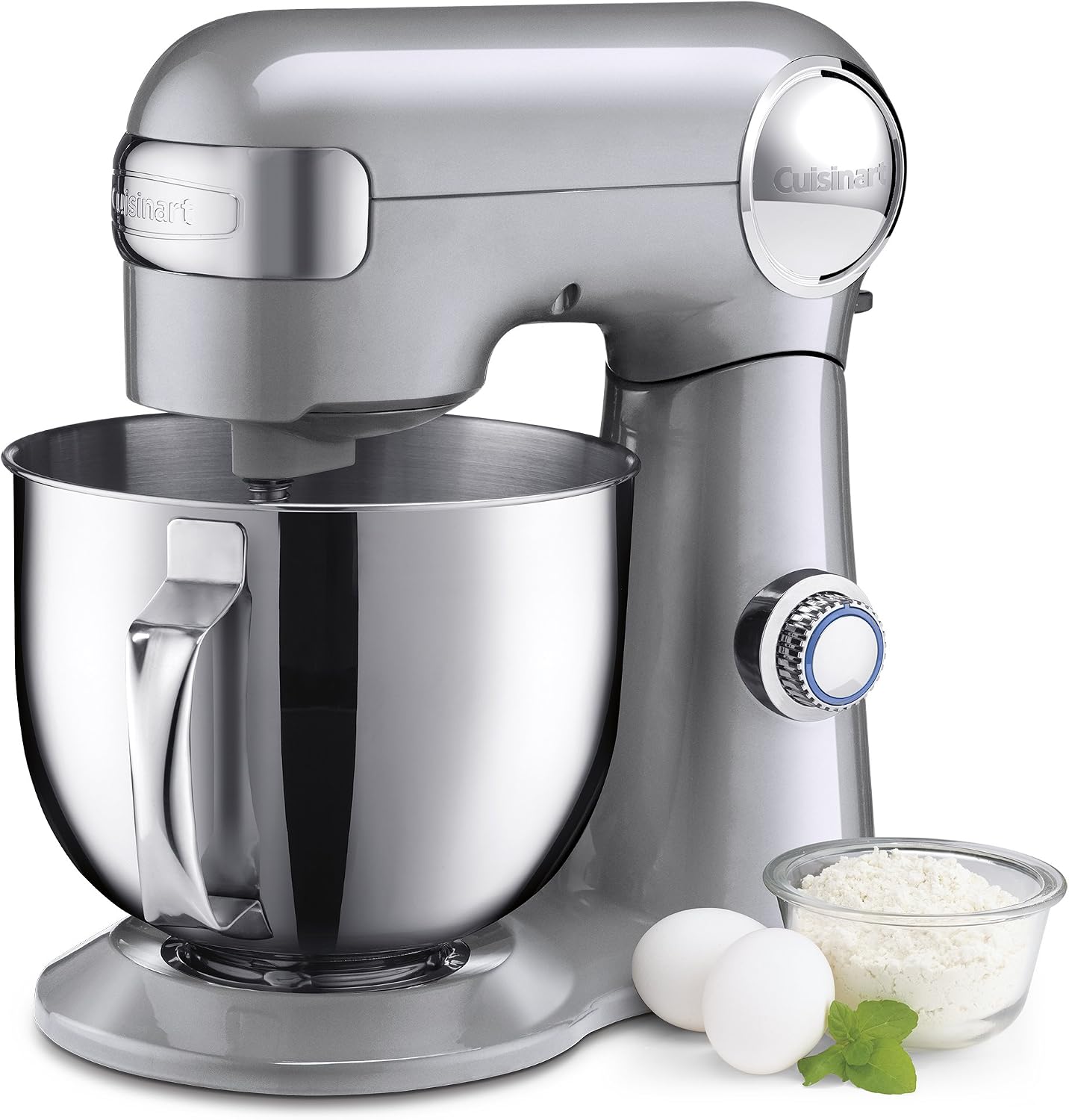
Cuisinart Stand Mixer, 12 Speeds, 5.5-Quart Bowl, SM-50BCNAS, Silver Lining
12 speeds, a 5.5-quart bowl, and a splash guard with a pour spout included
The tilt-head design gives up rigidity under very stiff dough
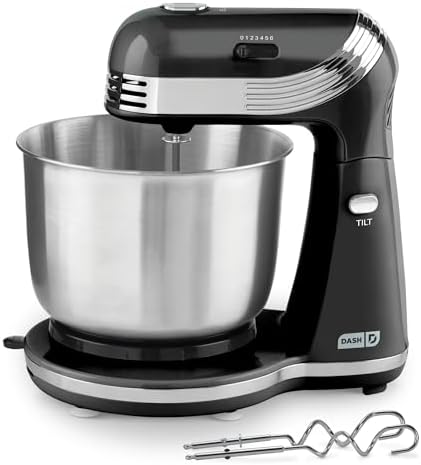
Dash Everyday Stand Mixer, 6-Speed, 3-Quart, Red
Light, compact, and genuinely useful for cakes, cookies, and small batches
A 3-quart bowl and 6 speeds cap it well below bread duty
Prices and availability were captured from Amazon Creators API and may change.
How I run a mixer through the bread gauntlet
Every mixer here gets the same workup. A lean sourdough at moderate hydration. A brioche with enough butter to make a tilt head complain out loud. A plain white sandwich loaf that I knead longer than the recipe asks for, purely to see what happens when the gluten is fully developed and the dough turns into a rubber band around the hook.
I look for three things. First, does the bowl stay still, or does it walk across the counter while I hold a coffee? Second, does the machine keep its speed when the dough tightens, or does it audibly sag? Third, after ten minutes of continuous kneading, I open the head and smell the motor. A warm, clean smell is fine. A hot, electrical, "something is burning" smell means the mixer is working past its design and I note it.
I do not trust wattage as a number on its own, and I do not trust bowl size as a measure of dough capacity. A big bowl with a weak motor is a beautiful pie dish. What matters is whether the machine holds a steady, slow rotation when the dough fights back.
Lift bowl or tilt head, decided once
This is the argument I have with students every month, so let me settle it here. A tilt-head mixer raises the head backward on a hinge so you can reach the bowl. That hinge is a joint, and joints move. Under a stiff two-pound dough, a tilt head flexes and wobbles, and you can feel it in the whole machine.
A bowl-lift design holds the bowl in a cradle and raises the bowl up into a fixed head. Nothing hinges. The frame is a solid chunk of metal doing one job, and that rigidity is exactly what heavy dough needs.
Does that make every tilt head bad? No. Tilt heads are lighter, easier to store, and a joy for cakes, cookies, frosting, and whipped cream. But if your primary reason for buying a mixer is bread, the bowl-lift is the safer money. That is not marketing, it is geometry.
KitchenAid 5.5-Qt Bowl-Lift: the pick for weekly bread
I have a KitchenAid in my kitchen that survived a decade of weekly bread duty, and that history is why this bowl-lift model sits at the top of this list. The 5.5-quart bowl-lift frame is the version of the design that handles a two-pound loaf without drama. The head does not move, the bowl locks into the cradle, and the dough hook climbs the dough instead of burying itself in the middle of it.
The other half of the argument is the ecosystem. KitchenAid's attachment world is the largest in the category, which means a pasta roller, a grinder, or a spiralizer turns the mixer into a kitchen system instead of a single-purpose gadget. I own three attachments I have used exactly once each, and I would still buy the machine for the option.
The trade-offs are honest ones. It is heavy, and heavy means you will pick a permanent spot on the counter rather than dragging it out of a cupboard. It also costs more than the rest of this group, and if you never bake bread, you are paying for capability you will not use.
Kenwood Chef Titanium: the motor argument
If the deciding factor for you is raw power for the money, the Kenwood Chef Titanium makes the loudest case here. It carries an 800W motor and electronic variable speed control, which means you can dial in a slow, steady knead without the machine hunting between speeds. It ships with a dishwasher-safe work bowl and three mixing tools, so you are not buying a dough hook separately on day one.
In a stiff dough, that motor is the reason I would hand this machine to a friend who bakes two or three loaves a week and does not want to think about the motor again. Variable speed control also helps at the slow end, where bread dough actually wants to be kneaded. Fast is not better for gluten development, and a mixer that can hold a genuinely slow speed is a mixer that respects dough.
The friction is the support system. Kenwood's footprint in the United States is smaller than KitchenAid's, so attachments and replacement parts take more hunting, and the community of people who have already solved your problem is thinner. Check availability on the accessories you actually want before you commit. That caveat is the only reason this is not sitting in the top slot.
Cuisinart SM-50: the middle that behaves
The Cuisinart SM-50 is the machine I recommend to people who want one mixer, a reasonable budget, and no drama. Twelve speeds is more range than most bakers will ever use, and the 5.5-quart bowl is the same capacity class as the KitchenAid here. It comes with a chef's whisk, a flat mixing paddle, a dough hook, and a splash guard with a pour spout, which is the accessory set that covers cakes, cookies, and a standard loaf.
The splash guard matters more than reviewers admit. Adding flour to a running mixer without one is how you redecorate your kitchen. The pour spout is the kind of small design decision that suggests someone at the company actually bakes.
Where it gives ground is rigidity. The tilt-head design flexes under a very stiff dough in a way a bowl-lift frame does not, and that flex is the difference between a machine that feels confident at the end of a knead and one that feels like it is working hard. For a weekly sandwich loaf, it is fine. For stiff sourdough at low hydration, you will notice the difference.
Dash Everyday: the small-batch specialist
The Dash Everyday is a compact tilt-head mixer with a 3-quart stainless steel bowl and 6 speeds, and I want to be fair to it, because it is not a bad machine. It is a specific machine. For cake batter, cookie dough, frosting, whipped cream, and a single batch of pancakes, it does the job in a small kitchen where a full-size mixer would live in a closet.
Where it loses this comparison is bread, and it loses on capacity more than anything else. A 3-quart bowl simply cannot hold a two-pound loaf with room to develop, which means anything approaching a serious bread session is out of its range. If you buy this expecting a bread mixer, you will be disappointed by physics, not by the brand.
My honest framing: this is the mixer for someone who bakes sweets and occasionally stirs together a small dough for pizza night. If bread is the point of the purchase, spend the extra money elsewhere. If bread is a twice-a-year curiosity, this is a lot of mixer for a small footprint.
What "powerful" should actually mean
Wattage tells you how much electricity a motor can draw. Torque tells you whether that motor can keep turning when the dough stops cooperating. Those are not the same thing, and marketing departments blur them constantly. A high-wattage motor with cheap gearing will still bog down on a stiff dough, and a well-geared motor with a modest rating can knead for years without complaint.
The practical test is not on the spec sheet. It is the sound the machine makes when the dough tightens and the speed does not drop. It is the temperature of the head after ten minutes. It is whether the bowl stays planted or starts creeping. Every recommendation in this article comes from that test, not from a number in a bullet list.
There is also a limit that no mixer escapes. Two pounds of stiff dough is roughly where most home machines start to strain. If you routinely bake double batches, no amount of clever design on a home mixer will substitute for a machine built for it.
Attachments decide the long relationship
A mixer is not a purchase, it is a relationship, and attachments are how that relationship ages. The KitchenAid wins here by a wide margin because the ecosystem is enormous, widely stocked, and supported by a community that has already answered most of your questions. The Kenwood is excellent but more niche in the United States. The Cuisinart covers the basics and not much beyond them. The Dash is a mixer and only a mixer.
My rule for anyone shopping: buy the mixer whose accessory catalog you would actually use. Pasta rollers, grinders, and shredders are what turn a machine that sits on the counter into a machine that earns its footprint. If you never plan to attach anything, buy on motor and frame rigidity instead, and save the money.
Who should buy which
For weekly bread and a decade of use, the KitchenAid 5.5-Qt Bowl-Lift is the machine I would put my own money on. For the strongest motor per dollar with variable speed control, the Kenwood Chef Titanium is the smart pick, with the caveat about US accessory availability. For a first real mixer on a moderate budget that handles a standard loaf, the Cuisinart SM-50 is the safe middle. For cakes, cookies, and small kitchens, the Dash Everyday is a perfectly pleasant choice that should stay away from bread duty.
What I am testing next
The 60-day gauntlet keeps running. I am pushing the same brioche through each machine again at a colder dough temperature to see whether the motor strain changes when the butter is firmer, which is the kind of detail that separates a mixer you tolerate from a mixer you trust. I will update this comparison when the last loaf comes out of the oven.
If you take one thing from this: buy the motor and the frame, not the bowl size. Everything else is decoration.