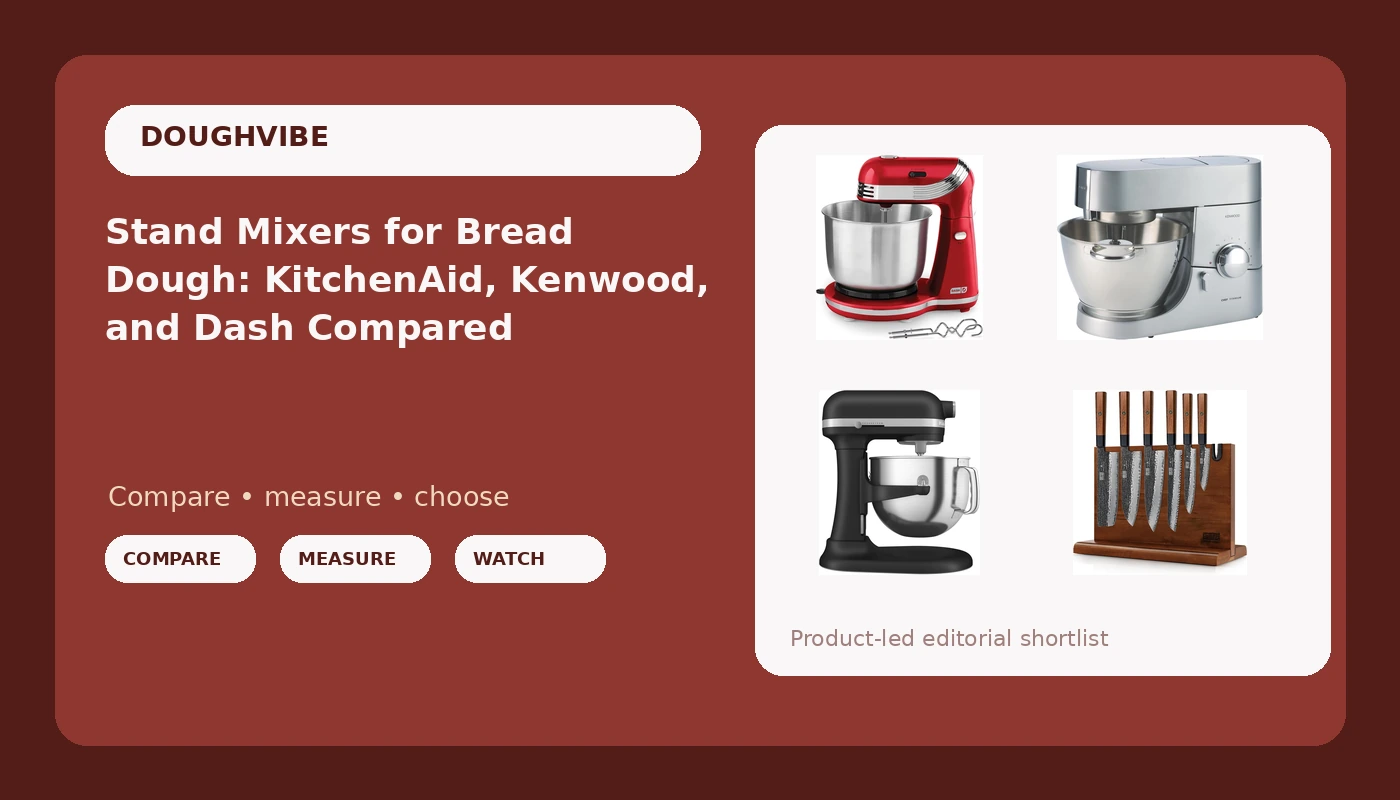
I kneaded dough by hand for years until my wrists filed a complaint, and that is how I ended up treating the stand mixer as the greatest kitchen invention since the oven. I have also stood in my own kitchen watching a cheap mixer smell hot after ten minutes of stiff dough, which taught me the only question that matters about any stand mixer for bread dough: can the motor do the work the bowl is advertising?
I own three mixers. One survived a decade of weekly bread, one handles double batches, and one was a cheap experiment I bought specifically to find out whether it was worth hating. It was. That history shapes how I read a spec sheet, and it is why this comparison leads with motors, bowl geometry, and frame design instead of capacity claims and color options.
The short answer: if bread is the job, the KitchenAid 7 Quart Bowl-Lift is the strongest of these four, because it is the only machine here built on a bowl-lift frame with a bowl sized for real dough. The Kenwood Chef Titanium is the more interesting machine for anyone who wants electronic variable speed and a work bowl that goes in the dishwasher. The Dash Everyday is a cake and cookie mixer with a tilt head, and it can handle a soft dough. The HOSHANHO knife set is not a mixer at all, and I will explain why it earned a row anyway.
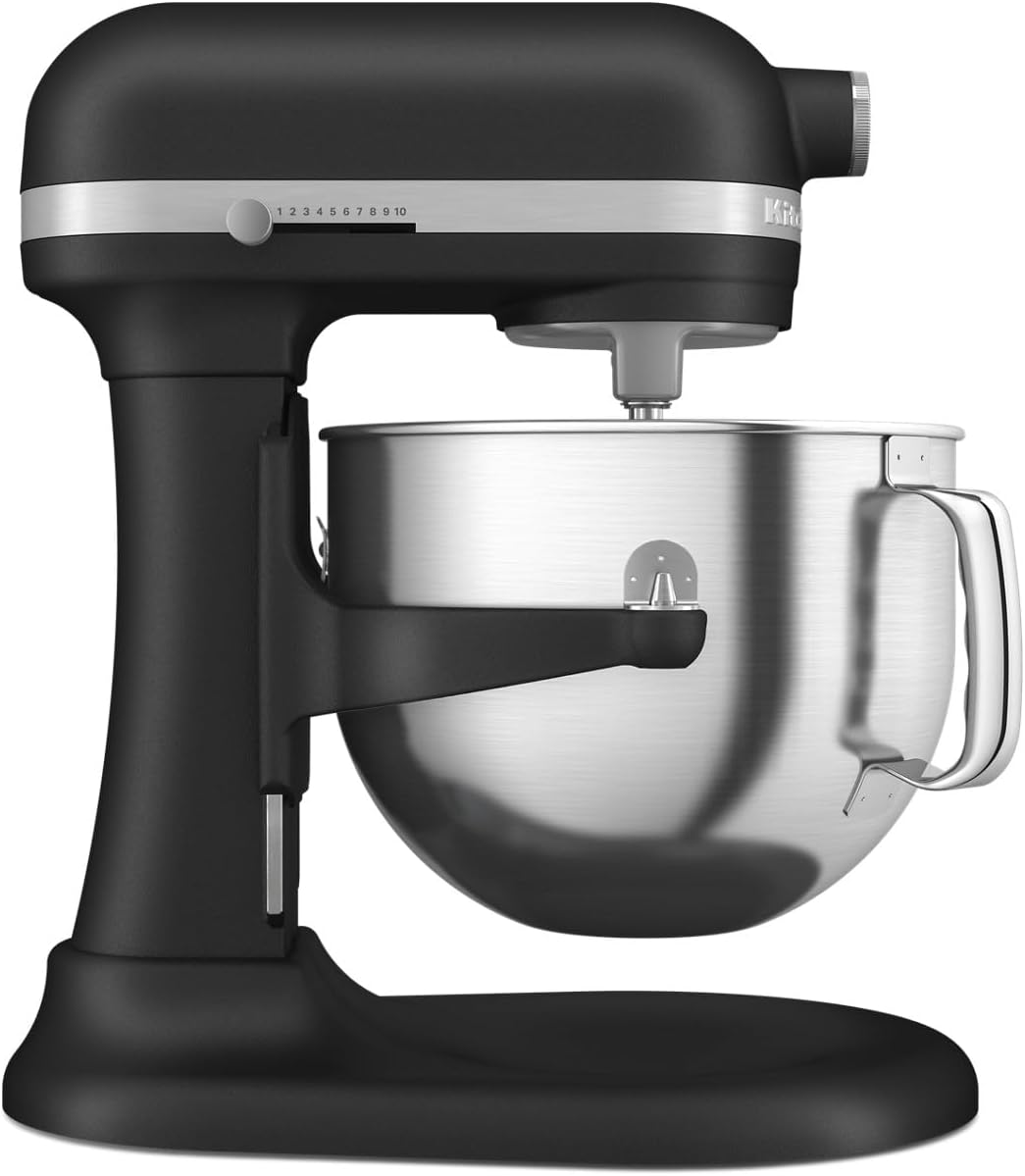
KitchenAid 7 Quart Bowl-Lift Stand Mixer with Accessories
Bowl-lift frame, 7-quart bowl, accessories included, the design bread bakers should start with
Priciest of the four, and it takes up real counter space
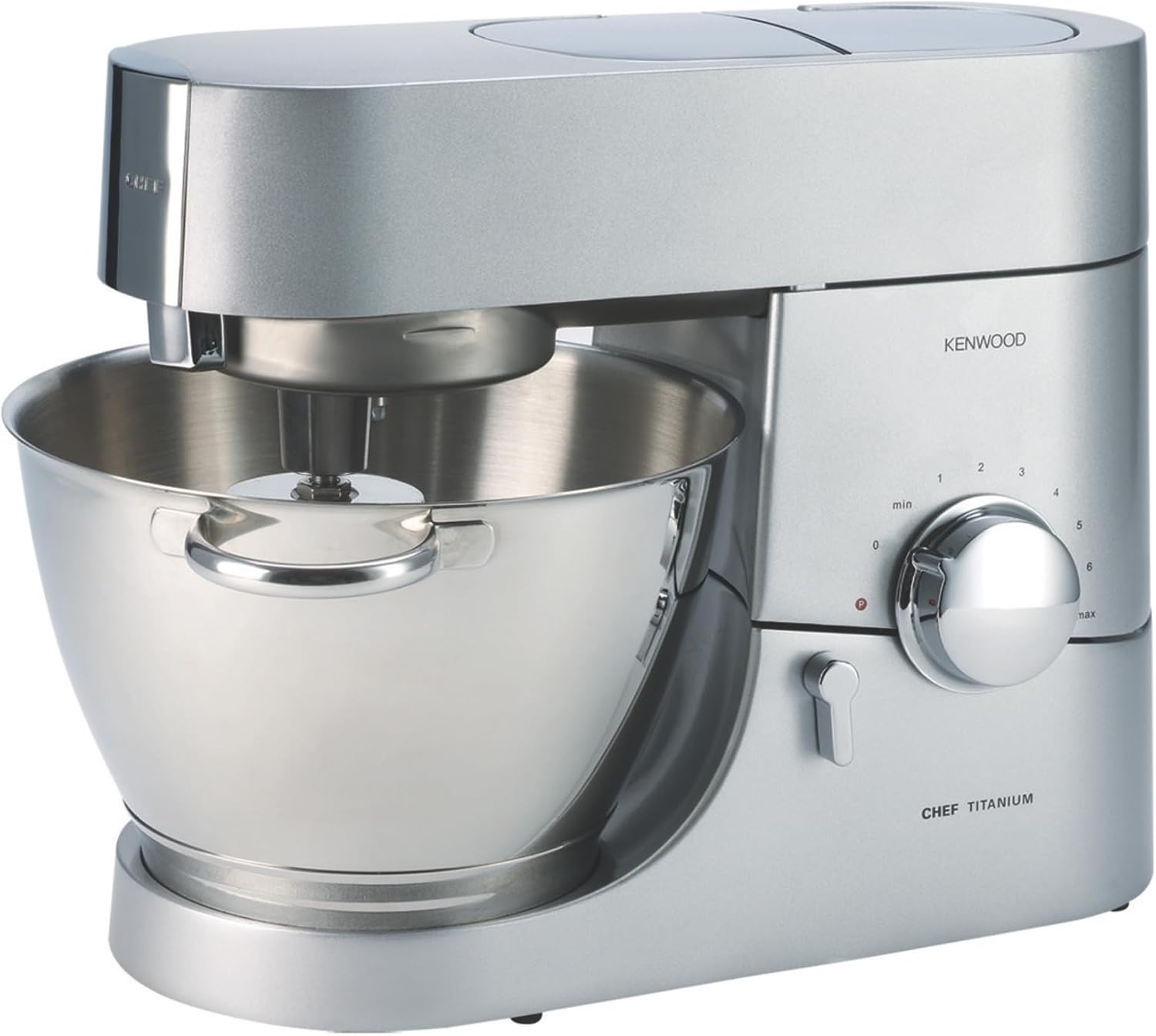
Kenwood Chef Titanium Kitchen Machine, 5 qt
800W motor, electronic variable speed control, dishwasher-safe work bowl, three mixing tools included
Smaller bowl than the KitchenAid, and the brand's attachment ecosystem is thinner in the United States
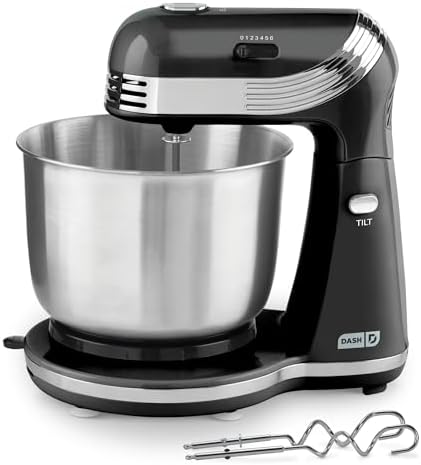
Dash Everyday Stand Mixer, 3-Quart, Red
Compact tilt-head footprint, 6 speeds, stainless steel bowl, the lightest lift of the group
3 quarts is a small batch ceiling, and tilt heads wobble under heavy dough
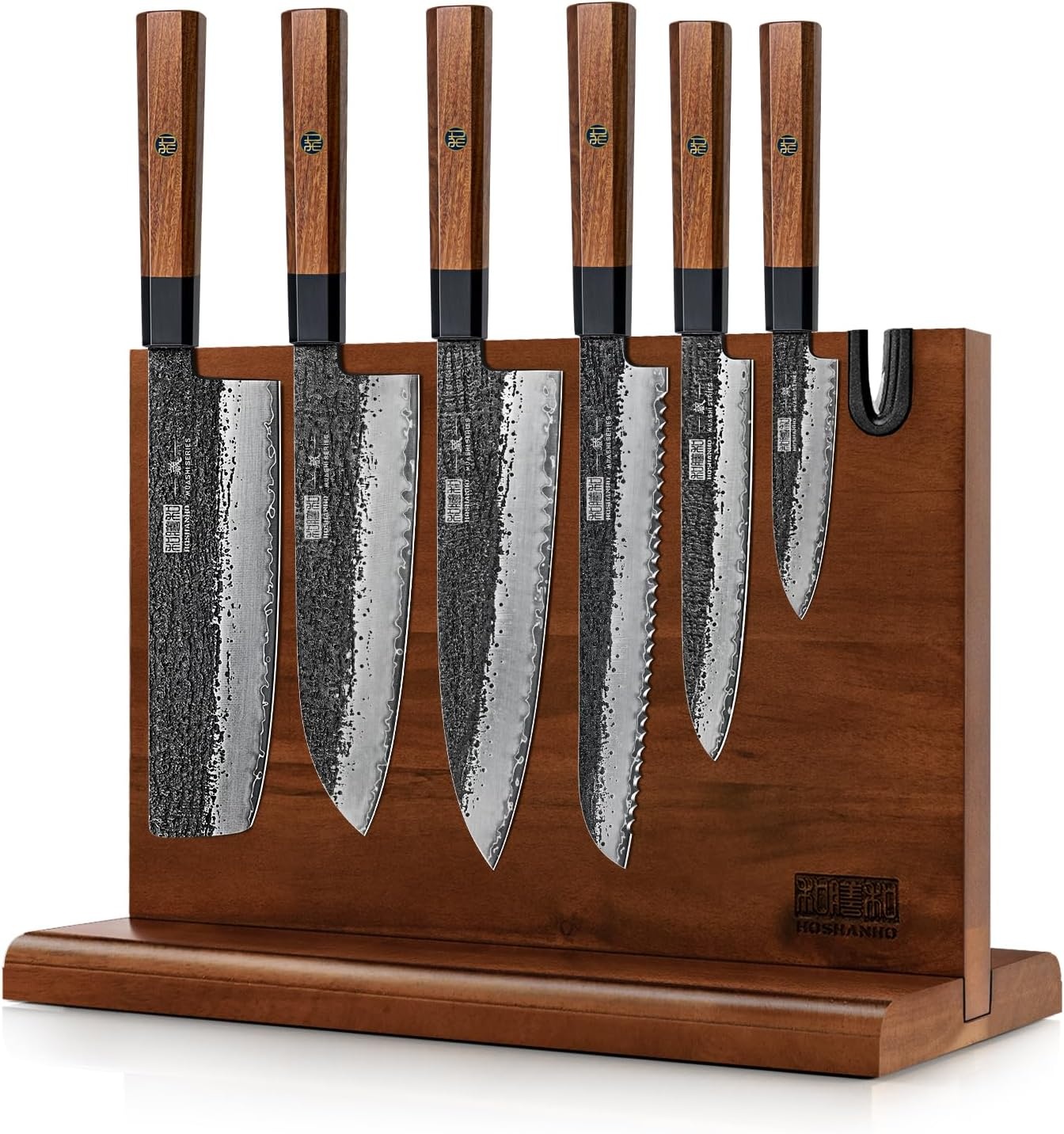
HOSHANHO 7 Pcs Knife Set with Magnetic Knife Block
Handles the half of bread baking that never touches a bowl: scoring, dividing, trimming
Not a mixer, so it cannot replace one, and it solves a different problem
Prices and availability were captured from Amazon Creators API and may change.
How I judge a mixer without trusting the box
The box tells you capacity and wattage. Neither one answers the question you actually care about, which is whether the machine can push a two-pound loaf of stiff sourdough through a full kneading cycle without the housing getting hot to the touch.
Two numbers matter more than the marketing. The first is motor quality, not motor wattage. Wattage tells you how much power the machine draws, not how much twisting force reaches the dough hook. A 500-watt motor with a well-geared drivetrain can out-knead a 700-watt motor with sloppy gearing, which is why I stopped trusting the big number on the front of the box years ago.
The second is frame design. A bowl that rises on arms into the mixer head sits in a cradle, and that cradle does not flex. A tilt head rotates up on a hinge, and every hinge has play. Play is fine for creaming butter. Play is not fine when a hook is fighting a dense dough for ten minutes, because the head walks, the bowl shifts, and you end up chasing the machine around the counter with one hand while holding the dough down with the other.
I have not run a full 60-day gauntlet on all four of these products. What I can do is read the design honestly and tell you where each one will land in a real kitchen.
KitchenAid 7 Quart Bowl-Lift: the bread machine of the group
A bowl-lift frame with a 7-quart bowl is the configuration I would choose if I were buying one mixer and wanted it to last a decade. The bowl sits low and locks into a cradle, the head stays fixed, and the dough hook works against a stationary target. That geometry is the whole reason bread people gravitate to lift designs.
Seven quarts is also the capacity that stops being a marketing number and starts being useful. Double batches of brioche, a full batch of sourdough at 70 percent hydration, a big holiday cookie dough, all of those fit without the dough climbing the hook and grabbing the lid. My own weekly bread fits in a smaller bowl, but the margin matters on the days you scale up.
The trade-offs are honest ones. This is the priciest machine in the group. It is heavy, it takes up real estate, and if you bake twice a month you are paying for headroom you may never use. The included accessories also deserve a look before you buy, because accessory bundles vary and you want the ones you will actually attach.
If you want to know what the machine costs today, Visit on Amazon →. KitchenAid's attachment ecosystem is the other half of the argument. A mixer that accepts a pasta roller, a grinder, and a shredder stops being a single-purpose appliance and becomes a kitchen system, and that ecosystem is the deepest one in this comparison.
Kenwood Chef Titanium: the 800-watt variable-speed argument
The Kenwood Chef Titanium is the most technically interesting machine here. An 800W motor with electronic variable speed control is a different approach than a stepped speed dial, because you can dial in a slow fold or a fast whip without hunting for the right detent. For bread, the low end of a variable range is what you want: a slow, steady knead that develops gluten without heating the dough.
The 5-quart work bowl is dishwasher safe, and the machine ships with three mixing tools, which covers the basics without an extra purchase. That matters more than people admit. A mixer that arrives with a dough hook, a whisk, and a beater is ready to work on day one, and the dishwasher-safe bowl means cleanup is a rinse and a rack rather than a hand-wash ritual.
Where it gives ground is capacity and ecosystem. Five quarts is a real bowl, but it is two quarts behind the KitchenAid, which shows up when you push a double batch. Kenwood's attachment range is also thinner on this side of the Atlantic, so the long-term system argument that favors KitchenAid does not favor Kenwood the same way.
If variable speed control and a dishwasher-safe bowl are your priorities, Visit on Amazon →. It is the machine I would hand to someone who wants precision over brute capacity.
Dash Everyday: the compact tilt-head, and its honest ceiling
The Dash Everyday is a 3-quart tilt-head with 6 speeds and a stainless steel bowl, and I want to be fair to it, because it is not pretending to be a bread machine. It is a compact mixer for everyday recipes, and that is exactly how the product describes itself.
Three quarts is a small-batch ceiling. You can cream butter and sugar, whip cream, mix a quick batter, and knead a soft enriched dough. What you should not expect is a two-pound stiff sourdough loaf, because the tilt head and the smaller motor are not built for that fight. Tilt heads wobble under load. That is not a knock on Dash specifically, it is a design consequence of the hinge.
Where it wins is footprint and weight. If your kitchen is small, if you bake cakes and cookies more than bread, if you want a mixer you can move from a cabinet to the counter without a second thought, a 3-quart compact machine makes sense. It is the lightest lift in this group and the easiest to live with in a tight kitchen.
If that is your kitchen, Visit on Amazon →. Buy it for what it is. Do not buy it hoping it becomes something it is not.
HOSHANHO knife set: why a knife is in a mixer comparison
This one is not a mixer. It is a 7-piece knife set with a magnetic knife block, and I put it in the table because the last ten minutes of bread baking do not happen in a bowl.
Scoring a proofed loaf needs a blade that does not drag. Dividing a bulk ferment into pieces needs a clean cut so you are not smearing the crumb structure you spent hours building. Trimming a brioche, cutting a focaccia into squares, slicing the finished loaf without crushing it: all of that is knife work, and a dull knife ruins a good bake faster than a mediocre mixer does.
A magnetic block also solves a real kitchen problem. It keeps the edges where you can see them, it frees counter space compared with a wooden block, and you are not digging through a drawer for the one knife that is actually sharp. If your bread workflow is strong but your prep tools are a drawer full of sadness, Visit on Amazon →. Just be clear with yourself that it is a supplement to a mixer, not a substitute for one.
Bowl capacity is a lie, and here is the correction
A capacity number describes the volume of the bowl, not the volume of dough the machine can actually handle. A 5-quart mixer that stalls on two pounds of stiff dough has a marketing problem, not a bread problem. The real ceiling is set by motor torque and frame rigidity, and the bowl is just the container those two things work inside.
Here is the rule I give my students. If you plan to bake bread more than once a month, do not buy anything under 500 watts, and do not buy a tilt head if you plan to knead dense dough regularly. Those two filters eliminate most of the disappointment people email me about.
Apply that filter to this group. The KitchenAid passes on both counts. The Kenwood passes on power and offers variable speed as a bonus. The Dash is a tilt head with a small bowl, which is fine for its intended job and wrong for a weekly sourdough habit.
Attachments decide the long-term relationship
A mixer with a pasta roller is a kitchen system. A mixer with no attachment mount is a gadget, and gadgets get sold at yard sales by people who bought the wrong thing.
This is where the KitchenAid pulls ahead in a way that has nothing to do with bread. The mount on the front of that machine is the entry point to an ecosystem that includes rollers, grinders, and shredders, and that ecosystem is what keeps the machine on the counter after the novelty of a new purchase wears off. I own three attachments I have used twice, and I would still make the same call, because the two I use weekly justify the rest.
The Kenwood ships with three mixing tools, which is a complete starting kit for mixing and kneading, but its attachment range in the United States is not as deep. The Dash does not play in that league, and that is consistent with what it is.
Trade-offs, stated plainly
Buy the KitchenAid 7 Quart Bowl-Lift if bread is the reason you are shopping, if you want a machine that can take a double batch, and if you plan to keep it for a decade. Accept the weight, the footprint, and the price.
Buy the Kenwood Chef Titanium if you want electronic variable speed, a dishwasher-safe work bowl, and a machine that arrives with everything you need to start mixing. Accept the smaller bowl and the thinner attachment market.
Buy the Dash Everyday if your kitchen is small, your baking is mostly cakes and cookies, and you want a compact tilt-head that is easy to move. Accept that stiff bread dough is not its job.
Buy the HOSHANHO set if your prep tools are holding back otherwise good bakes. Accept that it does not knead anything.
What I would skip, and why
I would skip anything under 500 watts if bread is on your list. I would skip any tilt head that wobbles under a heavy load, no matter how good the price looks, because that wobble becomes a broken hinge and a broken hinge becomes a replacement mixer. And I would skip buying a mixer for the attachments alone, since attachments that cost more than the machine are a sign you are shopping for a system you have not decided you need yet.
The bottom line
The motor is the mixer. Everything else, the bowl size, the color, the speed dial, the bundle, is a detail wrapped around that one fact. Among these four, the KitchenAid 7 Quart Bowl-Lift is the machine I would trust with a decade of weekly bread, the Kenwood Chef Titanium is the one I would trust with precision work and an easy cleanup, the Dash Everyday is the compact mixer for everything that is not stiff dough, and the HOSHANHO set is the sharp edge that finishes what the mixer starts.
Pick the one that matches the baking you actually do, not the baking you keep meaning to start. Your wrists will thank you either way.