I kneaded bread by hand for the first six years of my baking life, and my wrists still send me reminders about it. Then I ran a bakery for a decade, moved into teaching bread classes, and spent the years since putting home mixers through the same question: can this thing handle stiff dough without quitting on me?
This comparison covers four machines that land in the same shopping cart: the Kenwood Chef Titanium, two versions of the Cuisinart SM-50, and the compact Dash Everyday. If you want the best stand mixer for bread dough in this group, the answer depends on how much dough you make and how honest the motor spec is.
Related: Stand Mixer Bowl Capacity: Why 5 Quarts Is Not Always 5 Quarts
My pick for bread bakers here is the Kenwood Chef Titanium, because it is the only machine in the group that publishes a motor figure specific enough to argue about, 800 watts, and it backs that with a 5-quart bowl, electronic variable speed control, and three mixing tools in the box. The Cuisinart mixers are the smarter buy if you want the fullest set of tools and the largest bowl, and the Dash only makes sense if your batches are small and your counter is smaller.
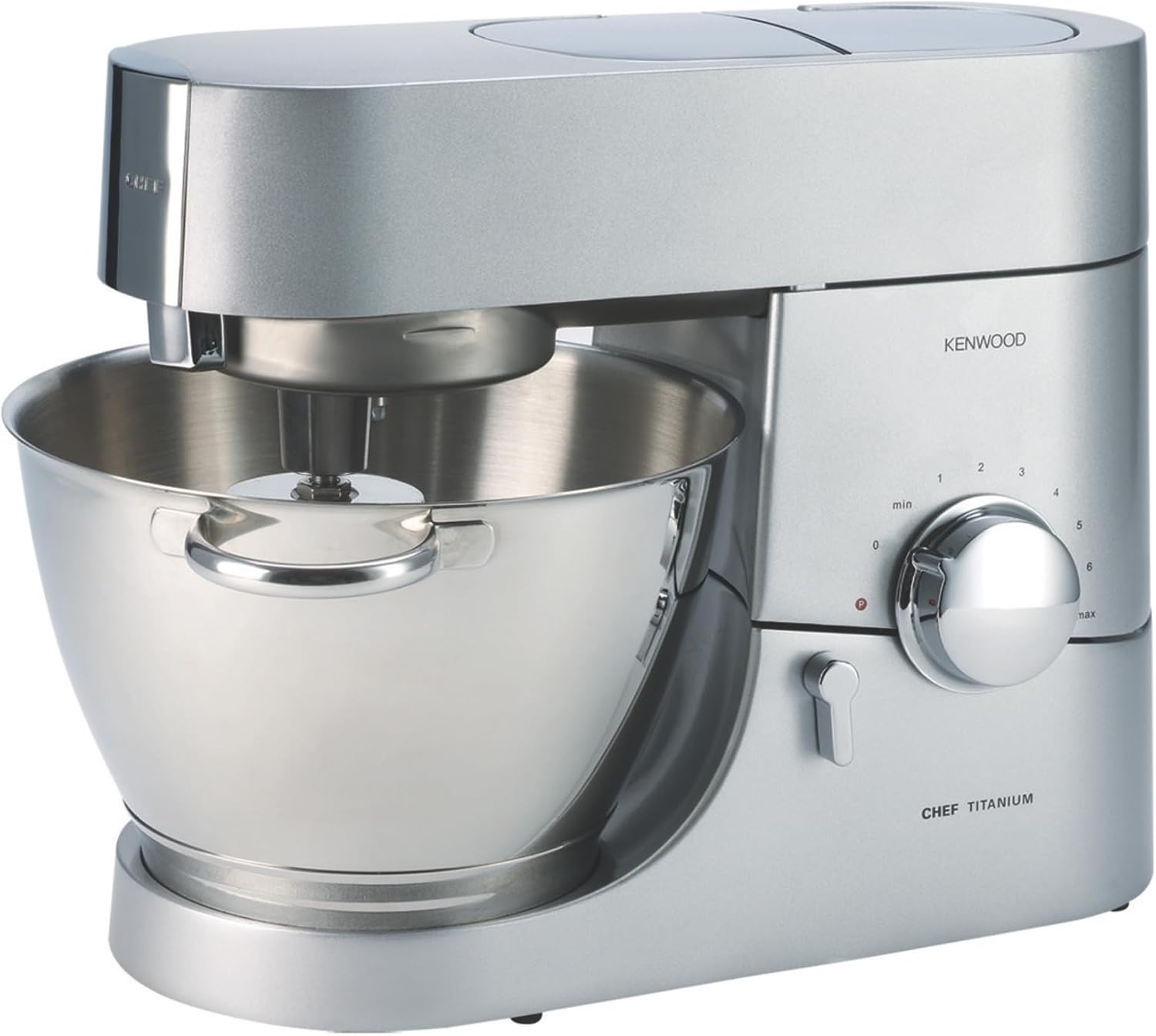
Kenwood Chef Titanium Kitchen Machine
800-watt motor, electronic variable speed control, and a dishwasher-safe work bowl make it the most bread-capable machine in this group
Heavy on a small counter, and 5 quarts is still not double-batch territory
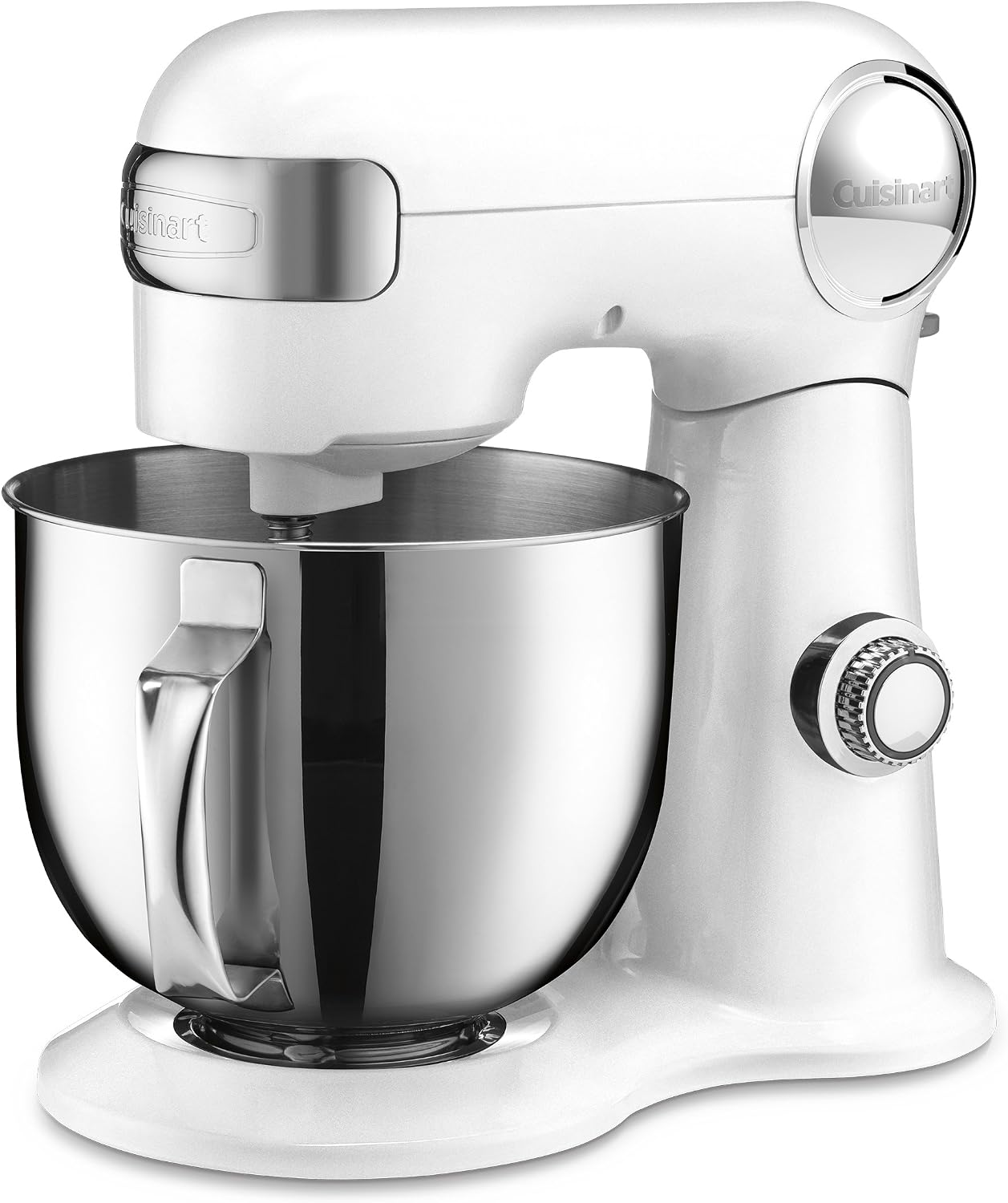
Cuisinart Stand Mixer, White Linen
12 speeds, a 5.5-quart stainless bowl, and a complete tool set: chef's whisk, mixing paddle, dough hook, and splash guard with pour spout
The bowl size outruns the published specs, so you are trusting the motor without a wattage number
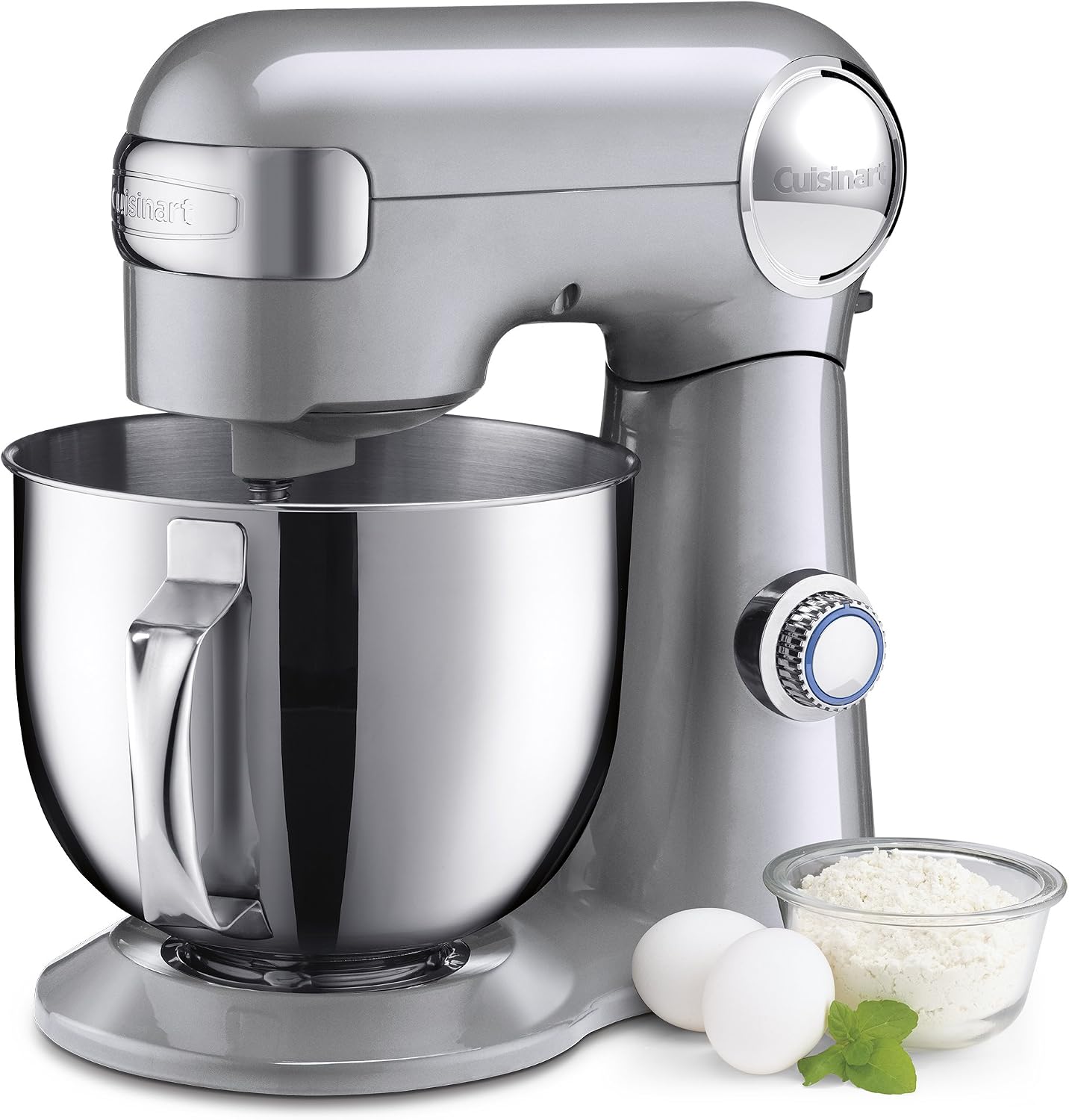
Cuisinart Stand Mixer, Silver Lining
Same 12-speed, 5.5-quart platform as the White Linen version, with a flat mixing paddle in the box
Functionally the same mixer, so the decision comes down to finish and what is in stock
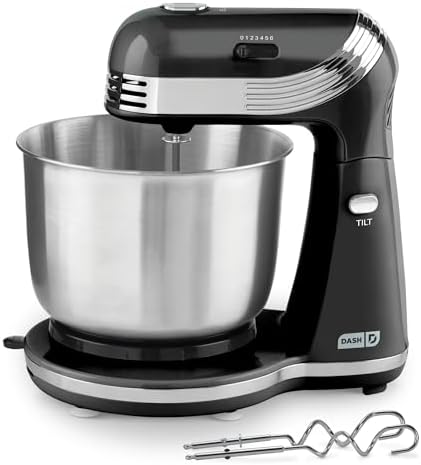
Dash Everyday Stand Mixer
Compact 3-quart footprint, 6 speeds, tilt-head access, and a stainless steel bowl
3 quarts and a tilt head are the wrong combination for weekly bread, so it is a small-batch machine
Prices and availability were captured from Amazon Creators API and may change.
How I judge a stand mixer for bread
Every mixer that earns a recommendation from me goes through the same gauntlet: a sourdough with a long rest, a brioche with enough butter to make a weak motor complain, and then the fifth loaf, which is the point where underpowered machines start to smell hot.
Four things decide it for me, in this order.
Torque, not wattage. Wattage tells you how much power the mixer draws. Torque tells you whether it can actually turn a stiff dough. A machine can be rated at a big number and still stall when the dough gets dense, which is why I care about what the motor does at the end of a knead, not at the start.
Dough hook geometry. A good hook climbs the dough and works it. A bad one buries itself in the center and spins while the dough sits there like a rock. This is the difference between kneading and stirring.
Bowl stability. A bowl that shifts under load is a bowl that is not doing its job. This is where the lift-bowl versus tilt-head argument comes from, and it matters more the stiffer your dough gets.
The ten-minute smell test. If the motor smells hot after ten minutes of dough, it is not powerful enough for what you bought it for. That is not a measurement, it is a warning, and it is the single most useful thing I can tell you.
Notice what is not on that list: the number of speeds printed on the box, the color, and the bowl size in quarts. Bowl capacity is a marketing number until you fill it with something stiff.
Kenwood Chef Titanium: the motor-first machine
The Kenwood Chef Titanium is the machine in this group that leads with power instead of accessories. It carries an 800-watt motor with electronic variable speed control, a 5-quart capacity, a dishwasher-safe work bowl, and three mixing tools in the box.
The variable speed control is the part I care about most. Dough development is not one speed, it is a progression: slow to bring the flour together, then a steady working speed once the gluten starts to organize. Electronic control holds that speed under load instead of sagging when the dough fights back. That is the difference between a mixer that kneads and a mixer that pretends to.
The dishwasher-safe work bowl is the unglamorous feature that ends up mattering every single week. Bread baking produces a sticky, floury mess, and a bowl you can put in the dishwasher changes how often you actually bake.
What it loses on: it is a heavy kitchen machine, and it takes up real counter space. The 5-quart bowl is a solid single-batch size, but if you are planning to double your bread recipe, this is not the machine that gives you headroom for it. And the attachment ecosystem around a kitchen machine is a long-term cost, not a starter kit.
Check current Amazon price on the Kenwood Chef Titanium Kitchen Machine.
Cuisinart SM-50 in White Linen: the complete kit
The Cuisinart SM-50 in White Linen is the most fully equipped mixer of the four. It runs 12 speeds, uses a 5.5-quart stainless steel bowl, and ships with a chef's whisk, a mixing paddle, a dough hook, and a splash guard with a pour spout. It also includes a manual, which sounds like a small thing until you are trying to figure out which speed to knead on.
Twelve speeds sounds like spec-sheet padding, and on a weak motor it would be. On a mixer that can hold its speed, having a slow, gentle range matters, because you want the first minute of mixing to be barely moving. Flour clouds are not a personality trait.
The splash guard with the pour spout is a genuinely thoughtful piece. You can add liquid while the mixer runs without wearing it. If you have ever dumped a cup of water into a running mixer and then spent twenty minutes wiping down the wall, you understand.
The honest criticism is that the bowl size is the loudest number on the page and the motor spec is not stated as clearly. A 5.5-quart bowl is the largest capacity here, and large bowls invite large batches, which is exactly when a motor has to prove itself. Buy this one because you want the tool set and the capacity, not because a quart count promised you torque.
Check current Amazon price on the Cuisinart Stand Mixer in White Linen.
Cuisinart SM-50BC in Silver Lining: the same mixer, different finish
Here is the short version: the Cuisinart SM-50BC in Silver Lining is the same 12-speed, 5.5-quart platform as the White Linen version. It includes a chef's whisk, a flat mixing paddle, a dough hook, and a splash guard with a pour spout, and it wears a silver finish instead of white.
If you are choosing between the two Cuisinart models, you are choosing between a white finish and a silver one, plus whatever availability looks like on the day you buy. The flat mixing paddle in the Silver Lining box does a slightly different job than a standard mixing paddle, and for creaming butter and blending batters it is the tool I reach for first.
Everything I said about the White Linen version applies here, including the criticism. Same bowl, same speed range, same tool set, same question about whether the motor is as ambitious as the capacity. If you want the Cuisinart platform and your kitchen leans stainless, this is the one that matches. If your kitchen leans white, the other one does.
Check current Amazon price on the Cuisinart Stand Mixer in Silver Lining.
Dash Everyday: the compact tilt-head
The Dash Everyday is a different animal, and I mean that as a description, not an insult. It is a 3-quart tilt-head mixer with 6 speeds, a stainless steel bowl, and a compact footprint, in red.
Where it wins is the small kitchen. Three quarts is a real size for one loaf of bread, a single cake, a batch of cookie dough, or whipped cream for a pie. The tilt-head gives you easy access to the bowl, and the whole machine takes up a corner instead of a countertop. For someone baking once a week in an apartment, that is a legitimate package.
Where it loses is exactly where a bread baker gets frustrated. A 3-quart bowl has a dough ceiling, and it arrives sooner than the marketing suggests. Tilt heads also wobble under load, and stiff dough is the load that finds the wobble. Push this machine through a weekly sourdough habit and you will be asking it to do a job it was not built for.
If your baking is cakes, quick breads, and small batches of enriched dough, the Dash is a sensible, compact choice. If bread is the reason you are shopping, keep reading.
Check current Amazon price on the Dash Everyday Stand Mixer.
Capacity, speeds, and tools: the three trade-offs
Capacity is a range, not a number. The Cuisinart mixers list 5.5 quarts, the Kenwood lists 5 quarts, and the Dash lists 3 quarts. Those numbers describe the bowl, not the dough. A bowl can hold more than a motor can knead, and the gap between the two is where disappointing bread days live. My rule: buy the capacity you will actually fill, and treat the number as a ceiling you should stay under.
Speeds are only useful if the motor holds them. Twelve speeds on the Cuisinart models and 6 on the Dash both cover the practical range, from a slow fold-in to a fast whip. The Kenwood's electronic variable control is the one that is designed to resist bogging down under a stiff load. More speeds is not automatically better; sustained speed is.
Tools decide the long-term relationship. The Cuisinart models give you the most complete starter kit with a whisk, a paddle, a dough hook, and a splash guard. The Kenwood includes three mixing tools and a dishwasher-safe bowl. The Dash keeps it simple. Look at what is in the box, because buying the tools separately later is how a reasonable purchase turns into an expensive one.
Who should buy which
Buy the Kenwood Chef Titanium if bread is your priority and you want a motor with a published power figure, variable speed control that holds under load, and a bowl you can put in the dishwasher.
Buy the Cuisinart SM-50 in White Linen if you want the largest bowl, the most speeds, and the most complete tool set out of the box, and you bake a mix of bread, cakes, and cookies.
Buy the Cuisinart SM-50BC in Silver Lining if that description fits and you prefer the stainless finish. It is the same platform with a flat mixing paddle and a different color.
Buy the Dash Everyday if your batches are small, your counter is tight, and bread is an occasional project rather than a weekly ritual.
What I check before spending money
First, measure your batch. Write down the largest dough you actually make in a normal month, then buy a mixer with room above that. Most people overbuy capacity and underbuy motor.
Second, confirm what is in the box. Whisk, paddle, dough hook, and splash guard are not extras, they are the job. A mixer that arrives without a dough hook is not a bread mixer yet.
Third, think about where it lives. A heavy kitchen machine that stays in a cabinet does not get used. A compact mixer on the counter gets used twice as often, even if it is less capable.
Fourth, check the return window and use it. Run your hardest recipe in the first two weeks. If the motor smells hot after ten minutes, send it back. That is not being difficult, that is using the policy the way it was written.
What I'm testing next
All four of these machines are in the middle of the same 60-day bread gauntlet I run every year: the same sourdough, the same brioche, and the same fifth-loaf question about what the motor smells like when the dough gets serious. The Kenwood is the one I expect to hold its speed longest. The Dash is the one I expect to tap out first, and I will say so plainly when the testing wraps.
If you take one thing from this comparison, take the ordering of the priorities: motor first, dough hook second, bowl stability third, capacity last. Get those in the right order and you will not end up with a cake mixer with ambitions.