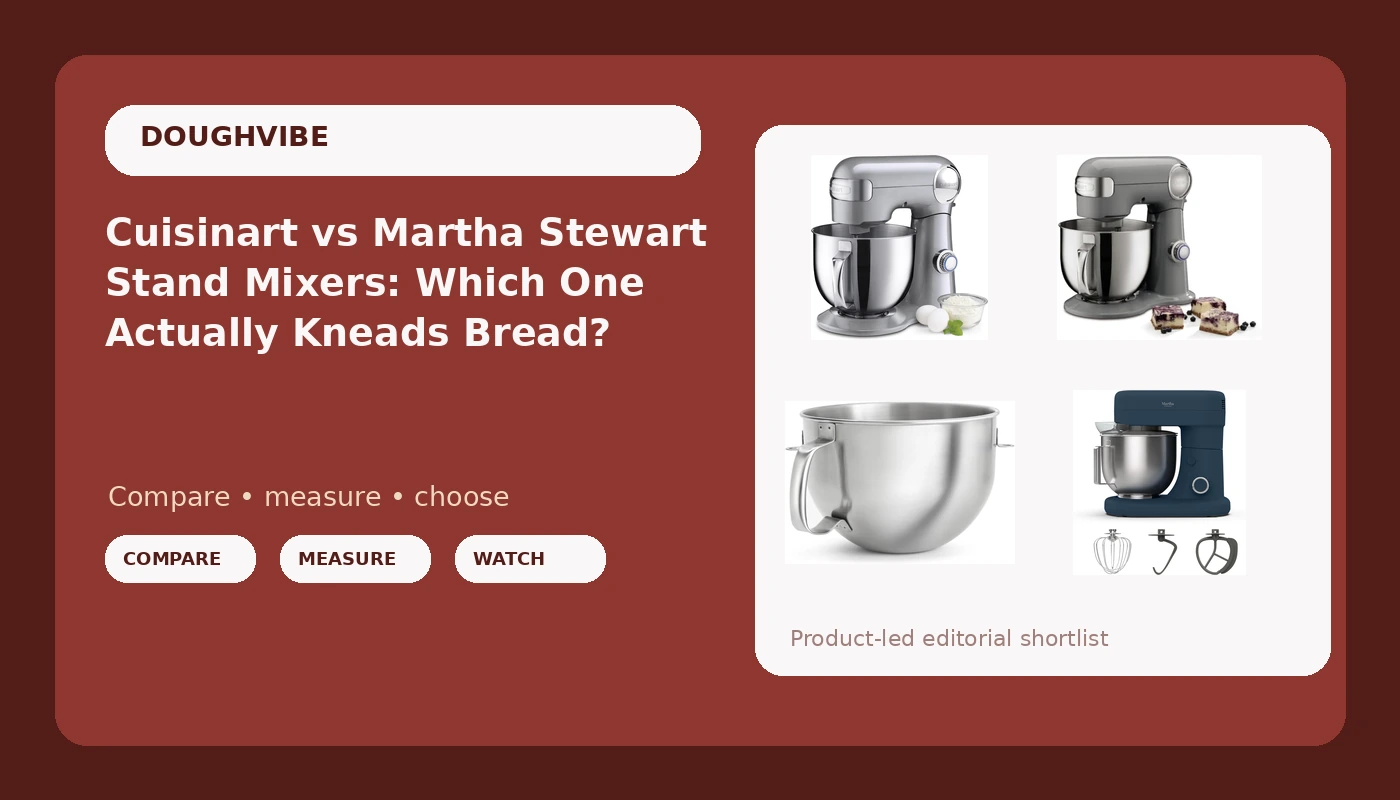
I have kneaded dough by hand until my wrists gave out, and I have watched a bargain mixer's motor quit halfway through a stiff sourdough. So when someone asks me to compare stand mixers, I do not start with the color options. I start with the dough. This Cuisinart vs Martha Stewart stand mixers comparison covers four products that shoppers keep putting in the same cart, and two of them are not even the same kind of thing. Three are mixers. One is a bowl.
Here is the short version if you want to stop reading: the Cuisinart SM-50, in either finish, is the one I would hand to a baker who plans to knead bread every week. The Martha Stewart tilt head is a fine small-batch machine for cakes, cookies, and softer doughs, and it asks less of your wallet. The KitchenAid six-quart bowl is not a mixer at all. It is an upgrade part, and it only belongs in this conversation if you already own one of the bowl-lift mixers it fits.
Related: Tilt Head Vs Bowl Lift Stand Mixers: What Actually Matters Under Load
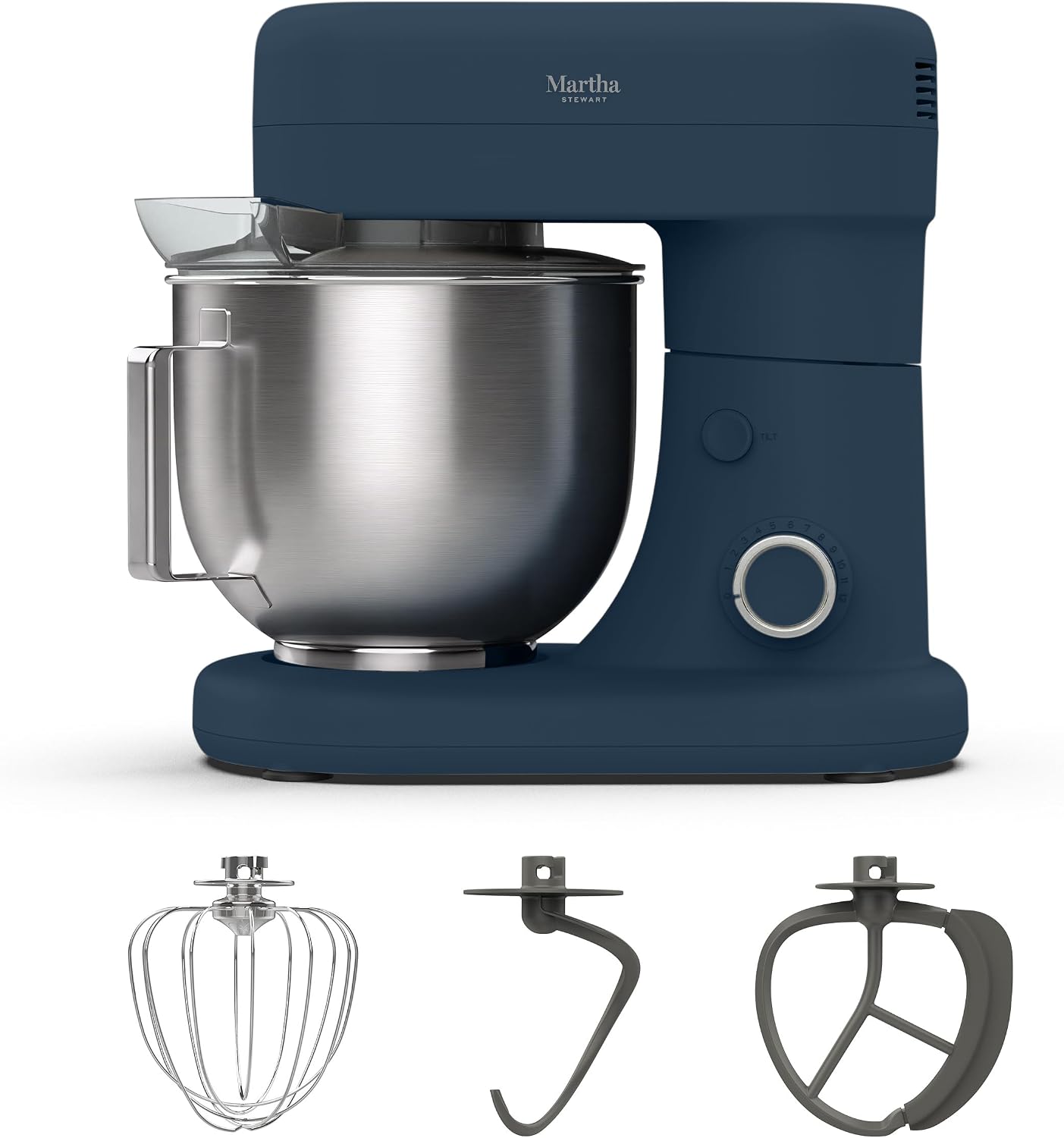
Martha Stewart 5.3QT Tilt Head Stand Mixer
Lowest entry point here, 12 speeds, stainless bowl, easy to store under a cabinet
Tilt head geometry is the wrong shape for stiff dough, and the listing does not promise a dough hook
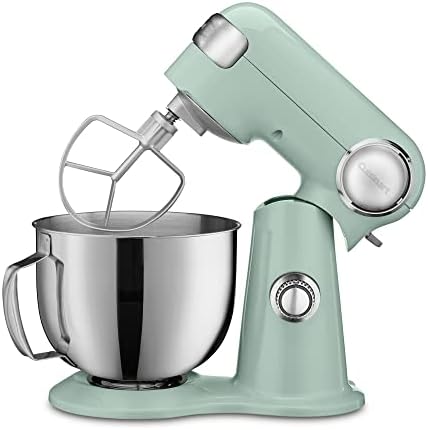
Cuisinart SM-50GR Precision Master Stand Mixer, Dove Gray
Full attachment set out of the box: whisk, flat paddle, dough hook, splash guard with pour spout
Same machine as the other Cuisinart here, so the finish is the only real difference
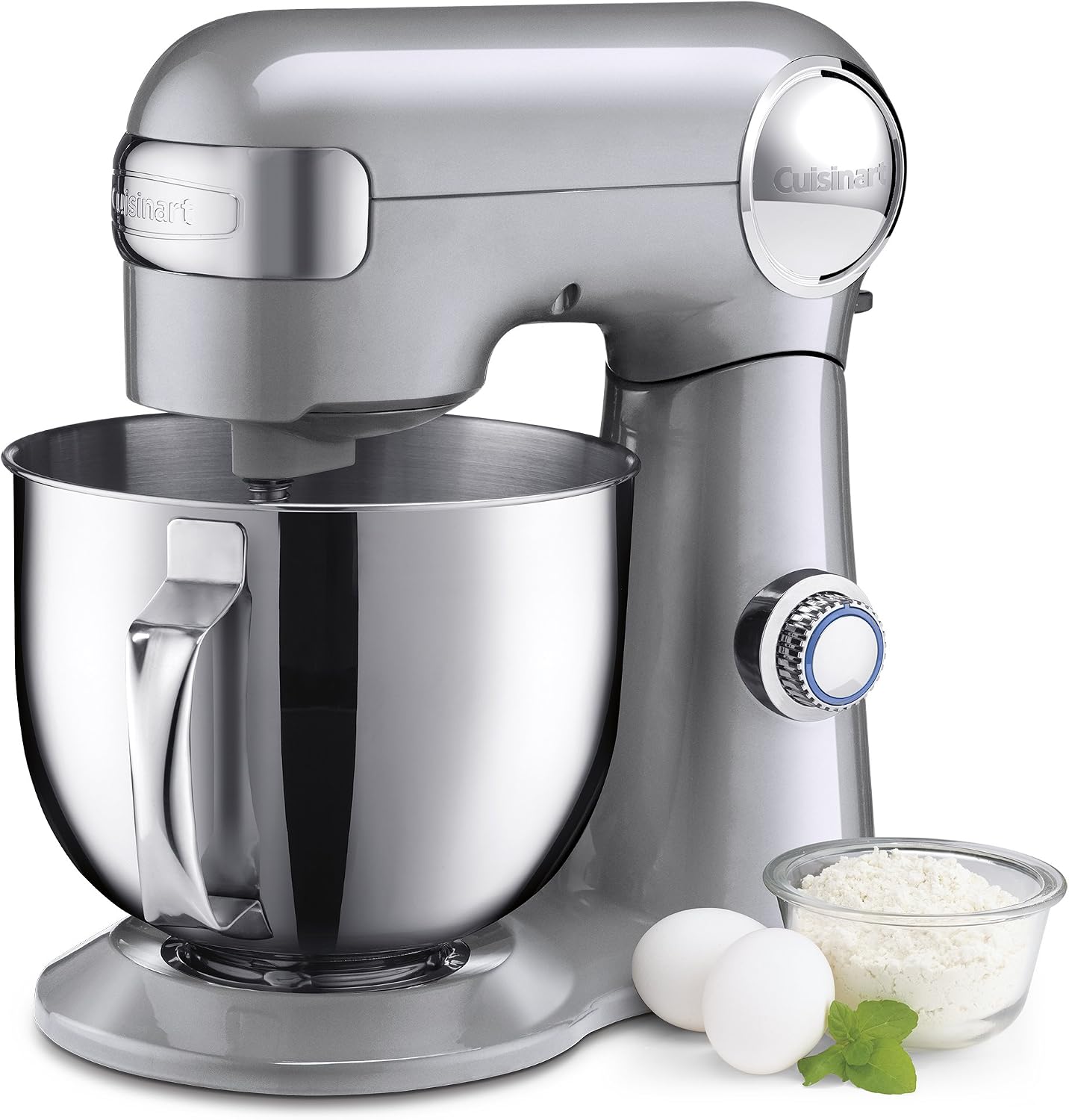
Cuisinart Stand Mixer, Silver Lining
Identical 5.5-quart capacity and 12-speed control, same five-piece kit
Silver finish shows fingerprints and flour dust more than the gray does
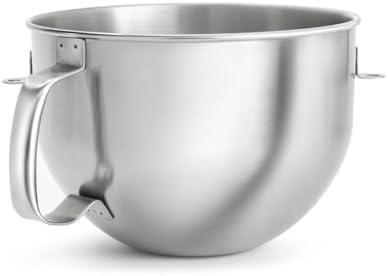
KitchenAid 6-Quart Polished Stainless Steel Bowl with Handle
The single best upgrade for a bread baker who already owns a compatible bowl-lift mixer
It is a bowl. It does not mix anything, and it only fits select bowl-lift models
Prices and availability were captured from Amazon Creators API and may change.
How I judge a mixer that is supposed to knead bread
Wattage tells you how much power the machine draws. Torque tells you whether it can actually turn a hook through two pounds of stiff dough without stalling. Those are different numbers, and the second one is the one nobody prints on the box.
When a mixer lands on my bench, I look at four things before I look at anything else.
First, the motor's behavior under load. A mixer that whips cream into stiff peaks without breaking a sweat can still bog down the moment the dough gets tight. That is not a defect. It is a machine doing a different job than the one you bought it for.
Second, the bowl geometry. A bowl that is too wide leaves a ring of flour on the wall that the hook never touches, and you end up stopping the machine every thirty seconds to scrape. A bowl that is too narrow crowds the dough and makes the motor work harder than it should.
Third, the head design. A lift bowl raises the bowl into a fixed head, and that head does not move. A tilt head hinges back, and every hinge is a place where a heavy dough can make the whole assembly flex. For cakes, you will never notice. For a double batch of bagels, you will.
Fourth, the smell test. If the motor smells hot after ten minutes of dough, it is not powerful enough for what you bought it for. That smell is insulation cooking, and it does not get better with practice.
The two Cuisinart SM-50 mixers are the same machine
Here is the thing that makes this comparison shorter than it looks. The Cuisinart SM-50 in Dove Gray and the Cuisinart SM-50 in Silver Lining are the same mixer wearing different paint. Both carry a 5.5-quart mixing bowl and a 12-speed control. Both ship with the same kit: chef's whisk, flat mixing paddle, dough hook, and a splash guard with a pour spout.
So the decision between them is not a performance decision. It is a finish decision, and possibly a price decision on the day you buy. Pick the one that matches your kitchen and costs less when you check out.
What the SM-50 gets right for bread people is the inclusion of the dough hook in the base kit. A lot of budget mixers make you buy the hook separately, which is how a $150 machine quietly becomes a $200 machine. Here, the hook is in the box, and the splash guard means you can add flour to a wet dough without painting the backsplash.
What it gets wrong is the ceiling. This is a 5.5-quart machine with a motor that will handle a weekly loaf and a batch of cookies without complaint, but it is not a bakery machine. If you are the person who makes four loaves at a time, every weekend, forever, you will eventually want more bowl and more motor, and no amount of careful loading will change that.
The Martha Stewart tilt head is the light-duty pick
The Martha Stewart 5.3QT Tilt Head Stand Mixer lists a 5.3-quart stainless steel bowl and 12 speeds. That is the whole spec sheet I am working from, and it tells you most of what you need to know.
The capacity is within spitting distance of the Cuisinarts. The speed count is identical. The difference is the architecture. This is a tilt head, which means the head hinges up and back so you can get the bowl in and out. That design is genuinely pleasant for creaming butter, whipping egg whites, and folding together a cake batter. It is also the design that fights you the moment the dough gets stiff, because the hinge is the flex point.
There is a second thing to check before you buy: the listing names the bowl and the speeds, but it does not promise a dough hook in the box. Before you assume this machine can knead, look at what the current listing says is included. If you have to buy a hook separately, factor that into the total, and factor in whether the hook the brand sells is the shape you want.
My honest read is that this is a good mixer for a household that bakes cakes, cookies, muffins, and the occasional pizza dough. It is not the machine I would choose for a weekly sourdough habit. Not because it is bad, but because you would be asking a tilt head to do a lift bowl's job.
The KitchenAid bowl is not a mixer and that is the point
The KitchenAid 6-Quart Polished Stainless Steel Bowl with a handle is the odd entry in this table, and I put it here deliberately because it keeps showing up in the same search results as the mixers.
It is a bowl. It does not have a motor, a head, or a speed control. What it has is six quarts of polished stainless steel and a handle, and it fits select bowl-lift stand mixers. The word to underline there is select. Check the compatibility information for your specific model before you buy, because a bowl that does not seat correctly on your machine is a very expensive mixing bowl.
If it does fit your mixer, though, this is the highest-value purchase on this page for a serious bread baker. Here is why. The bottleneck in a home bread operation is rarely the motor. It is the wait. Dough needs to rise, and while it rises, the bowl is occupied. A second bowl means you can start the next batch while the first one proofs, or move a sponge out of the way and mix the final dough without washing anything.
Two bowls turn one mixer into a small production line. That is a better upgrade than a new attachment you will use twice.
The trade-offs nobody prints on the box
Bowl capacity is a marketing number. A 5.5-quart bowl does not mean 5.5 quarts of bread dough. Stiff dough is heavy, and the practical limit is usually well below the bowl's volume, because the hook needs room to climb the dough instead of burying itself in it. A "5-quart" mixer that stalls on two pounds of dough has a marketing problem, not a capacity problem.
Tilt head versus lift bowl is not a style choice. For cakes, either works and the tilt head is easier to live with. For bread, the lift bowl wins, because the bowl rises into a head that does not move. That is the whole argument, and no amount of attractive colorways changes the physics.
The attachment ecosystem decides the long-term relationship. A mixer that accepts a pasta roller, a grinder, or a slicer becomes a kitchen system instead of a single-purpose gadget. A mixer with a closed attachment port stays a mixer. If you plan to keep this machine for a decade, look at what you can add to it before you look at what it costs today.
Weight and footprint are real costs. A heavier machine is a more stable machine, and stability matters under load. It is also harder to drag out of a lower cabinet, which is the reason a lot of good mixers spend their lives in storage. If your counter space is tight, measure before you buy, not after.
Speed count is the least important number here. Twelve speeds sounds impressive on a box. What matters is whether the low end has enough torque to knead and the high end is stable enough to whip. Both of these machines list 12 speeds, and neither number tells you which one handles dough better.
Which one for which baker
If you bake bread every week: the Cuisinart SM-50, in whichever finish is cheaper when you order. The included dough hook and the 5.5-quart bowl are the right combination for a weekly loaf and a batch of rolls.
If you bake cakes, cookies, and frosting: the Martha Stewart tilt head. The tilt design is easier to work with for light mixtures, the bowl size is comparable, and you are not paying for kneading capacity you will not use.
If you already own a compatible bowl-lift mixer: the KitchenAid six-quart bowl. Confirm compatibility first, then buy it. Two bowls will change how much you bake more than any attachment will.
If you are choosing between the two Cuisinarts: stop. Pick the finish. There is no mechanical difference to weigh.
What I am watching next
The question I keep coming back to is not which mixer is best, because there is no single answer to that. It is whether the budget end of the market has finally caught up on torque, or whether the low prices are still being paid for with motors that smell hot at the ten-minute mark.
That is the test that matters. Not the bowl size on the box, not the speed count, not the color. Ten minutes of stiff dough, and what the motor smells like when you stop it. Buy the machine that passes, and you will still be using it when the next three generations of marketing copy have come and gone.