I have kneaded dough by hand until my wrists ached, and I have stood next to a mixer while its motor gave off that hot electrical smell ten minutes into a stiff sourdough. That smell is the whole argument in miniature. A stand mixer for bread dough is not a cake mixer with a bigger bowl, and the four products in this comparison draw that line more clearly than most: a commercial-grade bowl-lift machine, an 800-watt kitchen machine, a compact tilt-head, and a pair of wooden rolling pins that handle the one job no motor does well.
Here is the short answer. If bread is the point, the KitchenAid Commercial Series 8 Quart is the only machine in this group built around stiff dough from the frame up. The Kenwood Chef Titanium is the sensible middle. The Dash Everyday is a good small-batch mixer that is not a bread machine. And the rolling pins are cheap insurance for the shaping step. The long answer is about torque, bowl geometry, and what happens to a motor when the dough fights back.
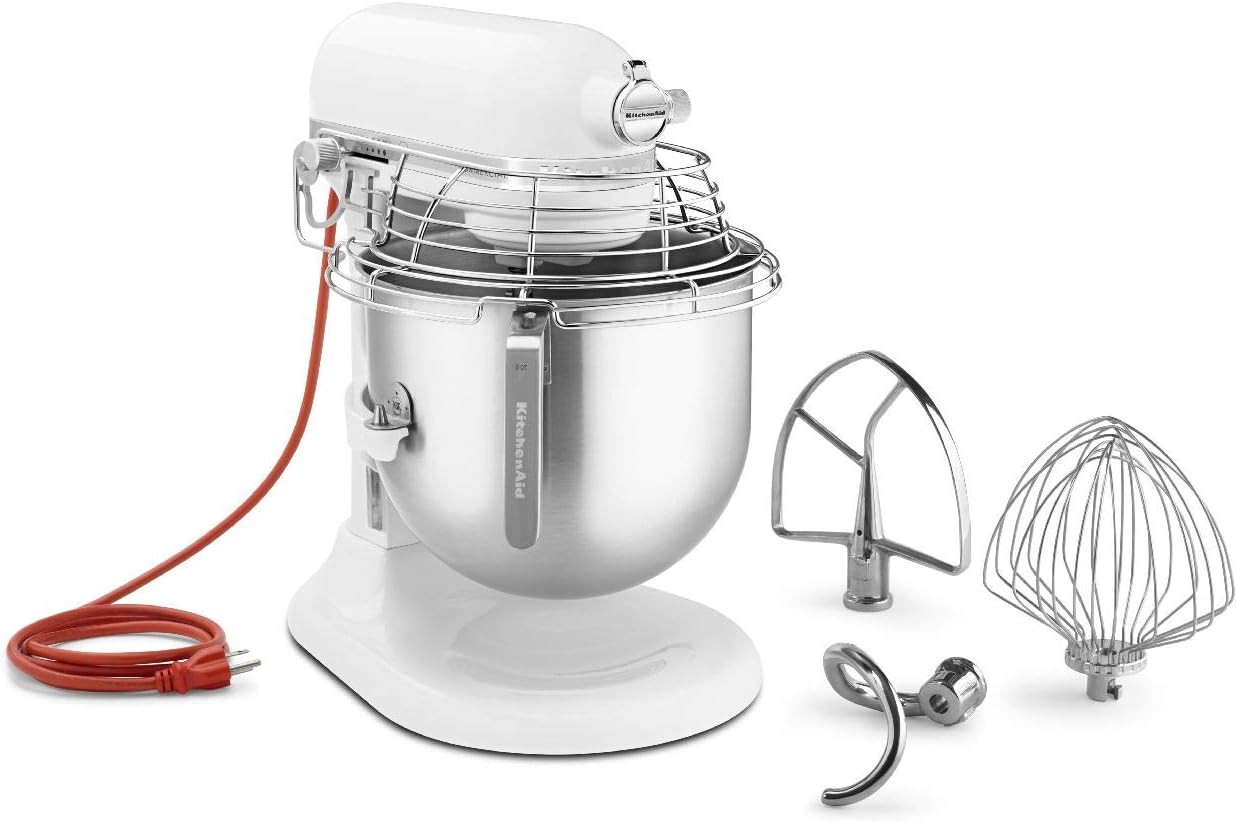
KitchenAid Commercial Series 8 Quart Bowl-Lift (KSMC895)
Bowl-lift geometry, an 8-quart stainless bowl, and a bowl guard make it the only machine here designed for heavy dough at volume
Heaviest and priciest of the group, and it takes real counter space
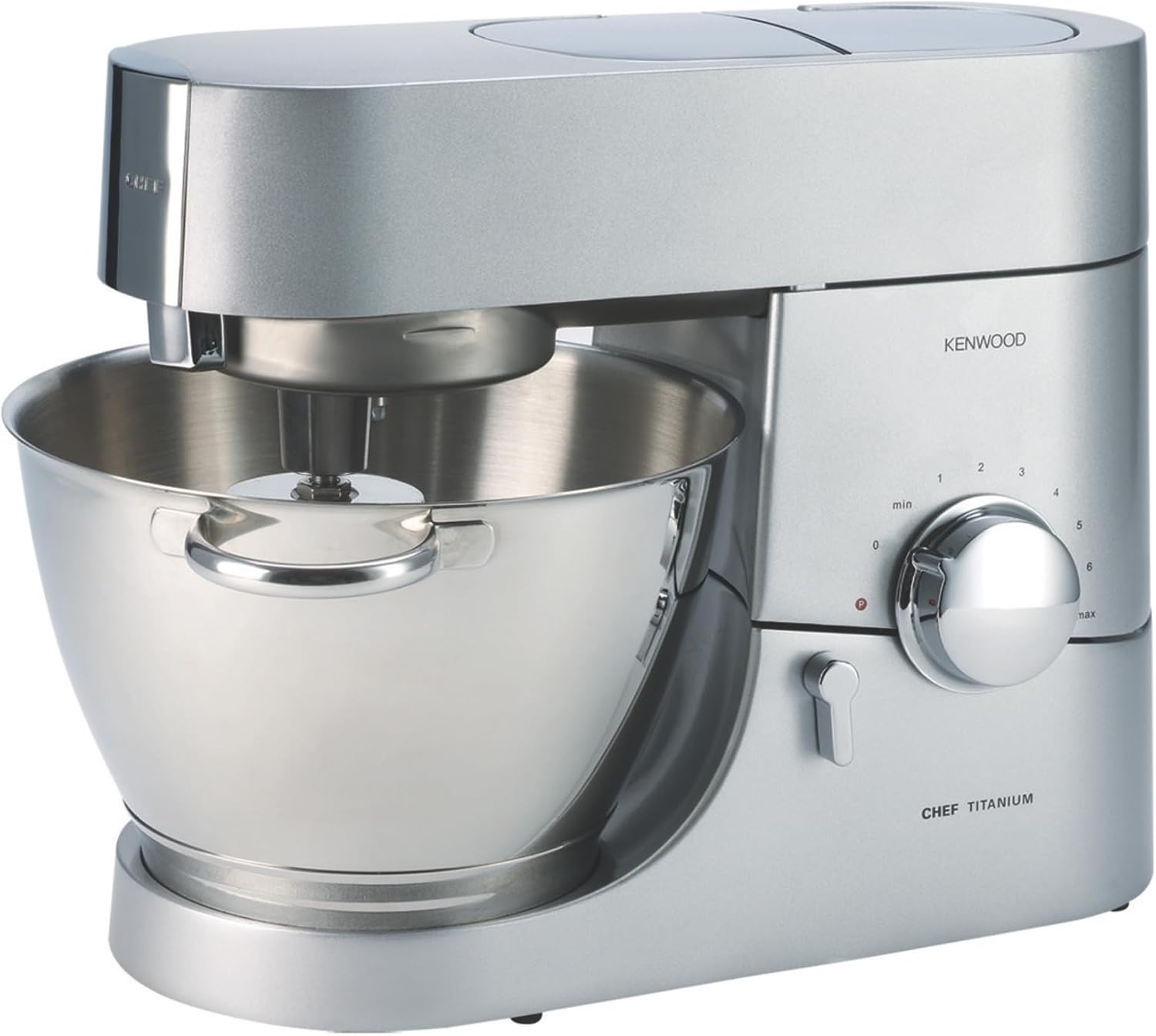
Kenwood Chef Titanium Kitchen Machine, 5 qt
800W motor with electronic variable speed control, dishwasher-safe bowl, three mixing tools in the box
5-quart bowl caps you at single batches, and the attachment ecosystem is thinner in the US
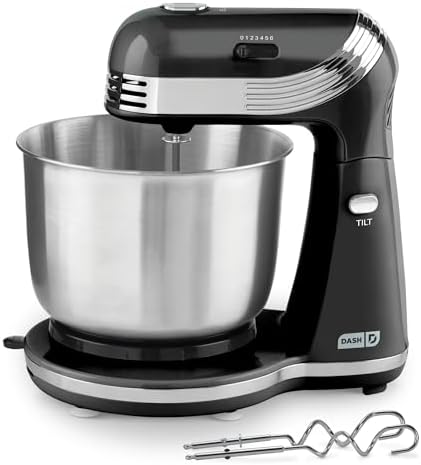
Dash Everyday Stand Mixer, 3-Quart
Compact, light, six speeds, and genuinely good at batter, cream, and small doughs
Tilt-head hinge flexes under a stiff load, and 3 quarts is not enough dough for a real loaf
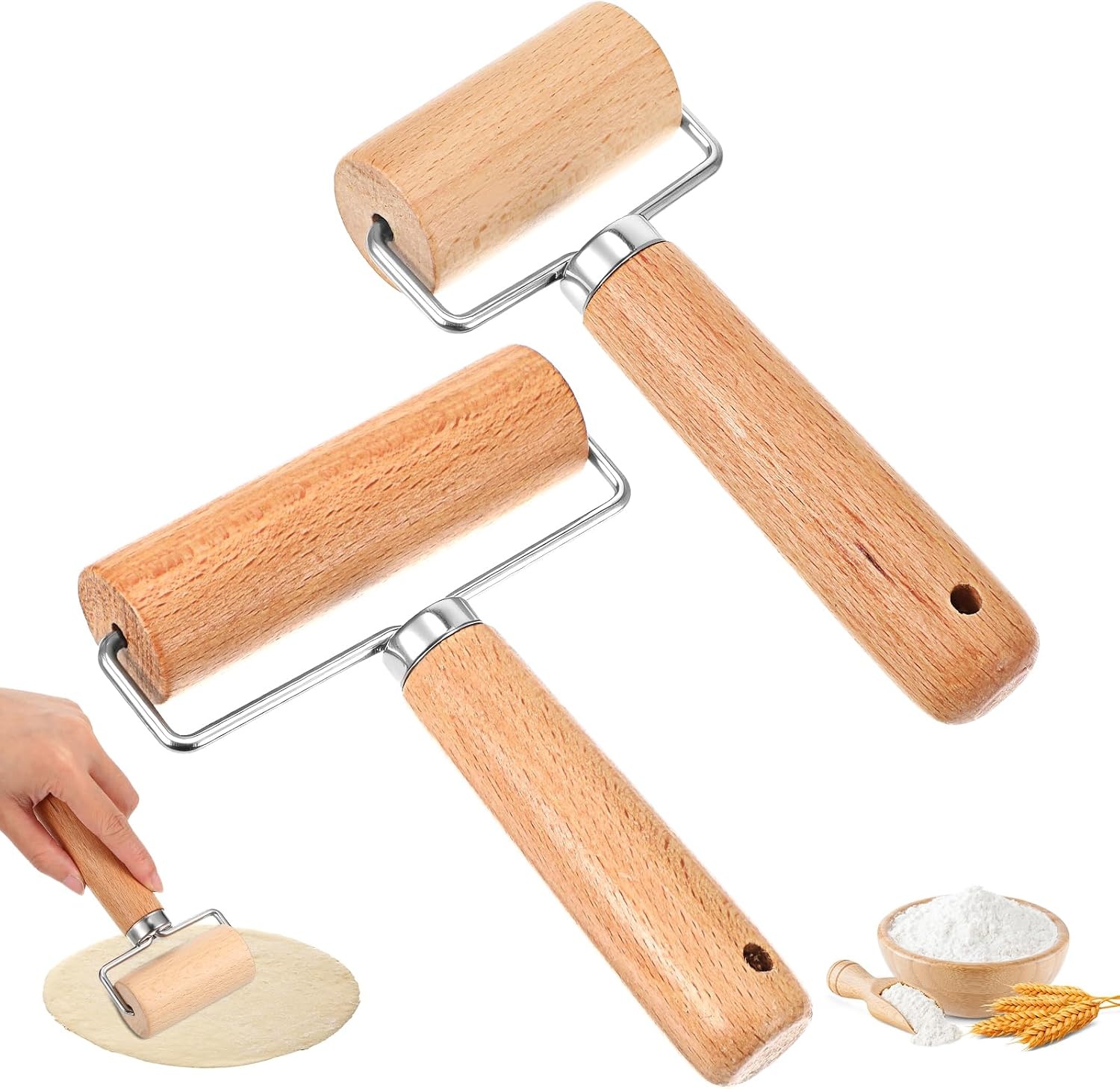
Qianyu Wooden Rolling Pins, 2 PCS
Does the shaping and rolling job no mixer can do, and costs almost nothing
Not a mixer, and wood needs hand washing and occasional oiling
Prices and availability were captured from Amazon Creators API and may change.
How I judge a mixer for bread
Start with the motor, because the motor is the mixer. Wattage tells you power draw. Torque tells you whether the machine can actually turn a stiff dough or whether it slows to a crawl and heats up while you pretend not to notice. I ran a bakery for a decade and I have taught bread classes for years, and the failure mode is always identical: the dough wins, the motor stalls, and the smell starts.
The second thing I look at is bowl geometry, because bowl capacity marketing is the biggest lie in this category. A 5-quart mixer that stalls on two pounds of dough has a marketing problem, not a capacity advantage. What matters is how much dough the machine can move, and that depends on bowl shape, clearance around the hook, and whether the bowl is held steady while the hook works.
That is where lift bowl versus tilt head becomes real. A lift bowl rides up on arms into the head, so the bowl sits locked in a cradle and the assembly stays rigid when dough climbs the hook. A tilt head pivots on a hinge at the back, and under a heavy load that hinge is the flex point. For cakes, cookies, and buttercream, a tilt head is fine and often more convenient. For a two-pound sourdough, the fortress design wins.
Third: the dough hook itself. A good spiral hook climbs the dough and stretches it against the bowl wall. A bad hook buries itself in the center and spins while the dough sits there doing nothing. You feel that difference in the finished crumb.
Fourth, and this is the step most write-ups skip: what the motor smells like after ten minutes of stiff dough. If it smells hot and electrical, it is not powerful enough for what you bought it for. No spec sheet substitutes for that test, and no wattage number on a box overrides it.
Last, the attachment ecosystem. Attachments decide the long-term relationship. A mixer with a pasta roller, a grinder, and a shredder is a kitchen system, not a gadget. A mixer with a proprietary port and two lonely attachments is a gadget with ambitions.
KitchenAid Commercial Series 8 Quart: the bowl-lift fortress
The KitchenAid Commercial Series 8 Quart Bowl-Lift is the outlier here, and the name tells you why. Bowl-lift means the bowl rises into the head on two arms instead of the head tilting back on a hinge. That is the design I would choose every time for bread, because the bowl cannot rock, the hook stays centered, and the whole machine behaves like a fixed piece of equipment rather than a countertop appliance.
The 8-quart stainless bowl is a serious piece of metal. It gives you room for a big batch of dough to climb the hook without pressing against the head, and it means you can mix a double or triple batch of the same recipe without dragging out a second bowl. The stainless steel bowl guard is the detail that separates this from home machines: it keeps flour and dough where they belong during a fast mix, which matters more than it sounds when you are running a stiff dough at speed.
The honest trade-offs are weight and footprint. An 8-quart bowl-lift machine is heavy, and it wants a permanent home on the counter rather than a shelf in a cupboard. If you bake one loaf a week, you are paying for capacity you will not use most days. And the attachment ecosystem is the classic KitchenAid advantage: this is the platform where a pasta roller or a meat grinder turns the mixer into something else entirely.
Kenwood Chef Titanium: the 800-watt middle path
The Kenwood Chef Titanium Kitchen Machine is the one I would point most people toward, because it sits right in the middle of the capability curve. The listed motor is 800W with electronic variable speed control, which is the kind of spec that matters more than a bowl measurement. Electronic speed control means the head holds its speed when the dough thickens instead of sagging the moment the gluten develops.
The 5-quart stainless work bowl is dishwasher safe, and the machine ships with three mixing tools, so you get the whisk, the beater, and the dough tool without buying anything extra. That is a genuinely complete starting kit, and it is the reason this machine reads as a kitchen workhorse rather than a specialty bread tool.
Where it loses ground is batch size. A 5-quart bowl is a single-batch bowl. If your Saturday involves two loaves and a brioche, you are mixing twice, and that is fine, but it is twice the time. The other consideration is the attachment ecosystem. Kenwood's add-on range is well established in Europe and thinner in the US, so if you want a pasta roller or a grinder later, check availability before you commit.
For cakes, cookies, buttercream, and a weekly loaf of bread, the 800W motor and variable speed control are the sweet spot. This is the machine I would buy for a household that bakes a lot but does not bake at bakery scale.
Dash Everyday: honest about what a 3-quart tilt-head is for
The Dash Everyday Stand Mixer is a compact tilt-head machine with a 3-quart stainless steel bowl, six speeds, and a red finish that will look cheerful on a small counter. It is not a bread mixer, and the sooner you accept that, the happier you will be with it.
Three quarts is a small bowl, which means small batches. Cake batter, cookie dough, whipped cream, frosting, a single small batch of soft dough: all of that is within reach. A two-pound sourdough is not. The tilt-head design also means the hinge at the back takes the load, and under a stiff dough that is where you feel the flex. Six speeds on a light motor is plenty for cream and eggs and not much for gluten development.
Where it wins is size, weight, and simplicity. It tucks into a cupboard, it comes out for a birthday cake without a production, and it does not intimidate anyone who is new to baking. If your kitchen is small and your baking is mostly sweets, this is a sensible first mixer. If you bought it hoping to make bread every week, you will be back in the market within a year.
Qianyu wooden rolling pins: the finishing tool
The Qianyu set is two wooden rolling pins, sold for pizza dough and general shaping, and it belongs in this comparison for one reason: no mixer shapes bread. A mixer kneads, and kneading is only half the job. Shaping is the other half, and that happens on the bench with a pin in your hands.
Two pins is more useful than one. A longer pin handles a big sheet of dough or a wide pizza round, and a shorter one gives you control when you are rolling a small piece of laminated dough or evening out a thick crust. Wood has a different feel from stone or silicone: it dusts evenly with flour, it does not chill the dough, and it gives you a little grip instead of sliding.
The caveats are simple. Wood should be hand washed and dried promptly rather than soaked, and it benefits from an occasional wipe of food-safe oil to keep the surface from drying out. And if you already own a pin you like, this is a duplicate, not an upgrade. But as an inexpensive addition to a mixer purchase, it is the cheapest way to fix the weakest link in most home bread setups.
The trade-offs, stated plainly
The first trade-off is capacity against footprint. The KitchenAid Commercial Series 8 Quart gives you the most dough room and the most rigid bowl, and in exchange it owns a permanent spot on your counter and weighs accordingly. The Kenwood Chef Titanium gives you a 5-quart bowl and an 800W motor in a much friendlier package, and in exchange you mix in more, smaller batches. The Dash gives you a 3-quart bowl you can store in a cupboard, and in exchange bread is off the table.
The second trade-off is motor class against price. The Dash is the least expensive machine here by a wide margin, and it is built for batter. The Kenwood sits in the middle, and its 800W motor with electronic variable speed control is the reason it can handle a weekly loaf without complaint. The KitchenAid Commercial Series is the top of the range, and you are paying for the lift-bowl frame, the 8-quart bowl, and the bowl guard.
The third trade-off is ecosystem. KitchenAid has the deepest attachment catalog of the three, which matters if you want one machine to grind meat and roll pasta. Kenwood has a solid range with better availability outside the US. The Dash is a standalone appliance with a small accessory footprint, and that is fine for what it is.
The fourth trade-off is honesty about dough. Two of these machines will knead bread and one will not, and no bowl size changes that. If stiff dough is in your future, buy accordingly.
Which one belongs in your kitchen
If you bake bread seriously, in batches, and you want one machine that will still be working in ten years, the KitchenAid Commercial Series 8 Quart is the answer. The lift-bowl frame and the 8-quart bowl are the two features that matter most for stiff dough, and the attachment ecosystem keeps paying you back.
If you bake bread weekly alongside cakes, cookies, and everything else, the Kenwood Chef Titanium is the better fit. The 800W motor and variable speed control do the heavy work, the dishwasher-safe bowl makes cleanup painless, and the three included tools mean you can start baking the day it arrives.
If you bake sweets and small batches and your kitchen is tight, the Dash Everyday is a reasonable, compact choice. Just do not ask it to be something it is not.
And whatever you choose, add the rolling pins. Two wooden pins for the price of a coffee is the smallest, most sensible upgrade in this entire comparison, because a mixer kneads and your hands shape.
Before you click buy
Measure your counter and your cupboard before anything else. A bowl-lift machine with an 8-quart bowl needs height clearance under the upper cabinets, and that is the number people forget until the machine is sitting on the floor.
Count your batches, not your recipes. If a typical session is two loaves, a 5-quart bowl means two mixing cycles, and a 3-quart bowl means four. Capacity math is the single best predictor of whether you will love the machine or resent it by month three.
Finally, think about the ten-minute test. Whatever you buy, run a stiff dough in it for ten minutes and pay attention to the motor. If it smells hot, you bought a cake mixer with ambitions, and it is better to find that out during the return window than during a holiday bake.
Visit on Amazon → on the KitchenAid Commercial Series 8 Quart, Visit on Amazon → on the Kenwood Chef Titanium, and Visit on Amazon → on the Dash Everyday. The rolling pins are the cheapest decision of the four, and the one you will use every single bake day.