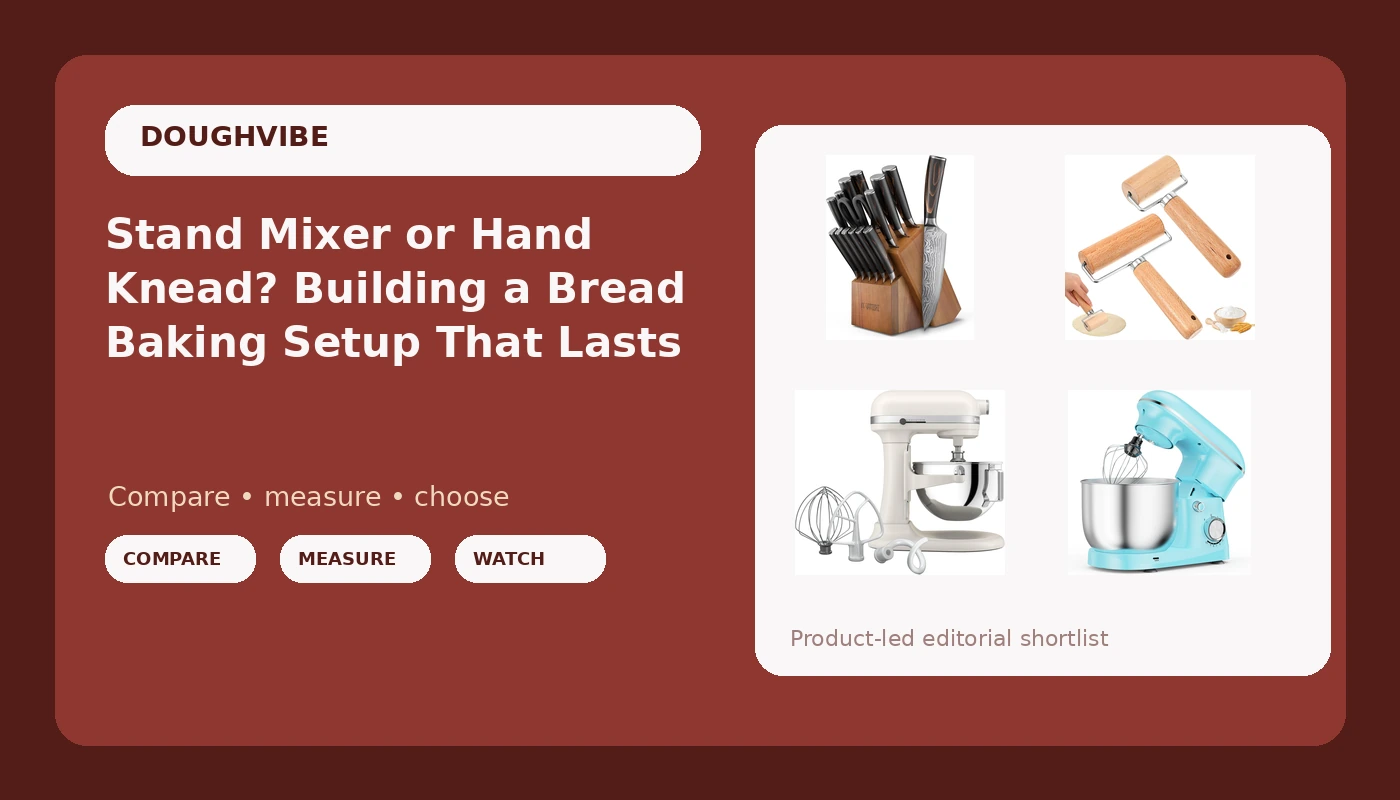
Bread baking exposes every weak point in a kitchen. A mixer that whips cream without complaint can stall halfway through a stiff dough, a bowl that looks generous on the box can hold less dough than the recipe calls for, and the tools around the machine quietly decide how pleasant the whole process is. Building a bread baking stand mixer setup means choosing a machine that can genuinely knead, then filling in the supporting pieces that make shaping and finishing easier. This explainer looks at four products that cover those jobs, what each one is designed to do, and how to tell whether a mixer is built for dough or simply decorated with a dough hook.
Related: How to Read Stand Mixer Specs Before You Buy →
Quick answer
Start with the mixer and treat everything else as a supporting purchase. A bowl-lift stand mixer is the sturdier of the two common configurations for heavy dough, because the bowl locks into a cradle instead of hanging off a hinge. Bowl size is not the same as dough capacity, and a bigger bowl number does not automatically mean more kneading power. The knife and rolling pin decisions matter far less than the motor decision, but they still shape how a baking day feels. If you bake bread weekly, put the money into the machine that kneads. If you bake occasionally, a lower-cost mixer with a realistic dough limit plus a good knife set and rolling pins covers more ground than one expensive appliance alone.
4 useful options
| Model | Best fit | What stands out |
|---|---|---|
| KitchenAid 5.5-Qt Bowl-Lift Stand Mixer, KSM55SXXX, Porcelain White | Bread-first kitchens that want one machine to grow with | 5.5-quart bowl-lift configuration in a Porcelain White finish |
| NEWBULIG Stand Mixer 6.3QT, Kitchen Electric Mixers Alternative | Budget buyers who want a larger bowl specification | 6.3-quart capacity in a lower-cost stand mixer format |
| Yatoshi Professional Kitchen Knife Set, 15 Pieces | Shaping, scoring, and everyday prep around the mixer | 15-piece set in high carbon stainless steel with ergonomic handles |
| Qianyu 2 PCS Baking Pizza Dough Roller Baking Wooden Rolling Pins | Pizza, flatbreads, and rolled dough work | Two wooden rolling pins supplied as a pair |
The core machine: KitchenAid 5.5-Qt Bowl-Lift Stand Mixer, KSM55SXXX, Porcelain White
The distinction between lift bowl and tilt head is not cosmetic. On a lift design, the bowl sits in a cradle and is raised by a lever, so the mass of dough and bowl is supported from below. On a tilt head, the upper housing pivots on a hinge, and under a stiff dough the whole assembly can flex and rock. For cakes, cookies, and whipped cream, either design works. For a two-pound lean dough that fights back, the lift bowl is the more settled arrangement. Capacity is the other half of the story: a 5.5-quart bowl describes volume, not the maximum weight of dough the motor should be asked to move. Read the manufacturer's dough limit, not the bowl number.
The budget alternative: NEWBULIG Stand Mixer 6.3QT, Kitchen Electric Mixers Alternative
This is where bowl capacity marketing does the most damage. A 6.3-quart figure sounds like more machine than a 5.5-quart figure, and on paper it is more bowl. What it does not tell you is how much torque the motor produces, how the gearbox is built, or how the machine behaves ten minutes into a stiff dough. A large bowl paired with a modest motor is a whipping machine with extra room, and it will handle sponge cakes, meringue, and quick breads happily. If bread is the goal, look for a stated dough capacity, a wattage figure you can compare against others, and a return policy that lets you find out whether the housing gets hot under load.
The prep knife: Yatoshi Professional Kitchen Knife Set, 15 Pieces, High Carbon Stainless Steel, Ergonomic Handle
A knife set is not the first thing people think of when they plan a bread kitchen, but a baker reaches for a blade constantly. Dividing a bulk ferment, trimming a shaped loaf, slashing a scoring line, cutting through a boule without crushing the crumb: all of it needs an edge that is actually sharp. High carbon stainless steel is a middle ground that takes a decent edge and resists staining better than plain carbon steel. Fifteen pieces is more than most bakers need, and that is the honest trade-off: a set spreads cost across tools you will rarely touch, including the block and the kitchen shears. One excellent chef's knife and one long serrated blade cover most bread work, so buy a set for the breadth, not because you need all fifteen.
The shaping tool: Qianyu 2 PCS Baking Pizza Dough Roller Baking Wooden Rolling Pins
Rolling pins matter less for a round sourdough boule than for pizza, flatbread, pie crust, and laminated dough, where an even thickness is the whole game. Wood is the traditional material: it grips dough slightly better than bare metal and does not chill the way a marble pin does, which helps when you want the butter in a laminated dough to stay pliable. The trade-off is care. Wood should be wiped clean and dried promptly rather than soaked, and an occasional light oiling keeps the surface from drying out and cracking. Two pins at this price point means you can keep one for dough and one for everything else, which is a small luxury rather than a necessity.
Prices and availability may change. Product images, names, and retailer links are matched to verified listings. No current price, rating, stock status, or measured result is stated here without current evidence.
Bowl capacity is not dough capacity
The single most common mistake in buying a mixer for bread is reading the bowl number as a dough number. A bowl's quart rating describes the volume of the vessel. The dough limit describes how much mass the motor, gearbox, and hook are designed to move at once, and it is usually lower than the bowl number suggests, sometimes by a wide margin. A five-quart bowl that lists a two-pound dough limit is not being modest; it is telling you where the machine stops performing well. Lean doughs made from flour, water, salt, and yeast are the stiffest thing most home mixers ever see, and they are harder on a motor than a butter-rich brioche that looks heavier in the bowl. When a machine stalls, it stalls because torque ran out, not because the bowl filled up.
What actually predicts kneading performance
Wattage is a starting point, not an answer. It measures how much electricity a motor can draw, and marketing departments treat it as a proxy for power, but the number that governs kneading is torque, the twisting force delivered to the hook. Gear ratio, motor design, and the rigidity of the head all shape that. Two practical signals are worth watching before you commit. First, does the manufacturer publish a dough capacity at all? A maker confident in the drivetrain usually does. Second, how does the machine behave under load: a mixer that slows dramatically, walks across the counter, or smells hot after ten minutes of dough is telling you its honest limit. Under 500 watts is usually a whipping machine with a dough hook accessory, regardless of how the product page is worded.
- Decide how often you will actually knead bread, weekly or a few times a year, and let that set your budget.
- Look for a stated dough capacity on the mixer listing before you look at the bowl size.
- Choose a bowl-lift configuration if stiff dough is a regular event; choose tilt head if cakes and cookies dominate.
- Check the attachment ecosystem if you want the mixer to become a pasta, grinding, or shredding station later.
- Budget the supporting tools separately: a sharp knife, a rolling pin, a bench scraper, and a scale cost far less than the mixer itself.
Practical guidance before you buy
- Weigh your flour instead of scooping it. Dough hydration only makes sense if the flour amount is accurate, and an inconsistent dough is harder on a mixer than a correct one.
- Mix on low until the dough comes together, then let the hook do the work. Running a stiff dough at high speed is how gearboxes die.
- Watch the machine, not the timer. If the housing is hot to the touch or the head is flexing, stop and finish by hand.
- Keep the dough within the stated limit. Splitting a double batch into two mixes is slower but far cheaper than replacing a stripped gear.
- Treat the knife and rolling pin as maintenance items. Sharpen the blade, dry the wood, and both will outlast several mixers.
Which option should you choose?
Choose the KitchenAid 5.5-Qt Bowl-Lift Stand Mixer when bread is a weekly habit and you want a bowl-lift platform plus a long attachment runway. Choose the NEWBULIG Stand Mixer 6.3QT when the budget is the deciding factor and your mixing leans toward cakes, cookies, and batters rather than stiff bread dough, with a clear-eyed look at the stated dough limit before you buy. Choose the Yatoshi Professional Kitchen Knife Set when you want a full set of cutting tools in one purchase and accept that a 15-piece set includes pieces you may rarely use. Choose the Qianyu 2 PCS Baking Pizza Dough Roller Baking Wooden Rolling Pins when pizza, flatbread, and rolled pastry are part of your rotation and you want a pair of wooden pins at a low entry cost.
One caveat applies to all four. This article describes what each product is designed to do based on its listing and general kitchen principles; it does not report a hands-on bread bake, a measured dough weight, or a motor test. Before buying any mixer for bread, confirm the manufacturer's stated dough capacity and check the return window, because the stiff-dough test is one you run in your own kitchen.
The bottom line
A bread baking stand mixer setup is built outward from the machine, not inward from the accessories. The mixer decides whether you can knead two pounds of dough without drama, and the bowl-lift configuration is the more settled design for that job. The supporting pieces, a sharp knife and a pair of wooden rolling pins, make the shaping and finishing work faster and more consistent, but they will never rescue a mixer that lacks torque. Match the machine to how often you actually bake, respect the dough limit the manufacturer publishes, and buy the tools around it once the core decision is settled.